BEIRUT: Slowing capital inflows to Lebanon and weaker deposit growth increase the risk of a government response that will include a debt rescheduling or another liability management exercise that may constitute a default, Moody’s Investors Service said.
This was despite fiscal consolidation measures included in the draft 2019 budget that is being debated in parliament, Moody’s said in a June 25 credit analysis.
Asked about the report, Finance Minister Ali Hassan Khalil said on Thursday “matters are under control.”
The draft budget aims to cut the deficit to 7.6 percent of gross domestic product from 11.5 percent last year, with Lebanese leaders warning the country faces financial crisis without reform.
Lebanon’s public debt is 150 percent of GDP, among the largest in the world. State finances are strained by a bloated public sector, high debt-servicing costs and subsidies for power.
The Moody’s report said: “Despite the inclusion of fiscal consolidation measures in the draft 2019 budget, slowing capital inflows and weaker deposit growth increase the risk that the government’s response will include a debt rescheduling or another liability management exercise that may constitute a default under our definition.”
Lebanon has long depended on financial transfers from its diaspora to meet the economy’s financing needs, chiefly the state budget deficit and the current account deficit of an economy that imports heavily and exports little by comparison.

Moody’s sees risk of Lebanon debt rescheduling despite budget
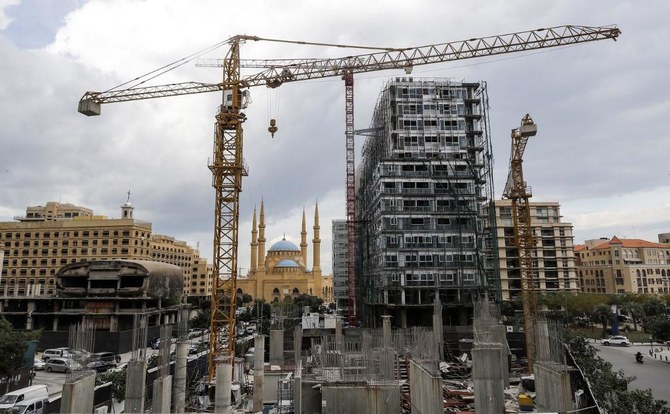
- The draft budget aims to cut the deficit to 7.6 percent of gross domestic product from 11.5 percent last year
- Lebanon has long depended on financial transfers from its diaspora to meet the economy’s financing needs
Landmine explosion in Sudan kills 9, including 3 children
KHARTOUM: A land mine explosion killed nine people in Sudan on Sunday, including three children, as they were riding in an auto-rickshaw along a road in the frontline region of Kordofan, a medical source told AFP.
The war between the regular army and the paramilitary Rapid Support Forces (RSF), which began in April 2023, has left Sudan strewn with mines and unexploded ordnance, though the explosive that caused Sunday’s deaths could also have dated back to previous rebellions that have shaken South Kordofan state since 2011.
“Nine people, three of them children, were killed by a mine explosion while they were in a tuk-tuk,” a medical source at Al-Abbasiya hospital said.
The vehicle was reduced to “a metal carcass,” witness Abdelbagi Issa told AFP by phone.
“We were walking behind the tuk-tuk along the road to the market when we heard the sound of an explosion,” he said. “People fell to the ground and the tuk-tuk was destroyed.”
Kordofan has become the center of fighting in the nearly three-year war ever since the RSF forced the army out of its last foothold in the neighboring Darfur region late last year.
Since it broke out, Sudan’s civil war has killed tens of thousands of people and forced 11 million to flee their homes, triggering a dire humanitarian crisis.
It has also effectively split the country in two, with the army holding the north, center and east while the RSF and its allies control the west and parts of the south.
The war between the regular army and the paramilitary Rapid Support Forces (RSF), which began in April 2023, has left Sudan strewn with mines and unexploded ordnance, though the explosive that caused Sunday’s deaths could also have dated back to previous rebellions that have shaken South Kordofan state since 2011.
“Nine people, three of them children, were killed by a mine explosion while they were in a tuk-tuk,” a medical source at Al-Abbasiya hospital said.
The vehicle was reduced to “a metal carcass,” witness Abdelbagi Issa told AFP by phone.
“We were walking behind the tuk-tuk along the road to the market when we heard the sound of an explosion,” he said. “People fell to the ground and the tuk-tuk was destroyed.”
Kordofan has become the center of fighting in the nearly three-year war ever since the RSF forced the army out of its last foothold in the neighboring Darfur region late last year.
Since it broke out, Sudan’s civil war has killed tens of thousands of people and forced 11 million to flee their homes, triggering a dire humanitarian crisis.
It has also effectively split the country in two, with the army holding the north, center and east while the RSF and its allies control the west and parts of the south.
© 2026 SAUDI RESEARCH & PUBLISHING COMPANY, All Rights Reserved And subject to Terms of Use Agreement.


