ISLAMABAD: Dilshad Bibi, a woman who moved the court eight years ago against her husband for marrying for a second time, said on Tuesday the Islamabad High Court’s recent decision recommending punishment if male spouses did not get permission to remarry from an arbitration council as well as the first wife was a “big win” for women.
In a ruling on Monday, Islamabad High Court Chief Justice Athar Minallah said a man would be punished if he entered into a second marriage unless it was approved by a reconciliation council and his wife.
“It [the verdict] is a big win for me and all women who have been fighting against patriarchy and injustices in society,” Bibi told Arab News. “I never lost hope and faith in our justice system, and finally won the case after eight years of long struggle.”
Bibi and husband Liaqat Ali Meer tied the knot in May 2011. Meer remarried in January 2013 without seeking permission from his first wife or a reconciliation council whose permission is binding under Muslim family law in Pakistan.
Subsequently Bibi moved a local court against her husband which sentenced him to one month in prison and a fine of Rs5,000 ($32). The punishment was overturned by an appellate court in February 2017, after which Bibi went to the IHC.
On Monday, the IHC overturned the verdict that acquitted Bibi’s husband. Meer will now have to serve his term and pay the fine, and an appellate court will reexamine whether additional punishment is required.
“During the subsistence of an existing marriage, no man shall contract another marriage except with the previous permission in writing of the Arbitration Council,” the court ruled in a 12-page verdict, quoting a section of the Muslim Family Laws Ordinance, 1961 related to polygamy.
According to Islamabad Capital Territory Local Government Act, 2015, the federal government is responsible for establishing an “arbitration council” for the amicable settlement of disputes in a locality. The council comprises a panel of seven members, including at least one woman, who are nominated for a term of five years.
With Monday’s verdict, the court had not banned second marriage, Bibi’s lawyer Ali Hussain Bhatti said, but made it “compulsory for men to follow a due process before contracting a second marriage.”
“This is still a historic verdict and will help protect the rights of women,” he told Arab News.
Bibi said the IHC’s verdict would now serve as a precedent for future court cases and “help women get justice and equal rights.”
Having multiple wives is common in about a quarter of the world’s nations, predominantly conservative male-dominated communities in Africa and Muslim-majority countries where it is part of traditional or religious customs.
But campaigners say most polygamous marriages fuel poverty — with husbands neglecting one family over another — leaving thousands of women and children impoverished and easy prey for exploitation.
In Pakistan, polygamy is not widespread and is mostly common in rural areas in families without a male heir or in cases when men fell in love with another woman.
Rights campaigner Farzana Bari said Monday’s verdict would “encourage more women to fight for their rights and approach courts for justice in case of any unfair treatment by their husbands.”
Dr. Qibla Ayaz, chairman of Pakistan’s Council of Islamic Ideology (CII), a body that advises the government on the compatibility of laws with Islam, said Pakistani law was in contradiction with Sharia law which did not bind a man to seek permission from his first wife to contract a second marriage.
“If a man does not seek permission from his wife and the conciliation council before remarrying, he will be punished under the law of the land, but his second marriage will still remain valid,” Ayaz told Arab News, “Under Sharia law, there is no need to seek permission of the first wife.”


![]()

Punishment unless first wife and arbitration body approve second marriage, Pakistan court rules
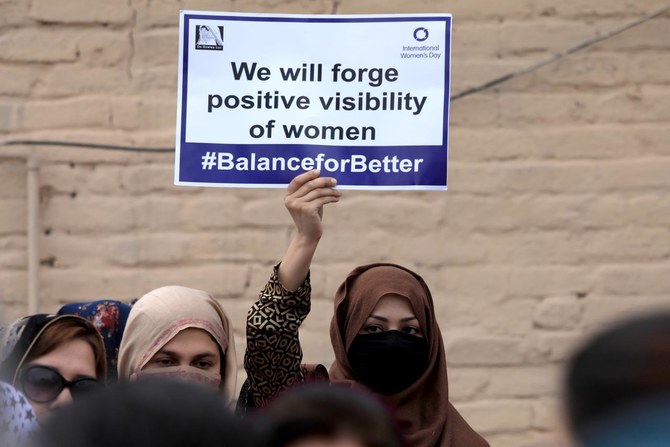
Punishment unless first wife and arbitration body approve second marriage, Pakistan court rules
- Verdict a “big win” for me and all women fighting against patriarchy, petitioner Dilshad Bibi says
- Council of Islamic Ideology Chairman says no need to seek permission under Sharia law
Latest updates



© 2026 SAUDI RESEARCH & PUBLISHING COMPANY, All Rights Reserved And subject to Terms of Use Agreement.