NICOSIA: A Cyprus criminal court on Monday sentenced an army captain to seven life terms in prison after he pleaded guilty to the premeditated murder and kidnapping of seven foreign women and girls.
In handing down the sentence, the three-judge panel said that Nicholas Metaxas appeared to have mounted a “campaign of murder” in choosing defenseless women, most of whom came to Cyprus looking for work.
The judges said Metaxas “didn’t even hesitate to kill children” over a 2½-year period during which prosecutors said he sought out many of his adult victims on online social networks using the handle “Orestes35” and had sex with them.
Five life terms will run consecutively, while two will run concurrently. The judges said there could be no mitigating circumstances in such a case.
Earlier, Metaxas pleaded guilty and tearfully apologized to the families of his victims for the “unjust pain” he has caused them.
Reading from a prepared statement, Metaxas said he doesn’t “have any clear answers” why he committed the killings and that he has “struggled” to figure out the “why and how.”
The 35-year-old officer said his cooperation with police investigators was the least he could do to ease the pain he caused to the families of the victims and his own family. Metaxas killed four Filipino women and the daughter of one of them, as well as a Nepalese woman and a Romanian mother and her daughter.
“I cannot go back in time and undo what I have done,” Metaxas, clad in a bulletproof vest and surrounded by armed police, told a packed courtroom.
He asked authorities for a scientific panel to interview him in order to delve into his psyche and find the reasons for his actions in what’s believed to be the east Mediterranean island nation’s first serial killer case. He did speak of unspecified events in his past “decades ago” that he tried to forget.
He looked down throughout his court appearance as a state prosecutor said six of the victims died of strangulation and the seventh of a massive head injury.
The case came to light on April 14 when the decomposing body of Mary Rose Tiburcio, 38, from the Philippines, was found by chance down a flooded mineshaft that was part of an abandoned copper mine.
Four days later, the body of 28-year-old Arian Palanas Lozano, also from the Philippines, was pulled out of the same mineshaft. Investigators homed in on Metaxas after scrutinizing the online communications of both women.
Metaxas, a divorced father of two children aged 6 and 9, initially refused to cooperate with investigators. But as the evidence increased, he buckled and confessed in a 10-page handwritten note to the seven killings.
His victims included Romanian Livia Florentina Bunea, 36, and her 8-year-old daughter Elena Natalia; Maricar Valtez Arquiola, 31, from the Philippines; Ashita Khadka Bista, from Nepal; and Tiburcio’s daughter, Sierra Grace.
Metaxas led police to where he disposed of his victims’ bodies; the bound remains of Bunea, her daughter and Arquiola were placed in suitcases and thrown into a toxic lake that was part of the same abandoned mine. Bista’s skeletal remains were found down a dry well inside an army firing range. Tiburcio’s daughter was found in another lake, wrapped in a sheet and weighed down by a rock.
Metaxas had told investigators under questioning that what prompted him to strangle Tiburcio and Bunea was his “hatred” of them and desire for “vengeance” over his suspicions that they prostituted their daughters. He said he choked the children to death as they slept “so that they would no longer have to suffer.”
Prosecutors said investigations found that both mothers were very loving and cared for their children.
Metaxas also told investigators that he strangled Maricar and Lozano as he climaxed during sex with them. He said he killed Bista, who died of a head injury, in anger after she spat at him for videoing their sexual encounter.
All Metaxas’ victims except Bista had been reported missing to police shortly after their disappearance. The disappearance of Bunea and her daughter in October 2016 was the subject of an investigative report by a local TV reporter, who said police claimed they had good reason to believe that the mother and daughter had crossed into the breakaway north of the ethnically split island.
Police failures to probe those missing persons cases resulted in the resignation of the justice minister and the firing of the police chief. Cypriot President Nicos Anastasiades said lives could have been spared had police acted swiftly in investigating those initial reports.


![]()

Cyprus court sentences serial killer to 7 life terms
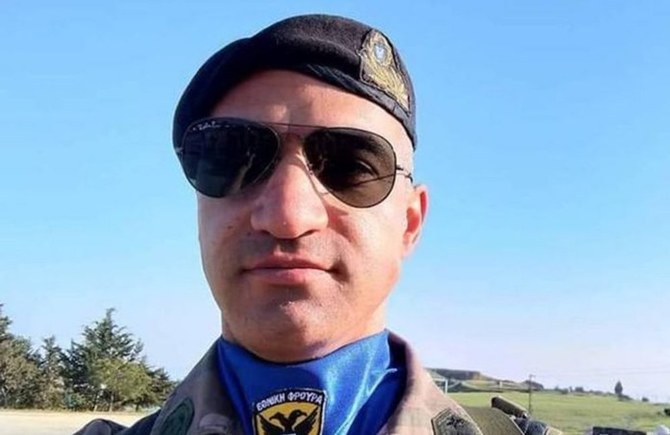
Cyprus court sentences serial killer to 7 life terms
- The army captain was sentenced to 7 life terms in prison after pleading guilty to kidnapping and murdering 7 foreign women and girls
- The 3-judge panel said the serial killer ‘didn’t even hesitate to kill children’ over a 2-and-a-half-year period


Latest updates


© 2026 SAUDI RESEARCH & PUBLISHING COMPANY, All Rights Reserved And subject to Terms of Use Agreement.