KHARTOUM: As night fell, residents of a southern district in Khartoum briskly moved to set the stage for Sudanese protest leaders giving a brief on the movement’s latest updates.
Grappling with a power outage, blocked Internet access and heightened security, people from the Jabra district had few means to organize the meeting which drew dozens from the neighborhood.
Within a few hours, power generators were fetched, loud speakers set up, plastic chairs lined up and cars blazed their headlights on the podium where protest leaders were to give their speech.
Roadblocks were also set up to secure the entrances of the area.
“The campaign keeps us updated with whatever new is happening about the situation in Sudan,” said Mujahed Abdelnaby who was attending the gathering.
Sudan’s ruling generals have largely cut Internet services in the wake of a deadly dispersal of a sit-in outside the army headquarters where thousands had been camped since April 6.
The crowds who were initially demanding the ouster of veteran leader Omar Al-Bashir stayed put after his fall to call on the generals who took over to hand power to civilians.
But on June 3 armed men in military fatigues launched a bloody crackdown on the encampment, killing more than 100 people according to medics linked to protesters. Official figures stand at 61.
Since then campaigning has been restricted, particularly with increased deployment of the paramilitary Rapid Support Forces across Khartoum.
The forces, which are led by the deputy chief of Sudan’s transitional military council, are accused by protesters of leading the encampment’s dispersal.
The council, which had previously vowed not to disperse the sit-in, denied ordering the violence and said it had only planned a purge of a nearby area called Colombia notorious for drug peddling.
Last week, protest leaders from the Alliance for Freedom and Change started organizing daily simultaneous gatherings to revive the protest movement.
“We just want to keep the communication going with the people to confront the blackout imposed by the military council,” said Waheeb Mohamed Saeed, a leading activist within the alliance.
Ahead of his speech at Jabra, he explained the campaigns are circulated via text messages and word of mouth among residents.
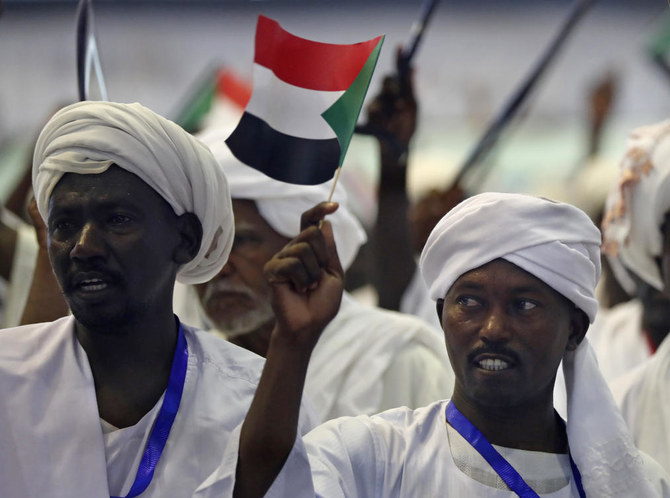
Demonstrators, meanwhile, started chanting to rhythmical beats their catchcry of “freedom, peace and justice.”
“We will bring civilian rule no matter how long it takes,” they vowed.
Similar rallies, gatherings and marches were regularly announced online, drawing thousands prior to the sweeping Internet blackout.
“We have been calling for the resumption of Internet services as part of conditions to restart negotiations,” Saeed said.
Talks between protest leaders and the military council had collapsed before the dispersal of the sit-in.
Both sides recently agreed to mediation efforts led by Ethiopian Prime Minister Abiy Ahmed.
Protest leaders say the mediation is pegged on releasing all detainees and ensuring freedoms.
But the military council’s chief Abdel Fattah Al-Burhan called for “unconditional” negotiations to be resumed.
“If all fails, we will press ahead with peaceful forms of escalation including civil disobedience,” Saeed said.
Following the sit-in dispersal, businesses across Sudan were shut and residents stayed indoors after protest leaders called for a nationwide general strike.
Last week, hundreds of protesters took to the streets reviving calls for civilian rule across several Sudanese states including the capital’s twin city Omdurman.
Dozens of employees from private companies and ministries, including oil and information, held silent demonstrations outside their offices in Khartoum.
For Lamia Babiker, who was attending the Jabra gathering, the deadly dispersal of the sit-in only rekindled the protest spirit.
“Now people can tell what’s right and what’s wrong,” she said.
“People from several districts were killed and others have been missing since the dispersal. We are no longer scared.”


![]()

Sudan protesters hold night gatherings to rekindle movement
Sudan protesters hold night gatherings to rekindle movement
- “The campaign keeps us updated with whatever new is happening about the situation in Sudan,” someone at the gathering said
- Rallies, gatherings and marches were regularly announced online, drawing thousands


Latest updates


© 2026 SAUDI RESEARCH & PUBLISHING COMPANY, All Rights Reserved And subject to Terms of Use Agreement.