KARACHI: The 17th edition of the Pakistan Oil, Gas and Energy Exhibition kicked off in Karachi on Thursday with visible participation from Middle Eastern companies drawn in by promises of greater concessions from a country that hopes improved security in recent years will reassure foreign investors who have been deterred in the past by the threat of militant violence.
Pakistan has been under mounting pressure in recent years to shore up its creaking energy infrastructure, both to provide more reliable supplies of oil and gas to its growing population of more than 200 million and to cut reliance on expensive foreign imports.
The country is believed to have rich mineral resources, with conventional gas reserves estimated at 20 trillion cubic feet (tcf), or 560 billion cubic meters, and shale gas reserves, which are so far untouched, at more than 100 tcf.
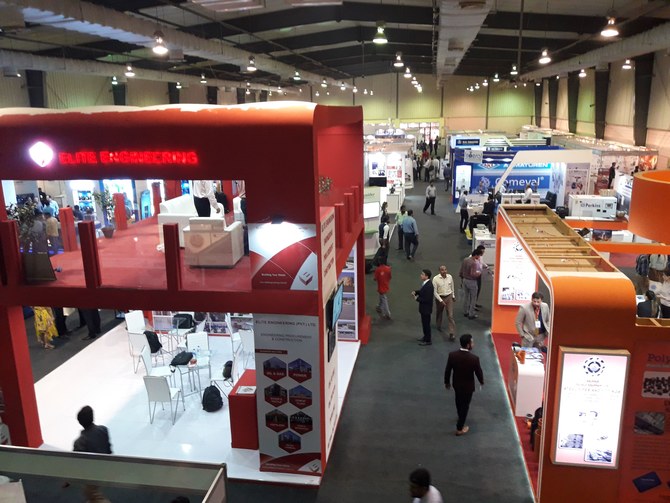
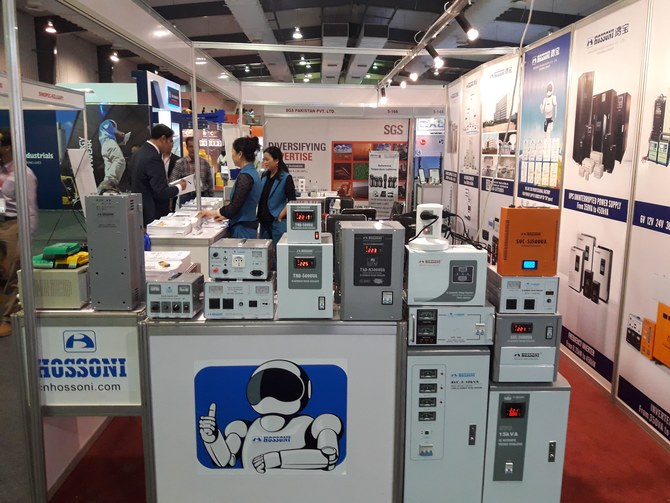
This year, the international energy conference, which will see the participation of around 223 companies from 26 countries over the three-day-long event, saw a greater interest from Gulf countries hoping to expand their outreach in Pakistan through digital industrial solutions, services and products.
“The newer part is the technological openness of Pakistan and that is the major attraction for foreign companies,” said Aamer Khanzada, the Managing Director of Pegasus Consultancy, the organizers of the exhibition. “Exploration opportunities in Pakistan’s onshore and offshore fields are also gaining momentum. Companies from Middle East are showing increasing interest in green and clean energy. They are showing interest in investment in various sectors and are here to explore opportunities.”
A range of Saudi and UAE companies that offer digital solutions to petroleum and household sector had exhibited their products and services at Thursday’s event.
“We are offering digital partnership for the digital transformation of the energy industry, mainly related to petroleum, oil and gas,” said Ammad Ghafoor, a representative for Saudi AVEVA, which provides digital transformation services to Saudi oil giant Aramco and SABIC, a Saudi company active in petrochemicals, chemicals, industrial polymers, fertilizers, and metals.
Polyfab Plastic Industry LLC, a UAE-based manufacturer of HDPE pipes and fittings, UPV pipes and fitting and PVC duct pipes and accessories, also participated in the exhibition for the first time.
“We have been selling our products in other gulf countries and South Africa but this is our first visit to Pakistan to introduce our products here,” Mohsin Ejaz, a representative of Polyfab told Arab News.
Junaid Makda, President of Karachi Chamber of Commerce and Industry, said he had asked Polyfab to come up with a proposal on how the company and its products could help Pakistan save financial resources.
“I have asked them that I will link them with Karachi Water and Sewerage Board for business purposes (for PVC pipes),” Makda said. “They are exporting to other countries but due to RD (Regulatory duty imposed on imports) it was not feasible for them to export to Pakistan but this can now be removed.”


![]()
![]()
![]()

Middle East companies show off technology solutions, products at Pakistani energy exhibit

Middle East companies show off technology solutions, products at Pakistani energy exhibit
- Around 223 companies from 26 countries participating in three-day-long event this year
- Greater interest from Gulf countries drawn in by promises of opportunity as Pakistan struggles to shore up energy infrastructure
Latest updates


© 2026 SAUDI RESEARCH & PUBLISHING COMPANY, All Rights Reserved And subject to Terms of Use Agreement.