BANGKOK: Environmental groups called on Tuesday for Southeast Asian countries to ban waste imports from developed countries to help tackle a pollution crisis, as regional leaders prepare to meet this week in Bangkok.
Southeast Asia has seen a staggering spike in imports of plastic and electronic waste from developed countries after the world’s top recycler, China, banned imports, causing millions of tons of the trash to be diverted to less regulated countries.
Thailand will from Thursday host four days of meetings for leaders of the 10-member Association of South East Asian Nations (ASEAN) to discuss the region’s most pressing issues.
“Greenpeace Southeast Asia demands that ASEAN leaders put this issue on the agenda during their summits this year and make a united declaration to address the region’s plastic waste crisis,” the group said in a statement.
“Declare an immediate ban on all imports of plastic waste,” Greenpeace urged.
It was in the interests of ASEAN, whose meetings are being held under the theme of sustainability this year, to ban waste trading, said a Thai environmental group.
“Welcoming plastics and electronic waste from abroad in the name of development must urgently end,” said Penchom Saetang, director of Ecological Alert and Recovery Thailand (EARTH) Foundation.
Some Southeast Asian countries have in recent months been taking action to stem the flow of trash.
Indonesia was the latest to reject trash imports from Canada, following similar moves by Malaysia and the Philippines.
Thailand does not ban plastic waste imports, but it aims to end them by 2020. It imposes partial bans on electronic scrap.


Southeast Asia should ban foreign trash imports: environmentalists
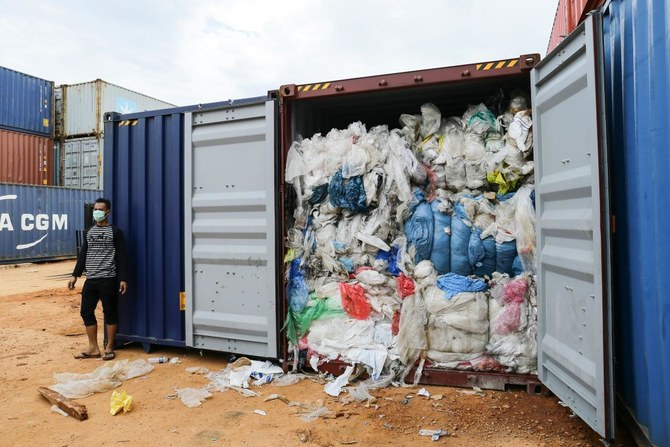
Southeast Asia should ban foreign trash imports: environmentalists

- Southeast Asia has seen a staggering spike in imports of plastic and electronic waste from developed countries
- Indonesia was the latest to reject trash imports from Canada, following similar moves by Malaysia and the Philippines


Sri Lanka hospital releases 22 rescued Iranian sailors
- Sri Lankan authorities said the survivors from the Dena were being handled according to international humanitarian law
COLOMBO: Sri Lanka discharged from hospital 22 Iranian sailors who were plucked from life rafts after their warship was sunk by a US submarine, officials said Sunday.
The sailors were treated at Karapitiya Hospital in the southern port city of Galle since Wednesday after the IRIS Dena was torpedoed just outside Sri Lanka’s territorial waters.
“Another 10 are still undergoing treatment,” a medical officer at the hospital told AFP.
He said the bodies of 84 Iranians retrieved from the Indian Ocean were also at the hospital.
Those discharged from hospital overnight had been taken to a beach resort in the same district.
Sri Lankan authorities said the survivors from the Dena were being handled according to international humanitarian law, and the government had contacted the International Committee of the Red Cross for assistance.
The island is also providing safe haven for another 219 Iranian sailors from a second ship, the IRIS Bushehr, that was allowed to berth a day after the Dena was sunk.
Sailors from the Bushehr have been moved to a Sri Lanka Navy camp at Welisara, just north of the capital Colombo, and their ship taken over by Sri Lanka’s navy.
Sri Lanka announced it was taking the Bushehr to the north-eastern port of Trincomalee, but an engine failure and other technical and administrative issues had delayed the movement, a navy spokesman said.
Sri Lanka has denied claims that it was under pressure from Washington not to allow the Iranians to return home, and said Colombo will be guided solely by international law and its own domestic legislation.
A US State Department spokesperson said the disposition of the Bushehr crew and Iranian sailors rescued at sea was up to Sri Lanka.
“The United States, of course, respects and recognizes Sri Lanka’s sovereignty in the handling of this situation,” the spokesperson told AFP in Washington.
India, meanwhile, said Saturday that it had allowed a third Iranian warship, the IRIS Lavan, to dock in one of its ports on “humane” grounds after it too reported engine problems.
The three ships were part of a multi-national fleet review held by India before the war in the Middle East started last week.
“I think it was the humane thing to do, and I think we were guided by that principle,” Indian Foreign Minister Subrahmanyam Jaishankar said on Saturday.
The Lavan docked in the south-west Indian port of Kochi on Wednesday.
“A lot of the people on board were young cadets. They have disembarked and are in a nearby facility,” Jaishankar said.


