ISLAMABAD: Amid a boost in foreign payments, Pakistan on Monday observed the International Day of Family Remittances to recognize the contribution of more than 200 million overseas workers.
According to data provided by the State Bank of Pakistan on Friday, overseas Pakistanis remitted $20.2 billion between July 2018 and May 2019, marking a growth of 10.42 percent compared to $18.3 billion received during the same period in the previous year.
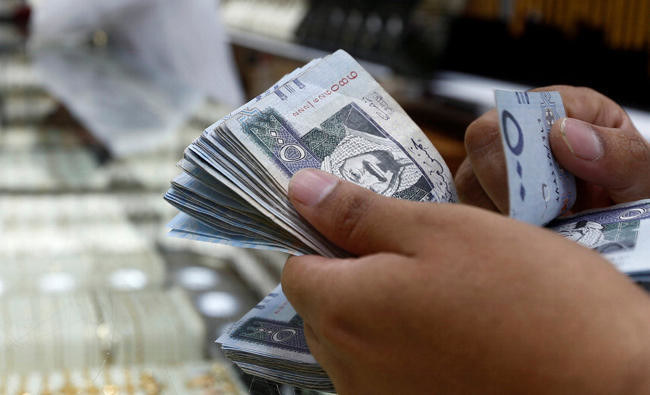
Saudi Arabia continued to be the largest source of foreign remittances, with Pakistan receiving $493.73 million in May 2019, recording a sharp increase of 14.28 percent from the previous year when it received $432.05 million in the same month.
“During May 2019, the inflow of workers’ remittances amounted to $2315.74 million, which is 30.17 percent higher than April 2019 and 28.36 percent higher than May 2018,” the state bank said in its statement.
Economists attributed the increase in remittances to certain policy measures introduced by the government which discourages the transfer of money through illegal channels.
“This $2 billion increase in the foreign remittances shows the confidence of overseas Pakistanis in the leadership of Prime Minister Imran Khan and his policies,” Dr. Athar Ahmed, a senior economist told Arab News.
He added that the increase in foreign remittances would also help the country “boost its dwindling foreign exchange reserves and stave off a balance of payments crisis.”
According to official figures, the amount received from other countries, such as the United Arab Emirates, United States, United Kingdom, Gulf Cooperation Council countries (including Bahrain, Kuwait, Qatar and Oman) and European Union states amounted to $476.57 million, $346.81 million, $387.09 million, $237.76 million and $70.61 million, respectively, compared to the inflow of $373.85 million, $290.26 million, $269.11 million, $178.96 million and $60.34 million from the same regions in May 2018.
Remittances received from Malaysia, Norway, Switzerland, Australia, Canada, Japan, in May this year, amounted to $303.17 million as compared $199.51 million in the same period last year.
Pakistan has set a $21.2 billion remittances target for the current fiscal year. However, the central bank’s projections show that the inflow would be between $20.5 billion and $21.5 billion. Pakistan had received $19.62 billion in remittances from overseas Pakistan during the outgoing fiscal year FY18 which is 1.4 percent higher than those recorded in the previous fiscal year but short of the target of $20.7 billion set for the year.


![]()

Pakistan marks International Day of Family Remittances to honor migrant workers
Pakistan marks International Day of Family Remittances to honor migrant workers
- Country received over $493mn in payments from nationals working in Saudi Arabia
- Crackdown on illegal money traders helped boost remittances through official channels, experts say
Latest updates


© 2026 SAUDI RESEARCH & PUBLISHING COMPANY, All Rights Reserved And subject to Terms of Use Agreement.