

Survivors of Houthi missile attack describe moment explosion ripped through Abha airport

1 / 12
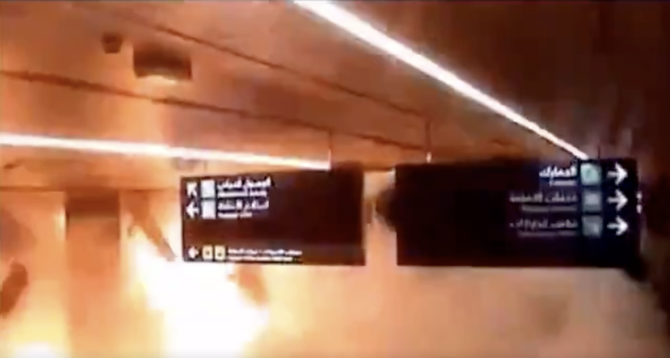
The Iran-aligned Houthi movement, which is locked in a war with the Arab coalition in Yemen, claimed responsibility for the attack on Abha Airport. (Screenshot/Twitter)
2 / 12
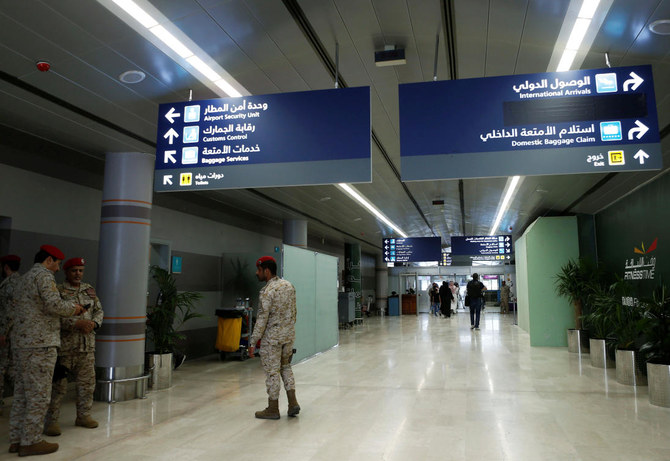
Saudi security officers are seen at Saudi Arabia's Abha airport, after it was attacked by Yemen's Houthi group in Abha, Saudi Arabia June 13, 2019. (Reuters)
3 / 12
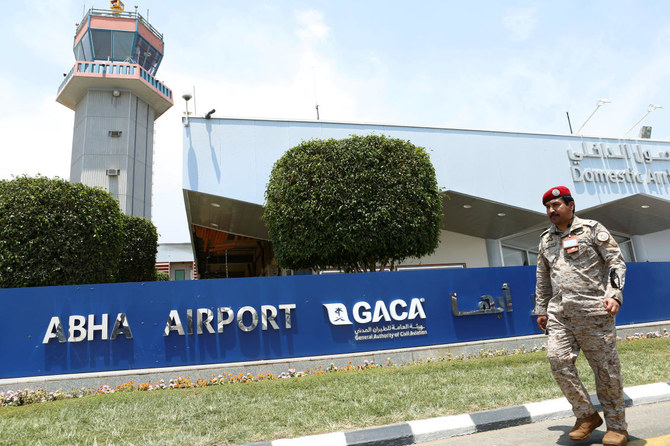
A Saudi security officer walks past the Saudi Arabia's Abha airport, after it was attacked by Yemen's Houthi group in Abha, Saudi Arabia June 13, 2019. (Reuters)
4 / 12
Workers fix the damages of Saudi Arabia's Abha airport, after it was attacked by Yemen's Houthi group in Abha, Saudi Arabia June 13, 2019. (Reuters)
5 / 12
A picture taken during a guided tour with the Saudi military on June 13, 2019 shows a worker fixing inspecting the damage at Abha airport in the popular mountain resort of the same name in the southwest of Saudi Arabia, one day after a Yemeni rebel missile attack on the civil airport, wounding 26 civilians. (AFP)
6 / 12
A picture taken during a guided tour with the Saudi military on June 13, 2019 shows a worker fixing inspecting the damage at Abha airport in the popular mountain resort of the same name in the southwest of Saudi Arabia, one day after a Houthi missile attack on the civil airport, wounding 26 civilians. (AFP)
7 / 12
A picture taken during a guided tour with the Saudi military on June 13, 2019 shows workers fixing the damage at Abha airport in the popular mountain resort of the same name in the southwest of Saudi Arabia, one day after a Yemeni rebel missile attack on the civil airport, wounding 26 civilians. (AFP)
8 / 12
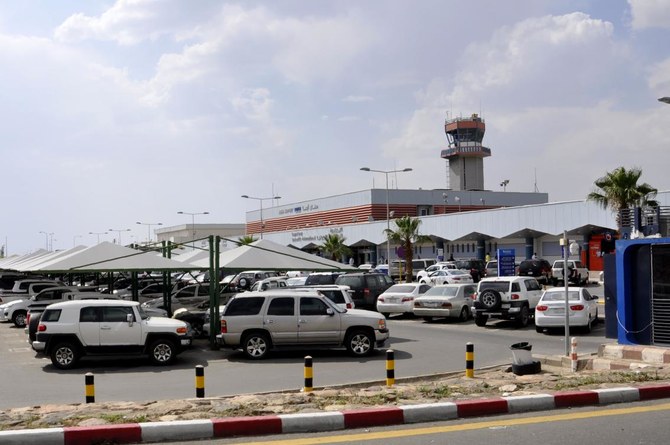
Cars are parked in front of Abha airport in southwestern Saudi Arabia's mountainous resort, on June 12, 2019. (AFP)
9 / 12
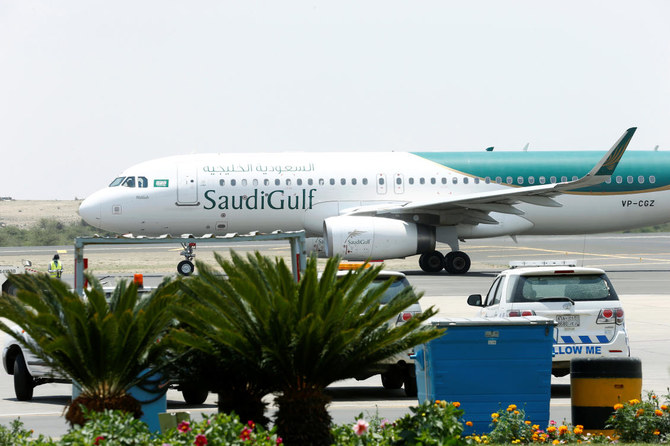
A Saudi Gulf airplane is seen at Saudi Arabia's Abha airport, after it was attacked by Yemen's Houthi group in Abha, Saudi Arabia June 13, 2019. (Reuters)
10 / 12
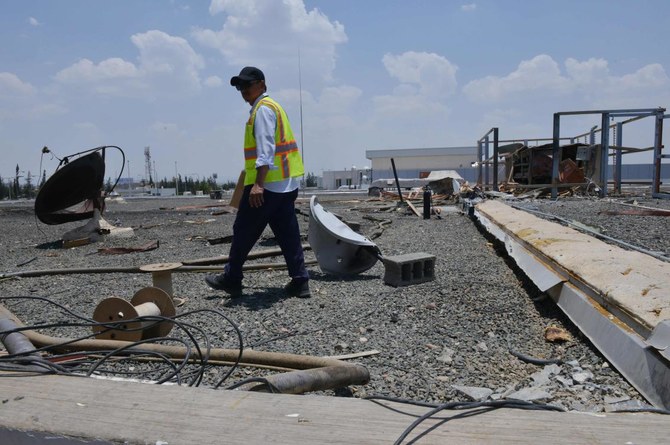
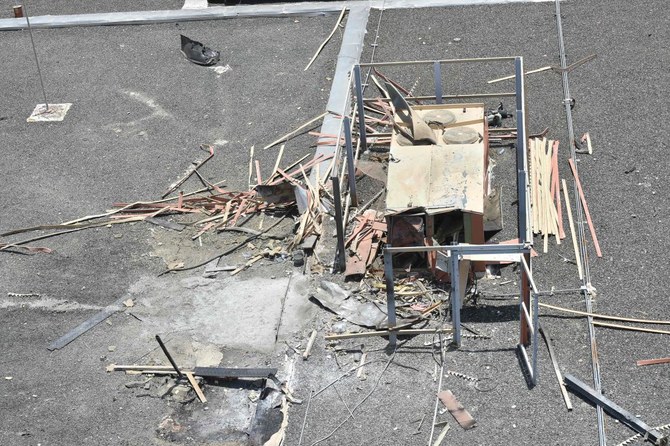
A picture taken during a guided tour with the Saudi military on June 13, 2019 shows damage on the roof of Abha airport in the popular mountain resort of the same name in the southwest of Saudi Arabia, one day after a Houthi missile attack on the civil airport, wounding 26 civilians. (AFP)
11 / 12
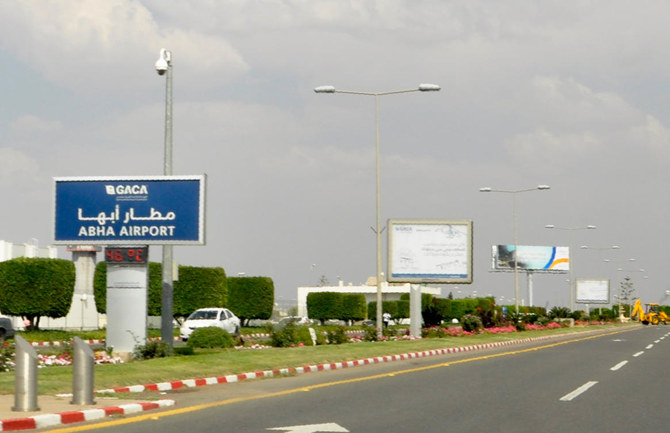
A sign on the side of a road leads the way to Abha airport in southwestern Saudi Arabia's mountainous resort, on June 12, 2019. (AFP)
12 / 12
Workers fix the damages of Saudi Arabia's Abha airport, after it was attacked by Yemen's Houthi group in Abha, Saudi Arabia June 13, 2019. (Reuters)
Updated 15 June 2019
Follow

Survivors of Houthi missile attack describe moment explosion ripped through Abha airport

  • The Houthis have for years targeted Saudi cities and infrastructure with drones and missiles
  • The strike on a civilian target inside Saudi Arabia came at a time of elevated tensions in the region between Iran and Gulf Arab allies of the United States

ABHA: As Nadia Assiri waited inside a regional Saudi Arabian airport for her sister to arrive from the capital Riyadh, an explosion threw her to the floor and ignited a fire.
Nearby, shrapnel tore through the arm and leg of another woman, Indian-national Um Karim, when a missile hit the arrivals hall of Abha airport where she had been sitting in the early hours of Wednesday morning after a night flight.
"While we were sitting we heard a noise and then saw fire and the blast threw me far," said Assiri, a 33-year-old Saudi.
Um Karim's son-in-law said that the explosion shook the car as the family came to pick her up. "I was scared there would be a second blast," he told Reuters.
The Houthis said a cruise missile strike destroyed the control tower.
The Iran-aligned Houthi movement, which is locked in a war with the Arab coalition in Yemen, claimed responsibility for the attack. The coalition said 26 people were hurt, including Saudi, Yemeni and Indian nationals.
The Coalition responded on Thursday with air strikes around the Houthi-held Yemeni capital Sanaa that it said targeted the group's military assets.
The Saudi airport that was struck, Abha, is about 200 km (125 miles) north of the border with Yemen. When media visited the airport on Thursday, it smelled of fresh paint. The flat bitumen roof of the arrivals hall had been patched up, but scorch marks could be seen.


The Houthis, who control Yemen's capital and the territory where most of the population lives, have for years targeted Saudi cities and infrastructure with drones and missiles, most of which have been intercepted by Saudi defence systems.
The strike on a civilian target inside Saudi Arabia came at a time of elevated tensions in the region between Iran and Gulf Arab allies of the United States.
"The fact that civilians have been injured (in Abha) puts additional pressure on the Saudis to respond to this attack. This just adds more fuel to the fire," said Jean-Marc Rickli, a defence expert at the Geneva Centre for Security Policy.
On Wednesday, the coalition said evidence indicated that Iran's Revolutionary Guards had supplied the Houthis with the weapon used in the Abha attack. The spokesman for the Arab coalition said on Thursday the fact the missiles were not intercepted did not mean there was a failure in Saudi defences.
Last month the Houthis claimed responsibility for an armed drone strike on two oil-pumping stations in Saudi Arabia, the first time they had struck the kingdom's oil infrastructure.
The coalition intervened in Yemen in 2015 to try to restore a government ousted from power in Sanaa by the Houthis.


Saudi aid agency launches food distribution projects in Djibouti and Guinea

Updated 12 sec ago
Follow

Saudi aid agency launches food distribution projects in Djibouti and Guinea

  • Projects to benefit 40,000 individuals across Djibouti and 50,000 in Guinea
  • KSrelief's aid programs have reached a total of 113 countries across four continents

RIYADH: The King Salman Humanitarian Aid and Relief Center (KSrelief) has launched its 2026 food distribution projects in the African republics of Djibouti and Guinea.

The initiatives are part of Saudi Arabia’s broader humanitarian relief efforts to enhance global food security for vulnerable populations, according to statements carried by the Saudi Press Agency (SPA).

In Djibouti, Saudi Ambassador Mutrek Al-Ajaleen and other local officials rolled out the fifth phase of the year’s project. It consists of 6,715 baskets of essential food items designed to support 40,000 individuals across multiple regions of the country.

In Guinea, Saudi Ambassador Dr. Fahad Al-Rashidi led the launch ceremony for a similar initiative. Under this project, 8,400 food baskets will be distributed, benefiting 50,000 people nationwide.

Since its establishment in 2015, KSrelief has served as Saudi Arabia's primary humanitarian arm, making food security one of its largest and most critical operational sectors. According to the center's official statistics, KSrelief has implemented over 1,150 dedicated food security projects at a total cost of more than $2.2 billion.

These specific food distribution initiatives have successfully delivered vital sustenance to vulnerable populations in 86 countries worldwide. Broadening the scope beyond just food security, KSrelief's overall humanitarian and development aid programs have reached a total of 113 countries across four continents.