KARACHI: In 2004, acclaimed comedian and actor Tina Fey wrote the film Mean Girls, which not only turned out to be a huge hit but is also considered a particularly insightful look at how social cliques in high schools affect young people. What Tina Fey might not have realized at the time was that her film was also a very useful analogy for understanding the context to Sunday’s World Cup match between India and Australia, which the former won by 36 runs.
Australia, the team that has historically been the most successful in world cricket, is clearly Regina George, the attractive, popular and vicious character from Mean Girls who was the school’s chief bully. She also created something called ‘The Burn Book,’ a collection of salacious rumors and secrets about students at the school which George used to her advantage. Australia, which also always enjoys getting its own way in cricket, has its own version of ‘The Burn Book’: sledging — a form of verbal abuse that preys on salacious rumors and secrets about opposition players, something Australians justify as a tactic for causing ‘mental disintegration.’
In contrast, India is similar to Cady Heron, the likeable and sweet lead character who initially befriends nerds and outcasts but changes as soon as Regina takes an interest in her, ditching her less popular friends and transforming into a spiteful, superficial, spitting image of Regina herself. Indian cricket has seen a similar transformation. It used to be a de facto leader of the resistance from cricket’s poorer, weaker boards against the excesses of sport’s historical powers, England and Australia. Yet over the last fifteen years or so, its swelling riches has seen it transform from an ally of the rest to the Grand Poobah itself. Much like Cady with Regina, India has become very much the sort of bully Australia has always been.
Some people might object to this labeling of both these sides as bullies, but it isn’t exactly unfair.
The English bowler James Anderson once wrote that “a bully waits until they are in the ascendancy to pounce on people. That is what Australian teams do.” Anderson’s depiction wasn’t an isolated one. Even former Australian captain and Aussie-ideologue Mark Taylor admitted that “bullying is not a bad term” for the actions of Australian players. Indeed, an independent inquiry into Australian cricket in 2018 described a “toxic culture of arrogance and bullying” within the male team.
India, like Cady, are newer to bullying but they’ve taken to it with aplomb. Its players have successfully resisted globally accepted changes like the decision review system, and forced broadcasters to drop commentators they felt weren’t praising them enough. Like Cady abandoning the nerds to join Regina’s gang, in 2014 the Indian board forced through a new revenue-sharing model for the ICC, cricket’s governing body. Instead of equal shares between all members like before, the changes meant India, England and Australia would keep most of the ICC’s wealth while leaving peanuts for the rest.
More recently, India had this World Cup’s schedule altered so its players could get more rest. And then it pointedly resisted the ICC after it ruled that a player wearing Indian Army logos on his gloves was a violation of its policy on political statements. As journalist Parth Pandya noted, “this should ideally have been a trivial matter put to rest with a piece of formal communication. However...the BCCI chose to resist the ICC’s orders and make this an issue of national pride.”
Given this context, the question for neutrals on the eve of this match was: who do you root for when two bullies take on one another? Since both teams losing wasn’t an option, many might have preferred to see some good cricket instead. Unfortunately for those neutrals, the match at the Oval was damp squib. India didn’t quite mop the floor with Australia, but they won comfortably nevertheless.
Prior to the toss, the Australian captain Aaron Finch noted that “we saw in the latest series we played against [India] that regardless of what the scoreline might be, whoever turns up and produces their best on the day will win.” His Indian counterpart, Virat Kohli, chose to bat first after winning the toss and noted that “the batsmen will feel scoreboard pressure”, a reference to Australia chasing the target.
It was a bold claim, since the last time Australia had lost a World Cup game while chasing it was still the last millennium. But India’s much hyped batting lived up to its billing, and led by a century from opener Shikhar Dhawan, they piled a mammoth total of 352/5 from 50 overs. The innings showcased the incredible poise of the Indian top order, as the openers started cautiously knowing that they had enough firepower to come strong later in the innings, and the team did just that.
In reply, Australian opener David Warner attempted a similar approach, except he got out before he could launch his attack. Warner’s torturous innings took up almost a third of Australia’s allocated overs, and it meant that the rest of the batting had to compensate heavily for his effort. They failed to do enough, but the fact that they stayed in the hunt for a long period in the match showed the incredible tenacity that defines their team. And while it ended up as a pretty resounding defeat, there was enough here to remind the rest of the tournament that Australia remain a threat.
In Mean Girls, Cady eventually realizes what a bully she has become, and after inflicting serious physical and social damage to Regina, she repents and goes back to being more nerdy and less popular. In cricketing terms, that would mean that India’s win over Australia here would cause the Aussies to lose their confidence and flame out, while India itself would later go on to lose to another side and help break these two sides’s hegemony over the World Cup (no other side has won it since 1996). But unfortunately, this tournament’s script is not being written by Tina Fey or anyone else from Hollywood, and so expect one, if not both of these teams to be vying for the title of Queen Bee when the tournament final rolls around.
As for Pakistan, they now face both of these opponents back to back. They were recently bullied 5-0 in a series by Australia, and India has been tormenting them for over a decade. The only sensible approach is to fight back.


![]()

India defeat Australia in ‘Battle of the Bullies’
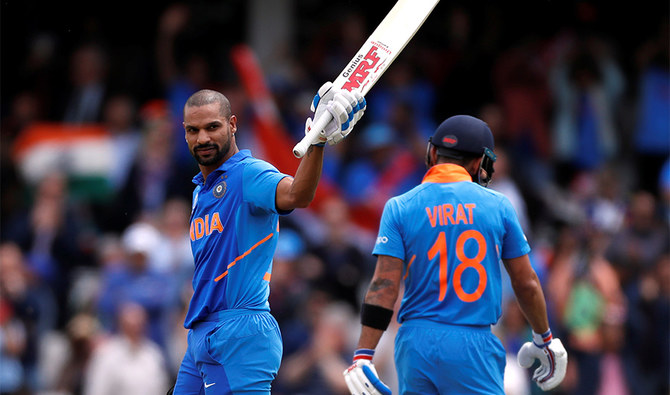
India defeat Australia in ‘Battle of the Bullies’
- India, leader of resistance from cricket’s weaker boards against excesses of powers England and Australia, has become the Grand Poobah itself
- Pakistan now face both of these bullies and longtime tormentors back to back; the only sensible approach would be to fight back
Latest updates


© 2026 SAUDI RESEARCH & PUBLISHING COMPANY, All Rights Reserved And subject to Terms of Use Agreement.