Saudi investment fund PIF ‘has $300bn in assets and counting’

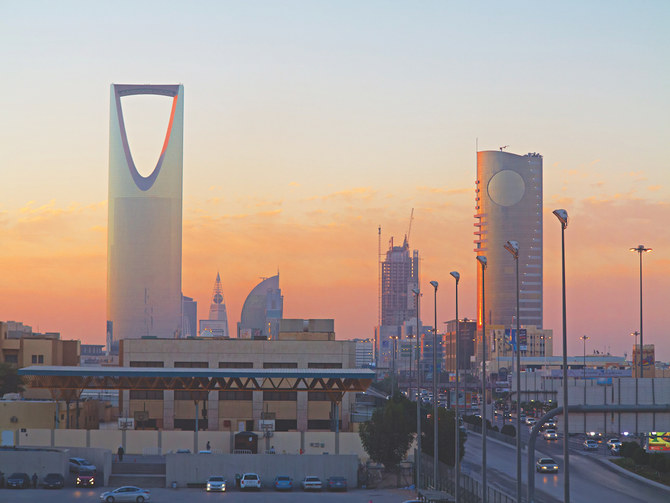
Saudi Arabia’s Vision 2030 reform plan is expected to transform the country’s key wealth fund into one of the world’s largest sovereign investment vehicles. (Shutterstock)
Updated 10 June 2019
Follow

Saudi investment fund PIF ‘has $300bn in assets and counting’

  • Boost in Kingdom’s wealth fund ‘will improve country’s international investment position,’ study shows

LONDON: Saudi Arabia’s key wealth fund has about $300 billion in assets and its growing size is set to “improve the country’s international investment position,” a new report has found.
Roughly a quarter of the Kingdom’s Public Investment Fund (PIF) holdings are overseas, with investments in companies like electric car maker Tesla and SoftBank’s Vision Fund, according to the Institute of International Finance (IIF) analysis. 
A raft of privatization deals and the planned $69 billion sale of a controlling stake in petrochemicals giant Saudi Basic Industries (SABIC) to Saudi Aramco is set to further boost the fund’s coffers, according to the IIF.
That means it is likely PIF will hit a target of $400 billion in assets by 2020, something the fund’s representatives have previously suggested is on track. 
“The expected further increase in the PIF’s assets abroad will improve the country’s international investment position,” the IIF report said.
“We now estimate PIF’s assets at about $300 billion, of which one-fourth are invested abroad, including in … Blackstone’s infrastructure fund, Egypt’s investment fund, Russia’s investment fund, and Uber. Proceeds from privatization (a target of about
$200 billion) and the eventual 5 percent sale of Aramco (a target of $100 billion) will further boost the PIF’s assets.”
However, the IIF noted that the privatization drive has been delayed due to legal impediments, concerns about implications for the labor market, and — in the case of the planned sale of a 5 percent stake in Saudi Aramco — regulatory procedures that need to be addressed.
The Vision 2030 reform plan envisions the transformation of the PIF into one of the world’s largest sovereign investment vehicles, managing $2 trillion by 2030. 
The Sovereign Wealth Fund Institute estimates PIF’s current assets at $320 billion, higher than the IIF’s assessment, making the Saudi entity the 10th largest fund of its type globally. Representatives of PIF did not immediately respond to a request for comment. 
The IIF report also found that Saudi Arabia’s holdings of US government bonds climbed to a peak of $170 billion in March 2019. The Kingdom has also “repositioned” its assets from euro and UK pounds to US dollars, the institute said.
“The increase in the Saudi appetite for US bonds coincided with relatively higher US yields and unfavorable investment sentiment in (emerging markets) and the euro zone,” the report noted.


Free trade negotiations between GCC, India mark new phase of partnership, says sec-gen

Updated 24 February 2026
Follow

Free trade negotiations between GCC, India mark new phase of partnership, says sec-gen

RIYADH: The Gulf Cooperation Council’s secretary-general affirmed that the negotiations for a free trade agreement between the GCC and India, and the signing of the joint statement, represents a new phase of strategic partnership.

Jasem Mohamed Al-Budaiwi said that this contributes to enhancing close cooperation and strengthening economic and trade ties, according to the Saudi Press Agency.

This came during the signing ceremony of the joint statement on launching the free trade agreement negotiations between the Al-Budaiwi and India’s Minister of Commerce and Industry, Piyush Goyal, which took place in New Delhi, on Tuesday.

During the signing ceremony, Al-Budaiwi said that the Terms of Reference, signed on Feb. 5, provide a comprehensive and clear framework for these negotiations. The two nations agreed to discuss enhancing cooperation in vital strategic areas, including trade in goods, customs procedures, and services.

Additionally, the framework covers Sanitary and Phytosanitary measures, intellectual property rights, cooperation on Micro, Small, and Medium Enterprises, along with other topics of mutual interest. This reflects the comprehensive nature of the agreement and its ability to keep pace with the future economy.

Al-Budaiwi expressed hope that these negotiations would lead to a comprehensive and ambitious free trade agreement that works to remove customs and non-customs barriers, enhance the flow of quality investments in both directions, and achieve further liberalization in trade and investment cooperation between the GCC and India for mutual benefit. 

This would provide a stimulating economic environment and an investment climate that opens broad horizons for the business sector, supports supply chains, and accelerates the pace of economic growth in line with the ambitious developmental visions of the GCC states. 

The top official affirmed the full readiness of the General Secretariat to host the first round of negotiations at its headquarters in Riyadh during the second half of this year.

The two sides held a meeting during which they reviewed the existing cooperation relations between the GCC and India and discussed ways to develop and elevate them to broader horizons, serving mutual interests and enhancing opportunities for strategic partnership between the two sides, particularly in the economic, investment, and trade fields.

They praised the role undertaken by the negotiating teams from both sides, appreciating the efforts contributing to reaching a comprehensive agreement that enhances economic integration and supports the smooth flow of trade between the two nations.