

‘Young Ahmed’: Cannes prize winner offers a harsh look at radicalization

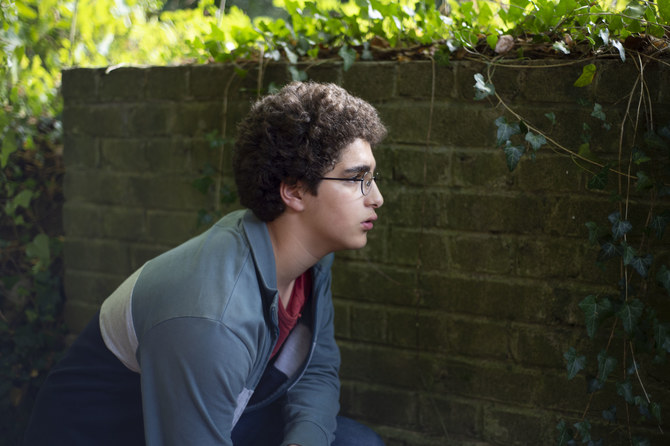
Unlike earlier works of the directors, this movie portrays a dark image of the radicalized boy. (Supplied)
Updated 27 May 2019
Follow

‘Young Ahmed’: Cannes prize winner offers a harsh look at radicalization

  • The boy gets radicalized by a militant Imam who gets close to him
  • Ahmad starts mistreating his mum cause of her alcohol use

DUBAI: Belgian brothers’ Jean-Pierre and Luc Dardenne's “Young Ahmed,” which won the best director trophy at Cannes on Saturday night, is characteristically dark. Winner of two earlier Palm d’Ors for their 1999 “Rosetta” about a 17-year-old girl’s travails dealing with unemployment and an alcoholic mother, as well as for “The Child” in 2005 in which a young husband sells his baby, the directors this time step into religious radicalism. “Young Ahmed” is a painful look at how the young and the vulnerable are brainwashed into a violent ideology. While the Dardenne’s earlier films like “The Son,” “The Kid with a Bike” and even “The Child” have a streak of optimism running through them, “Young Ahmed” has no such comfort.


(Supplied)

Ahmed (played with disarming natural ease by Idir Ben Addi) gets dangerously close to a militant imam (Othmane Moumen), who indoctrinates the boy with his own radicalized ideology — while absolving himself of blame. Ahmed begins to hate behavior he used to find normal. At school, he refuses to shake hands with his teacher, Ines (Myriem Akheddiou), because she is a woman. And at home, he abuses his mother for drinking alcohol. He is so obsessed with his own religious purity that when a girl wants to be friends with him, he asks her to convert.



(Supplied)

Some may see the movie as harsh, even far-fetched. Certainly, it is very different from the brothers’ earlier works, which shed some light at the end of a dark tunnel. But “Young Ahmed” confronts us with dangerous dilemmas — the boy is already in the deathly grip of the imam, despite his teacher’s desperate efforts, and ends up being caught in a painful tug-of-war.


Review: ‘A Knight of the Seven Kingdoms’ is an oddball comedy worthy of Westeros

Updated 19 January 2026
Follow

Review: ‘A Knight of the Seven Kingdoms’ is an oddball comedy worthy of Westeros

DUBAI: At a time when the sprawling saga of “Game of Thrones” and its prequel “House of the Dragon” have come to define modern fantasy television, “A Knight of the Seven Kingdoms” emerges as an unexpected offering.

Based on George R.R. Martin’s “Tales of Dunk and Egg” novellas, the six-episode HBO series — created and spearheaded by showrunner Ira Parker alongside Martin — gives viewers a story that is not about dragons or imperial politics, but about two unlikely companions navigating a treacherous and unforgiving world from its humbler margins.

From the opening moments of the premiere, where the familiar “Game of Thrones” theme music is undercut in a moment of shocking levity, the show makes clear that we are far away from the grand halls of Casterly Rock, the Red Keep or even Winterfell. Grounded and whimsical, this is Westeros viewed from muddy inns, dusty roads and makeshift jousting camps.

Peter Claffey as Ser Duncan “Dunk” the Tall is the beating heart of the series. Claffey imbues Dunk with an endearing earnestness — a towering, awkward figure, constantly walking into doors, whose moral compass is as unwavering as his endless appetite.

His chemistry with Dexter Sol Ansell’s young squire, Egg, who has deep secrets of his own, is warm and organic, creating a duo that is as compelling as any knight and squire of fantasy lore. Their dynamic gives the story a cozy, almost heartfelt buddy-adventure quality.

What makes “A Knight of the Seven Kingdoms” so captivating isn’t its lack of spectacle. It has plenty of Westerosi trappings and there’s a sizeable helping of Targaryens and Baratheons and who have you. But its choice to focus on everyday courage, loyalty and the messy, funny, sometimes mundane reality of being a hedge knight truly makes this a worthy addition to the “Game of Thrones” screen universe. We hope there’s more where that came from.