DUBAI: “The horse whisperer” is what Dana Algosaibi aspires to be. As one of Saudi Arabia’s first female horse trainers, the 39-year-old is breaking taboos by taming and training animals as part of a trailblazing career in the Kingdom.
Originally from Alkhobar, she has made it her life’s mission to care for animals in Jeddah. Along the way, Algosaibi hopes to change attitudes toward animals in Saudi Arabia and the region as whole.
“I’m not expecting or trying to get all people to love animals, or have animals, or take care of them,” she said.
“I am just trying to raise awareness so that people become at least kind toward animals and do not try to hurt them. We have so many stray cats and dogs, and in our religion, this is something very important. I don’t know why some people don’t see this aspect at all. It’s very strange.”
Algosabi has no doubt who she inherited this quality from — her father, whom she describes as an animal lover.
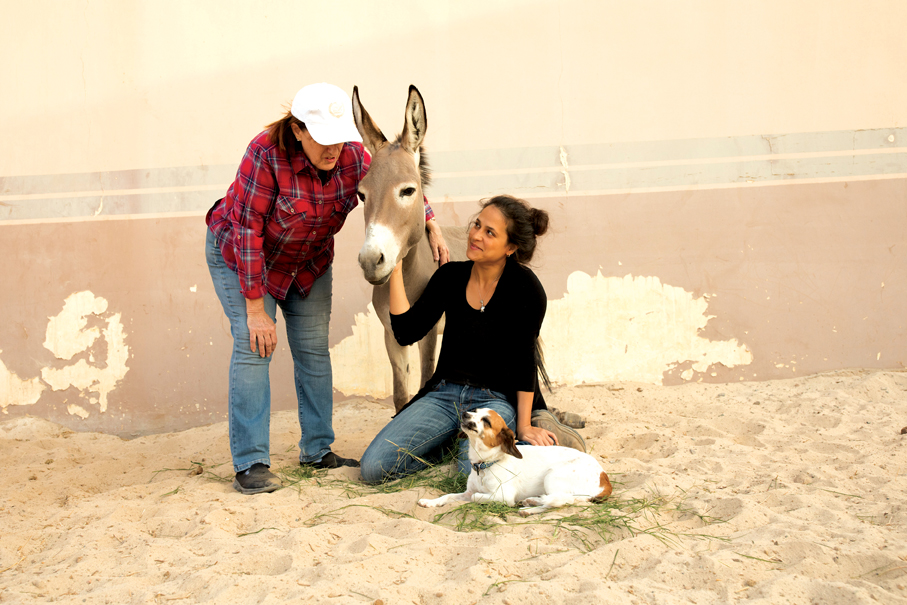
Dana Algosaibi tends to some of the animals she has rescued. (Photo supplied)
“We had a lot of animals in the house and the garden, from dogs, cats and monkeys to parrots, sheep, falcons, deer and horses,” she recalled. “We had exotic animals. I remember when I was a child, people thought our house was a zoo. They would come to look at the animals.
“It was a pretty interesting childhood, I loved growing up with animals and it was one of the best things I had as a child because I was around them all the time.”
As she got older, it took Algosaibi years to find her true calling. Discovering the purpose of education took some time.
“For me, school was not a happy moment,” Algosaibi said. “I went to seven different schools, and changed majors many times in many countries. It was always a roller coaster.”
SUCCESS STORY
Animal mistreatment has long been an issue in the Middle East. To help counter it, Prince Khaled bin Alwaleed, a Saudi entrepreneur and investor, recently took a stand by rescuing more than 1,300 horses, donkeys, mules and camels that were made to carry tourists and pull carriages in the Jordanian city of Petra. After witnessing an expose by PETA, the animal-rights group, of the conditions under which the animals worked at the UNESCO World Heritage Site, Prince Alwaleed devised a plan to tackle the problem. It includes a sanctuary for the city’s animals, restoration of steps leading to the site, and electric vehicles (and charging stations) in which tourists can be ferried around. His venture capital firm, KBW Ventures, plans to build a fishless aquarium in Riyadh and supports efforts to provide the Middle East with more vegan food.
A four-year degree in education in the UK allowed her to explore the subject in depth and find out whether she was cut out for a career in the arts. That was quickly followed by 13 years of traveling between Europe and North America, where she started working with horses and dabbling in the performing arts.
After moving back to the Kingdom in 2013, Algosaibi started teaching people what she calls “horse therapy” — communicating with the animals — and riding them at the Ancient Arabians stable in Jeddah.
“I am not a therapist but the work I do, which is natural horsemanship, is almost like meditation,” she said. “I do yoga around the horses as I’m also a yoga instructor. I have created my own cocoon.”
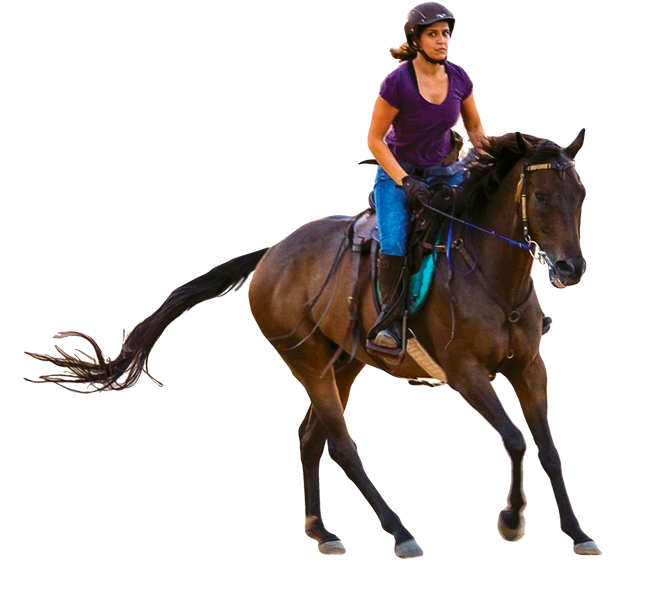
Dana Algosaibi riding one of her horses. (Photo supplied)
Ancient Arabians had contacted her in its quest for Saudi horse trainers. Algosaibi was delighted with the stable’s work ethic and approach to horses. “They gave me the green light to do anything I wanted to do,” she said. “It’s my own place.”
She describes her work with horses as unconventional, hoping more people will learn how to treat the animals better. “I don’t know anyone in Saudi Arabia who understands the work I do with horses,” she said.
“The horses trust me, and I enjoy this fact. I don’t feel restricted like I do in other places. (People) look at me as if I am crazy but what I do is very simple. We have not been educated to actually listen and understand the language of horses.”
According to Algosaibi, one has to be in tune with a horse to understand its language. “It’s not rocket science,” she said. “Once you have mastered this skill, the horse will trust you, you will deliver your message easily to the horse and it will be easier to train the horse. I’d love to be like the horse whisperer.”
Algosaibi is a strong believer in the theory that animals, horses and dolphins in particular, have a natural healing power. According to her, horses played a crucial role in her own recovery from severe depression. “I used to take a lot of medication, which had made my situation worse,” she said.
“I had to find my way through food, through animals and nature, to heal myself. This is one of those things that (taught me) how to accept (the circumstances of life) and live with (the circumstances).”
If you’re already an animal lover, then you’re lucky and you’re blessed.
Dana Algosaibi
As her life shifted toward finding happiness in helping others, Algosaibi began volunteering for cat and dog shelters in Jeddah. But it was the plight of a donkey that was to prove an eye-opener.
Murphy had been beaten and tortured and left with a broken leg in the desert. “The place was very far away in the desert and, when I first reached the location, I couldn’t believe there would be a donkey there,” she said. “I went down a hill and found a tunnel where I found Murphy, with a broken leg, all alone.”
Finding Murphy was not the end but the beginning of a long process. “No one wanted to take him in and everyone said ‘just put him down’,” Algosaibi recalled. “People said ‘throw him to the lions in the zoo.’ I couldn’t believe the level of reluctance to help just because of Murphy’s condition and the fact that he was a donkey.”
A few months later, with the help of a friend, Algosaibi found a place for Murphy, before she decided to move him to Ancient Arabians. The need to find Murphy a home, as well as information from Saudis about other injured donkeys, prompted her to think of building a shelter for equines.
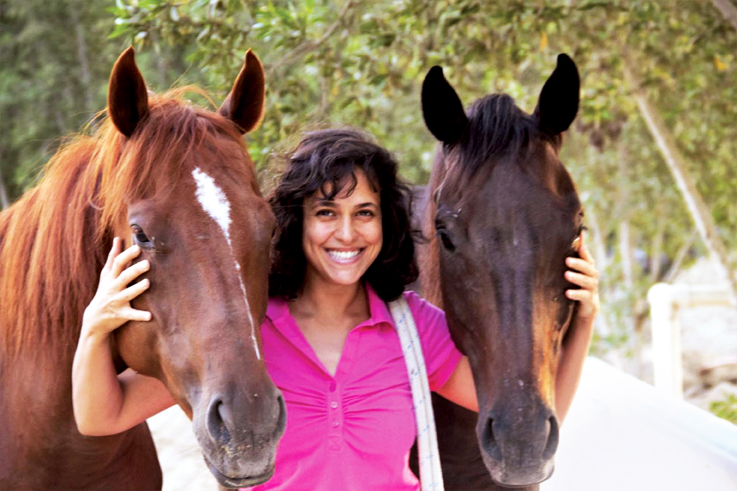
Dana Algosaibi and her horses. (Photo supplied)
“I learnt a lot about donkeys,” Algosaibi said. “They are at once very similar to, and different from, horses. However, I needed help in launching the construction of the shelter, which currently houses a lot of abused horses. It’s like a sanctuary for these equines.” She expects work on the structure to be completed within the coming month.
Looking back on her life so far, Algosaibi is pleased that she has been able to follow her passion. “I remember, while growing up, my family used to tell me, ‘working with horses is great but it’s a hobby. What’s your career?’ But I used to think, it’s both.”
Algosaibi’s hope is that in the future more people in the Middle East will start treating animals with love and respect. “If you’re already an animal lover, then you’re lucky and you’re blessed,” she said.
“If you’re not or if you’re afraid, then you should give yourself a chance. I’m not asking people to be obsessed by animals but to not miss out on a whole different level of love and communication. It’s simply out of this world.”