KARACHI: A bomb at a mosque in the Pakistani city of Quetta on Friday killed at least three people, hospital officials said, in the fifth blast in the southwestern Balochistan province in the last month.
Security forces have been on high alert during the holy month of Ramadan, with extra security set up at major sites around the country following a string of deadly assaults.
Dr. Waseem Baig, a spokesperson at the Quetta Civil Hospital, told Arab News three people had been killed and at least twenty wounded in a blast that took place inside a mosque in the Pashtunabad area of Quetta during Friday congregation prayers.
“Of twenty, the condition of three is critical whereas everyone else is stable,” Baig said, adding that doctors were present at the emergency ward to provide immediate treatment to wounded worshippers.
Balochistan Chief Minister Jam Kamal Khan condemned the blast and called for an investigation.
“The terrorists attacking innocent people on a holy day [Friday] of the holy month [of Ramadan] deserve severe punishment,” he said in a handout issued by his office.
Bomb disposal officials said the blast, which no militant group has as yet claimed, was caused by around two kilograms of explosives placed near the mehrab, the place inside a mosque where the prayer leader stands during congregation.
There have been a string of attacks in the last month in the resource-rich but underdeveloped province of Balochistan whose Gwadar port city is the crown jewel of China’s $62 billion investment in Belt and Road Initiative projects in Pakistan.
On May 9, an improvised bomb rigged to a motorcycle and apparently targeting a police vehicle exploded near a mosque in Quetta, killing at least four policemen and wounding 11.
On the same day, a tribal elder and two others were killed in a blast in the province’s Qilla Abdullah area, and the following day on May 10, two coal miners and three paramilitary soldiers were killed in a blast in Khost.
On May 11, three gunmen dressed as military officers raided the five-star Pearl Continental Hotel in Gwadar, killing three hotel security guards, an employee and a navy soldier in the ensuing gunbattle.
On April 12, a suicide bomb ripped through an outdoor fruit and vegetable market in Quetta, killing at least 18 people, half of them ethnic Hazaras. Six days later, unidentified gunmen killed 14 people, most of them personnel of the Pakistan army, after pulling them from several passenger buses on Balochistan’s southern Makran coast.
Separatist groups have for decades fought a low-level insurgency against the government in the province, complaining that Balochistan’s gas and mineral resources are unfairly exploited by richer provinces, with little reward for the people of Pakistan’s poorest province. The groups also oppose Chinese projects in the area.
“Another nefarious act by evil forces in Quetta,” State Minister for States and Frontier Regions Shehryar Afridi said in a Twitter post after Friday’s attack. “Our resilience will not be shaken by such coward acts ever.”


![]()

Three killed in blast inside mosque in Pakistani city of Quetta
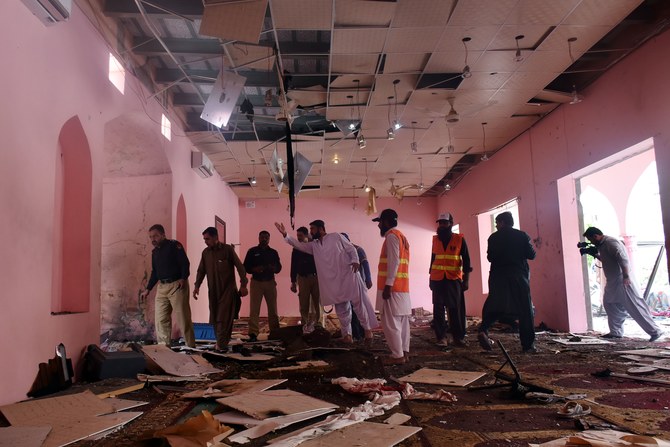
Three killed in blast inside mosque in Pakistani city of Quetta
- Hospital officials say 20 wounded, being treated at Civil Hospital Quetta
- This is the fifth attack in the southwestern Balochistan province in the last month
Latest updates


Recommended


© 2026 SAUDI RESEARCH & PUBLISHING COMPANY, All Rights Reserved And subject to Terms of Use Agreement.