

Researchers blame Iran for global fake news campaign targeting Saudi Arabia

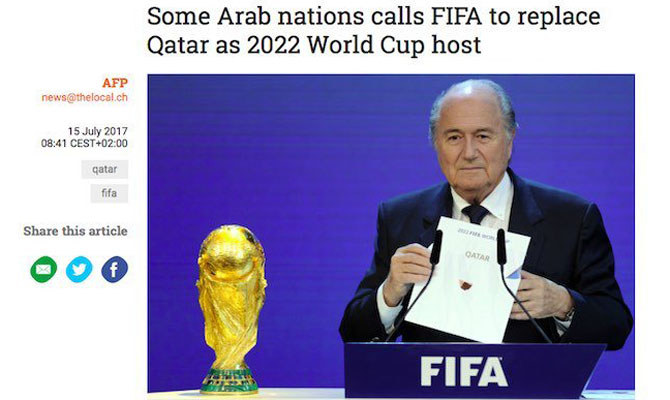
One of the fake stories that the Iranian operation planted on a website designed to mirror a Swiss news organization. (Supplied)
Updated 16 May 2019
Follow

Researchers blame Iran for global fake news campaign targeting Saudi Arabia

  • At least 135 fabricated articles were published since 2016
  • Citizen Lab researchers found many of the articles were directed at Saudi Arabia.

LONDON: Iran has been blamed for spearheading a global disinformation campaign that impersonated major media organizations and used fake Twitter accounts to undermine Saudi Arabia.

At least 135 fabricated articles were published since 2016 on websites that were created to mirror global media outlets such as Bloomberg and The Guardian, according to a new report.

Researchers, who tracked the operation for two years, said many of the articles were directed at Saudi Arabia.

In one example, a website mimicking a Swiss publication tricked the Reuters news agency and other outlets into publishing a false report that Saudi Arabia had written a letter to FIFA, football’s governing body, demanding that Qatar be barred from hosting the 2012 World Cup. The report was later withdrawn.

A few months earlier, a fake Belgian newspaper article claiming that then-French presidential candidate Emmanuel Macron's campaign was being one-third funded by Saudi money was widely shared in French ultra-nationalist circles.

Ron Deibert, director of the Citizen Lab at the University of Toronto’s Munk School, the research group that conducted the analysis, said the researchers had “moderate confidence” the operation was linked to Iran. 

This was based on “the overall framing of the campaign, the narratives used, and indicators from overlapping data in other reports.”

But he said the team have no “smoking gun” that the operation, named Endless Mayfly by the researchers, was run directly by the Iranian state.

The team were given a boost when in August 2018, in coordination with cybersecurity experts FireEye, Facebook, Google, and Twitter announced that they had removed hundreds of accounts for “coordinated manipulation” linked to Iran. 

“Many of these accounts were associated with websites that had been identified as part of Endless Mayfly’s republishing network,” the  Citizen Lab report said.

The report warns that despite reports increasing publicity surrounding the operation, the network is still active.


Paris exhibition marks 200 years of Le Figaro and the enduring power of the press

Updated 17 January 2026
Follow

Paris exhibition marks 200 years of Le Figaro and the enduring power of the press

  • The exhibition celebrated the bicentennial of Le Figaro, offering visitors a rare opportunity to step inside the newspaper’s vast historical archive

PARIS: One of France’s most influential newspapers marked a major milestone this month with a landmark exhibition beneath the soaring glass nave of the Grand Palais, tracing two centuries of journalism, literature and political debate.
Titled 1826–2026: 200 years of freedom, the exhibition celebrated the bicentennial of Le Figaro, offering visitors a rare opportunity to step inside the newspaper’s vast historical archive. Held over three days in mid-January, the free exhibition drew large crowds eager to explore how the title has both chronicled and shaped modern French history.
More than 300 original items were displayed, including historic front pages, photographs, illustrations and handwritten manuscripts. Together, they charted Le Figaro’s evolution from a 19th-century satirical publication into a leading national daily, reflecting eras of revolution, war, cultural change and technological disruption.
The exhibition unfolded across a series of thematic spaces, guiding visitors through defining moments in the paper’s past — from its literary golden age to its role in political debate and its transition into the digital era. Particular attention was paid to the newspaper’s long association with prominent writers and intellectuals, underscoring the close relationship between journalism and cultural life in France.
Beyond the displays, the program extended into live journalism. Public editorial meetings, panel discussions and film screenings invited audiences to engage directly with editors, writers and media figures, turning the exhibition into a forum for debate about the future of the press and freedom of expression.
Hosted at the Grand Palais, the setting itself reinforced the exhibition’s ambition: to place journalism firmly within the country’s cultural heritage. While the exhibition has now concluded, the bicentennial celebrations continue through special publications and broadcasts, reaffirming Le Figaro’s place in France’s public life — and the enduring relevance of a free and questioning press in an age of rapid change.