Nakba: Images of Palestine before and after 1948

Updated 15 May 2019
Follow

Nakba: Images of Palestine before and after 1948

There are many ways in which the Nakba in 1948 transformed Palestine. Neighborhoods that once stood are now gone, new settlements built and the families that occupied the buildings for generations replaced.

The following images capture the dramatic changes that took place before and after that fateful day. 

*********

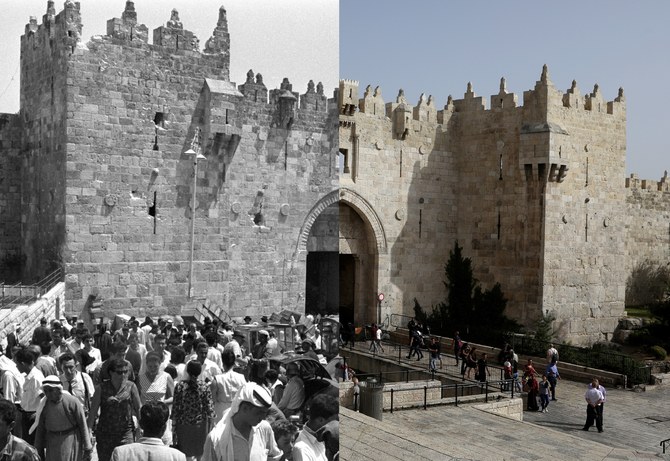
Damascus Gate: The gate is one of the main entrances to the Old City of Jerusalem. It is located in the wall on the city's northwest side and connects to a highway leading out to Nablus and from there to the capital of Syria, Damascus.


Ma'alul: The Catholic Church of Ma'alul - and together with a Greek Orthodox Church and a mosque - is what remains of the ancient Arab village of Ma'alul, just a few kilometers west of Nazareth. It was formed mainly by Christian Palestinians until 1948 when it was destroyed during the 1947–1949 Palestine war.


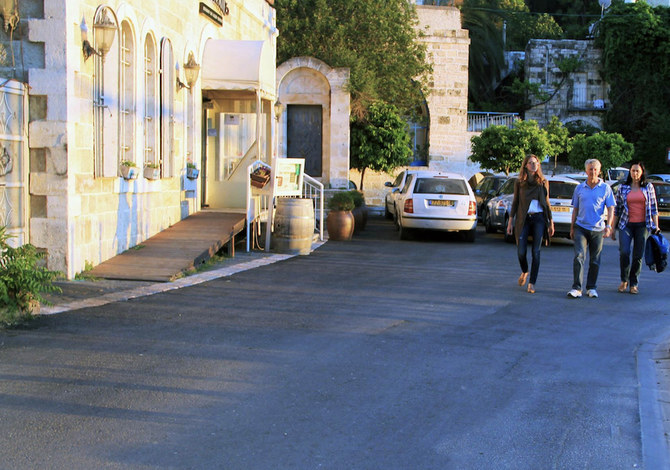
Al-Jamal House: This picture, believed to be taken in the late 1920s, shows Palestinian Shukri Al-Jamal and his wife, sisters and daughters in front of their home in the Talbiya neighborhood of Jerusalem. Today, Israelis live in the same property. Talbiya, officially called Komemiyut under the Israeli government, was built in the 1920s on land purchased from the Greek Orthodox Patriarchate of Jerusalem. Most of the early residents were affluent Middle Eastern Christians who built elegant homes.


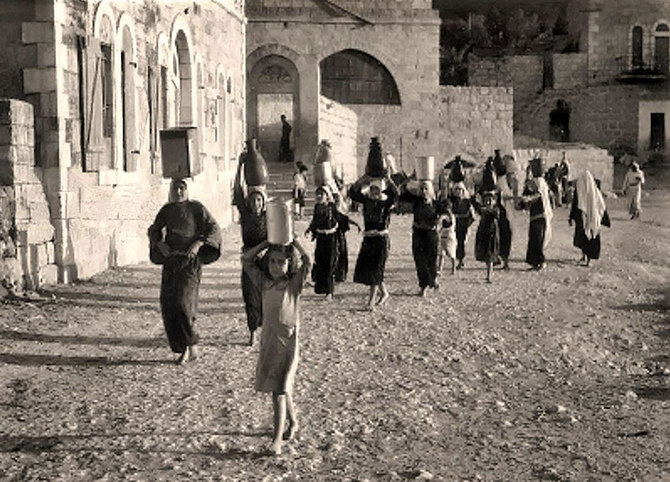
Ain Karem village: The village was an Arab Palestinian town until 1948 when it was attacked during the Nakba, and the population was forced to flee.


UN force says Israeli tank fired near peacekeepers in Lebanon

Updated 5 sec ago
Follow

UN force says Israeli tank fired near peacekeepers in Lebanon

  • Under the November 2024 truce, Israel was to withdraw its forces from southern Lebanon, but it has kept them in five areas it deems strategic and carries out regular strikes on Lebanon, usually saying it is targeting Hezbollah sites and operatives

BEIRUT: The UN Interim Force in Lebanon said an Israeli tank fired near its peacekeepers on Monday, and warned that such attacks were becoming “disturbingly common.”
UNIFIL has repeatedly reported Israeli fire near or toward its personnel in recent months, and less than two weeks ago, said gunfire from an Israeli position hit close to peacekeepers twice.
“UNIFIL peacekeepers observed two Merkava tanks move” from an Israeli army position inside Lebanese territory “further into Lebanon” on Monday, the force said in a statement.
UNIFIL has acted as a buffer between Israel and Lebanon for decades, and recently has been working with Lebanon’s army to support a year-old ceasefire between Israel and Hezbollah.
Under the November 2024 truce, Israel was to withdraw its forces from southern Lebanon, but it has kept them in five areas it deems strategic and carries out regular strikes on Lebanon, usually saying it is targeting Hezbollah sites and operatives.
“The peacekeepers requested through liaison channels that the tanks stop their activity,” the statement said.
Later, “one of the tanks fired three shells from its main gun, with two impacts approximately 150 meters away from the peacekeepers,” UNIFIL said, adding that “as the peacekeepers moved away for safety, they were continuously tracked with a laser from the tanks.”
The statement reported no casualties but noted UNIFIL had informed the Israeli army of its activities in the area in advance.
“Attacks like these on identifiable peacekeepers ... are becoming disturbingly common,” the statement said, urging a stop to such incidents.
It called them “a serious violation” of UN Security Council Resolution 1701, which ended a 2006 war between Israel and Hezbollah and forms the basis of the current truce.
Under heavy US pressure and fears of expanded Israeli strikes, Beirut has committed to disarming Hezbollah, and last week, Lebanon’s army said it had finished doing so in the area near the border.
UNIFIL’s final mandate ends this year, and the force is to leave Lebanon in 2027.