PESHAWAR: Funded by Saudi Fund for Development (SFD) in collaboration with the UK’s Department for International Development (DFID), the Khyber Pakhtunkhwa (KP) government has started installations of first solar Photovoltaic (PV) system at hundreds of schools in the province.
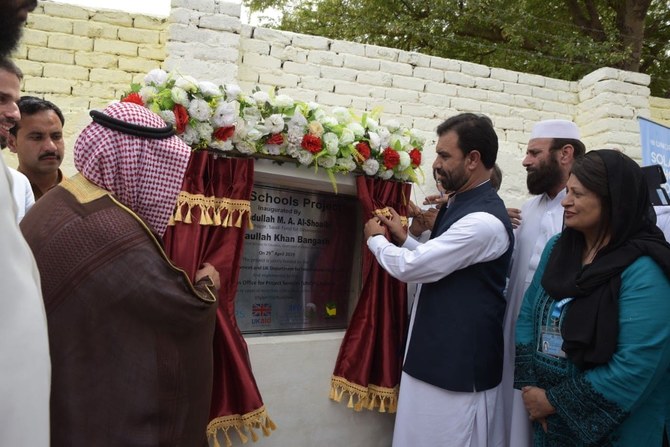
“The first solar PV system has been installed in government primary school Kahi Bazid Khel with the support of the DFID and SFD, benefiting the school with electricity since its construction in 1984,” Adviser to KP Chief Minister on Education Ziaullah Bangash told Arab News.
A number of schools in remote areas were facing power outages, affecting children and education activities but the latest move would help improve the situation, he added.
The project is being implemented by the United Nations Office for Project Services (UNOPS) in partnership with the Elementary and Secondary Education Department of provincial government, he informed.
“The Solar Schools Project will provide free, renewable and uninterrupted power supply to more than 1,250 primary and middle schools across southern districts of the province,” said Bangash.
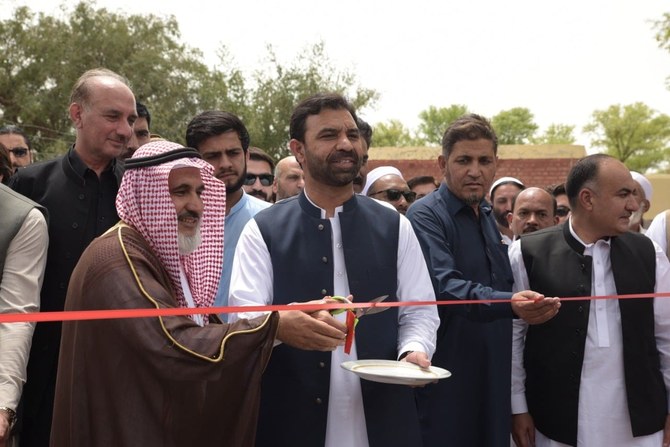
Eng. Abdullah Al Shoaibi, regional manager for SFD was the Chief Guests at the inauguration ceremony of the project held in Peshawar on Tuesday while Arshad Khan, KP Secretary Elementary and Secondary Education department was also among those attended the event.
Emphasizing the importance of education, Al-Shoaibi said that the SFD has financed more than 70 education projects worth more than $2 billion in 15 countries.
“Education comes at the center of SFD’s focus since it is the driver of development,” he said, adding that education reduces poverty, boosts economic growth and increases income.
A statement quoting the deputy head of DFID, Kemi Williams, said that the “UK is committed to providing quality education in Pakistan and the installation of solar systems will provide constant electricity to schools and will improve the learning environment for students.”
He expressed optimism that provision of sustainable energy and conducive environment would motivate parents to enroll their children in these schools for a better future.
Speaking on the event, Charles Callanan, UNOPS Hub Director, highlighted the importance of the project. “This pilot installation is the first step by UNOPS, and our partners, to provide a free and reliable source of electricity to schools in southern KP,” he added.
Benoit Rosenoer, Project Manager for the Solar Schools Project, offered insights into the project and reaffirmed his confidence in its successful implementation.
He said that realizing a qualitative solar PV installation and training the users in a remote rural school, in an environment difficult to access and characterized by a high-level of insecurity, is not an easy task.
Bangash said that installation of solar system in southern districts was ambitious project, which would be completed by December this year and the maintenance and upkeep of the system would be done by a trained local Parents Teachers Council in all the schools to promote community ownership.
“I’m sure providing electricity to schools in remote areas through solar system will encourage parents to send their children to schools. The initiative will help reverse dropout of children from schools and increase literacy rate in the province,” he said.


![]()
![]()

Saudi Fund to help light Pakistani schools with solar power
Saudi Fund to help light Pakistani schools with solar power
Latest updates


© 2026 SAUDI RESEARCH & PUBLISHING COMPANY, All Rights Reserved And subject to Terms of Use Agreement.