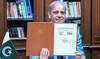
DiplomaticQuarter: Relations between Paris and Riyadh are better than ever, says French envoy

French Ambassador to Saudi Arabia Francois Gouyette meets Tabuk Gov. Prince Fahd bin Sultan bin Abdul Aziz. (SPA)
Updated 25 April 2019
Follow

DiplomaticQuarter: Relations between Paris and Riyadh are better than ever, says French envoy

  • Gouyette expressed his appreciation for the historic status of the Tabuk region

RIYADH: French Ambassador to Saudi Arabia Francois Gouyette has praised the partnership between Paris and Riyadh, saying that the relationship is the best it has ever been.

Speaking after a meeting with Tabuk Gov. Prince Fahd bin Sultan bin Abdul Aziz, the envoy added that France is a strategic partner of the Kingdom and seeks to develop these fraternal ties by promoting scientific, cultural and commercial exchanges.

As part of this mission, he said, there have been discussions about various types of cooperation, and one of the objectives of his Tabuk visit is to identify opportunities for the two nations to work as partners in a variety of fields. These include the mega-development projects that have been launched in the Kingdom, including Qiddiya, Neom, the Red Sea Project, and the Amaala Project.

Gouyette also expressed his appreciation for the historic status of the Tabuk region, and visited Tabuk University where he learned about the campus and its 16 faculties, which host more than 25,000 students who, he said, will play important roles in shaping the country’s future.

He also commended Saudi Arabia for the vital role it plays in achieving stability in the world, politically and economically, with particular reference to the Kingdom’s preparations to host the 15th annual G-20 Leaders’ Summit next year.

Underlining the importance of the historic relationship between the countries, the envoy said that as part of efforts to strengthen bilateral ties France recently celebrated the 50th anniversary of late King Faisal’s visit to Paris. Following his meeting with French President Charles de Gaulle in 1967, relations between the countries evolved through a series of high-level visits, including two trips to France by King Khalid, in 1978 and 1981. The first French president to visit the Kingdom was Valery Giscard d’Estaing, in 1977. He returned twice, in 1980 and 1981. King Fahd embarked on two official trips to France, in 1984 and 1987, and King Abdullah also visited twice, in 1985 and 1999. French President Jacques Chirac came to the Kingdom in 1997, and again in 2001 and 2006.

The increasingly close relationship between the two nations was also evident in the fact that former French President Francois Hollande paid four visits to the Kingdom following his election in 2012. His final official visit, in May 2015, was particularly historic; in addition to meeting King Salman and other senior officials, he was invited to attend the 15th meeting of the Gulf Cooperation Council, a rare honor for a foreign leader. This month, France also marked the first anniversary of the visit by Crown Prince Mohammed bin Salman in April 2018.


Makkah’s urban shift enhances the city’s quality of life

Updated 08 February 2026
Follow

Makkah’s urban shift enhances the city’s quality of life

  • By harmonizing its religious heritage with modern urban development, Makkah is proving that a city can honor its past while vigorously embracing the future

MAKKAH: Islam’s holiest city is currently witnessing a qualitative urban shift, one that seamlessly blends its profound spiritual sanctity with a modern, vibrant lifestyle. By integrating cultural, educational, and entertainment initiatives, Makkah is redefining the visitor experience and significantly enhancing the quality of life for its residents, directly supporting the goals of Saudi Vision 2030.

The city’s transformation was recently highlighted by the success of the Makkah winter season. The event attracted approximately 400,000 visitors — over 60% of whom were locals — demonstrating a strong domestic demand for high-quality public spaces.

The season revitalized community interaction, driving a 35% increase in visits to recreational sites and creating more than 1,200 temporary jobs for the local workforce.

Central to this urban renaissance is the Hira Cultural District. Since opening its doors in January 2023 near the historic Mount Hira, the district has become a definitive landmark that bridges Islamic history with contemporary identity.

Makkah’s Hira Cultural District has become a definitive landmark that bridges Islamic history with contemporary identity. (SPA photo)

Far from being a static monument, the district has cultivated a thriving creative economy. Its craftsmanship program, which features over 100 artisans, has generated up to SAR 3 million in sales and attracted 130,000 visitors to live workshops. These interactive spaces allow visitors to engage directly with the region’s heritage, moving beyond passive observation to active participation.

A living legacy 

The shift extends to Makkah’s broader ecosystem of museums and cultural sites, which are now positioned as key pillars of cultural tourism. Facilities like the Revelation Exhibition use cutting-edge technology and multilingual content to narrate the story of the Holy Quran’s revelation, offering an immersive experience that complements the spiritual journey of pilgrims.

These efforts align with the “Makkah: A Living Legacy” campaign, which seeks to document the city’s historical narrative and preserve its collective memory. Recent months have seen a surge in educational workshops for university students and tour guides, ensuring that the human element of Makkah’s history is conveyed with accuracy and depth.

City’s transformation recently highlighted by the success of the Makkah winter season. (SPA photo)
 

Economic and social impact 

The results of this integrated approach are tangible. Specialized museums and restored historic sites now attract up to 1.6 million annual visitors. Crucially, this cultural enrichment is encouraging pilgrims to linger longer, increasing the average duration of stay by 18%.

By harmonizing its religious heritage with modern urban development, Makkah is proving that a city can honor its past while vigorously embracing the future, offering a holistic experience that nourishes both the soul and the community.