LAHORE: The head of a team of Pakistani forensics experts at a government institute has said he was in talks with Sri Lankan authorities to send scientists to assist the South Asian nation identify victims of a slate of Easter Day bombings and investigate crime scenes.
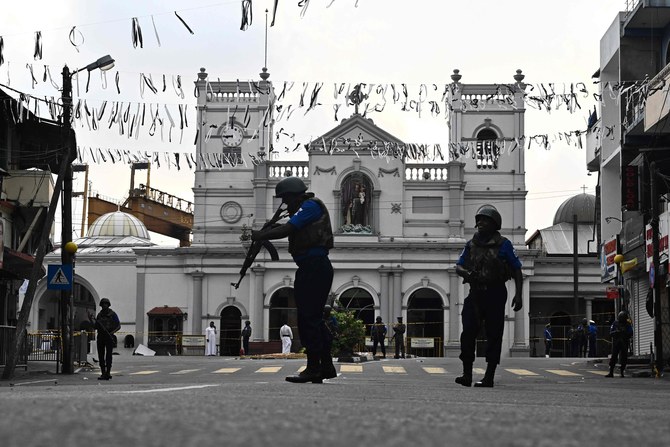
Coordinated Easter Sunday attacks on churches and hotels in Sri Lanka, claimed by the Daesh militant group, left 359 dead and at least 500 wounded following a lull in major attacks in the South Asian nation since the end of the civil war 10 years ago.
Dr. Hamayun Taimoor, head of a three-member forensics team at the public University of Health Sciences in the eastern city of Lahore, told Arab News he had initiated contact with Sri Lankan authorities, including the director general of the country’s health department, who had accepted the offer for help.
“He said that they were facing trouble in identifying bodies,” Taimoor said in an interview on Tuesday, referring to the Sri Lankan health official. “We can help them identify unknown dead persons and suicide bombers.”
Taimoor, who is Interpol’s lead forensics contact for Pakistan, headed the team of experts that helped identify victims of a December 2016 plane crash in Pakistan that killed 47 people, including rock star-turned-Muslim evangelist Junaid Jamshed. Taimoor recently joined the UHS to help set up its Department of Forensic Entomology and Dental Identification.
Taimoor said when he informed UHS vice chancellor Dr. Javed Akram about his correspondence with Sri Lankan authorities and their acceptance of the Pakistani offer for help, Akram immediately constituted a team and informed the Punjab Health Department about the initiative.
Punjab Health Minister Dr. Yasmeen Rashid said after receiving word from UHS, she had directed the health department to write a letter to the Sri Lankan government through the Ministry of Foreign Affairs informing them that a Pakistani forensics team was ready to travel to Sri Lanka. Once the foreign ministry receives a go-ahead from Sri Lankan authorities, the Punjab government would dispatch its team, Rashid said.
When asked if the government’s team would include experts from Pakistan’s premier Punjab Forensic Science Agency (PFSA), Rashid said: “Let the two states decide first; then we will review the constitution of the team.”
PFSA is the first of its kind body in Pakistan with hundreds of forensics and crime scene experts skilled in conducting DNA tests and handling DNA samples. The Agency is headed by world-renowned scientist Dr. Ashraf Tahir who spent 36 years working with US police and helped write the FBI handbook on forensics.
Tahir has assisted US police in uncovering evidence that helped imprison boxer Mike Tyson for rape, convict serial killer John Wayne Gacy and clear doctor Sam Sheppard of murdering his wife. In 2008, with militant attacks rising in Pakistan, Punjab’s chief minister Shehbaz Sharif called Tahir and asked for help to design a $31 million forensics lab in Lahore and enforce new standards of crime solving.
Tahir told Arab News he had not yet received word from the Punjab government to be a part of the team of experts traveling to Sri Lanka.
“PFSA has over 300 forensic and crime scene experts, who have been dispensing their duties successfully,” Tahir said. “Our experts can do anything which can be done in the forensic world. We can assist Sri Lanka in identification of the unknown persons through DNA tests, collection of crime scene evidence and other types of investigations,” Tahir added.
In 2009, Sri Lanka helped the Punjab government combat a deadly outbreak of the dengue virus that claimed dozens of lives in the province.
Pakistan’s intelligence agencies and military have also aided Sri Lanka in crushing an insurgency by ethnic Tamil separatists. The civil war ended in 2009.
On Wednesday, Pakistani Prime Minister Imran Khan also spoke to his Sri Lankan counterpart Ranil Wickremesinghe over the phone and offered counterterrorism assistance.


![]()

Top Pakistani forensic scientist in talks with Sri Lanka to send experts’ team
Top Pakistani forensic scientist in talks with Sri Lanka to send experts’ team
- Punjab health minister directs ministry to contact Sri Lankan authorities, offer forensic assistance in Easter Day bombing probe
- Sri Lankan officials say they require help in identifying bodies, head of forensics at government-run University of Health Sciences says
Latest updates


Recommended


© 2026 SAUDI RESEARCH & PUBLISHING COMPANY, All Rights Reserved And subject to Terms of Use Agreement.