

Five Algerian billionaires arrested as part of antigraft investigation

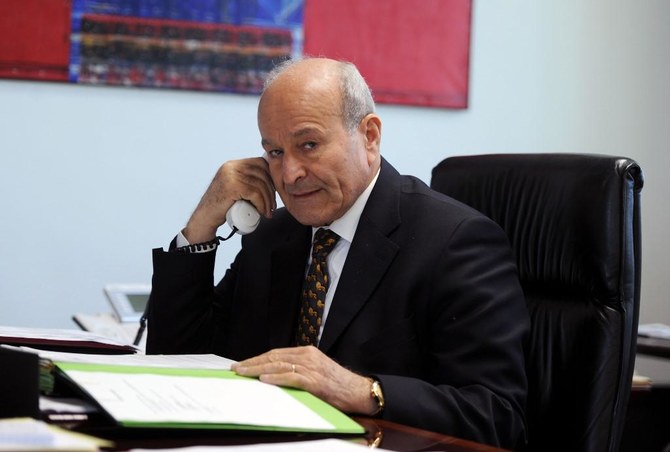
Algerian authorities arrested Issad Rebrab, above, who is considered to be the richest businessman in the country. (AFP/File)
Updated 23 April 2019
Follow

Five Algerian billionaires arrested as part of antigraft investigation

  • One of the arrested is considered to be the richest businessman in Algeria
  • A local court also summoned the previous PM for investigations

ALGIERS: Five Algerian billionaires, some of them close to former president Abdelaziz Bouteflika who quit over mass protests, have been arrested as part of an anti-graft investigation, state TV said on Monday.

The five are Issad Rebrab, considered the richest businessman in the energy-rich north African nation who is especially active in the food and sugar refining business, and four brothers from the Kouninef family, it said.

Rebrab is chairman of the family-owned Cevital company, which imports raw sugar from Brazil and exports white sugar to Tunisia, Libya and elsewhere in the Middle East.

The Kouninef family is close to Bouteflika, who ruled Algeria for 20 years. Bouteflika stepped down three weeks ago, bowing to pressure from the army and weeks of demonstrations by mainly younger Algerians seeking change.

There was no immediate statement from those arrested.

The move came after Algeria’s army chief, Lt. Gen. Gaid Salah, said last week he expected members of the ruling elite in the major oil and natural gas-producing country to be prosecuted for corruption.

An Algerian court has already summoned former prime minister Ahmed Ouyahia and current Finance Minister Mohamed Loukal, two close associates of Bouteflika, in an investigation into suspected misuse of public money, state TV said on Saturday.

Mass protests, which began on Feb. 22 and have been largely peaceful, have continued after Bouteflika’s resignation as many want the removal of an entire elite that has governed Algeria since independence from France in 1962. They also want the prosecution of people they see as corrupt.

Bouteflika has been replaced by Abdelkader Bensalah, head of the upper house of parliament, as interim president for 90 days until a presidential election is held on July 4.

Hundreds of thousands protested on Friday to demand the resignation of Bensalah and other top officials.

Bensalah has invited civil society and political parties on Monday to discuss the transition to elections but several parties and activists said they would not participate.

The army has so far patiently monitored the mostly peaceful protests that at times have swelled to hundreds of thousands of people. It remains the most powerful institution in Algeria, having swayed politics from the shadows for decades.

Salah said on April 16 that the military was considering all options to resolve the political crisis and warned that “time is running out.”

It was a hint that the military was losing patience with the popular upheaval shaking Algeria, a major oil and natural-gas exporter and an important security partner for the West against Islamist militants in north and west Africa.


Hundreds flee to government-held areas in north Syria ahead of possible offensive

Updated 16 January 2026
Follow

Hundreds flee to government-held areas in north Syria ahead of possible offensive

  • Many of the civilians who fled used side roads to reach government-held areas
  • Men, women and children arrived in cars and pickup trucks that were packed with bags of clothes

DEIR HAFER, Syria: Scores of people carrying their belongings arrived in government-held areas in northern Syria on Friday ahead a possible attack by Syrian troops on territory held by Kurdish-led fighters east of the city of Aleppo.
Many of the civilians who fled used side roads to reach government-held areas because the main highway was blocked with barriers at a checkpoint that previously was controlled by the Kurdish-led and US-backed Syrian Democratic Forces, Associated Press journalists observed.
The Syrian army said late Wednesday that civilians would be able to evacuate through the “humanitarian corridor” from 9 a.m. to 5 p.m. Thursday. The announcement appeared to signal plans for an offensive against the SDF in the area east of Aleppo.
There were limited exchanges of fire between the two sides.
Men, women and children arrived in cars and pickup trucks that were packed with bags of clothes, mattresses and other belongings. They were met by local officials who directed them to shelters.
In other areas, people crossed canals on small boats and crossed a heavily damaged pedestrian bridge to reach the side held by government forces.
The SDF closed the main highway but about 4,000 people were still able to reach government-held areas on other roads, Syrian state TV reported.
A US military convoy arrived in Deir Hafer in the early afternoon but it was not immediately clear whether those personnel will remain. The US has good relations with both sides and has urged calm.
Inside Deir Hafer, many shops were closed and people stayed home.
“When I saw people leaving I came here,” said Umm Talal, who arrived in the government-held area with her husband and children. She added that the road appeared safe and her husband plans to return to their home.
Abu Mohammed said he came from the town of Maskana after hearing the government had opened a safe corridor, “only to be surprised when we arrived at Deir Hafer and found it closed.”
SDF fighters were preventing people from crossing through Syria’s main east-west highway and forcing them to take a side road, he said.
The tensions in the Deir Hafer area come after several days of intense clashes last week in Aleppo, previously Syria’s largest city and commercial center, that ended with the evacuation of Kurdish fighters from three neighborhoods north of the city that were then taken over by government forces.
The fighting broke out as negotiations stalled between Damascus and the SDF over an agreement reached in March to integrate their forces and for the central government to take control of institutions including border crossings and oil fields in the northeast.
The US special envoy to Syria, Tom Barrack, posted on X Friday that Washington remains in close contact with all parties in Syria, “working around the clock to lower the temperature, prevent escalation, and return to integration talks between the Syrian government and the SDF.”
The SDF for years has been the main US partner in Syria in fighting against the Daesh group, but Turkiye considers the SDF a terrorist organization because of its association with Kurdish separatist insurgents in Turkiye.