

Irresistible Istanbul: Turkey’s cultural capital

1 / 2
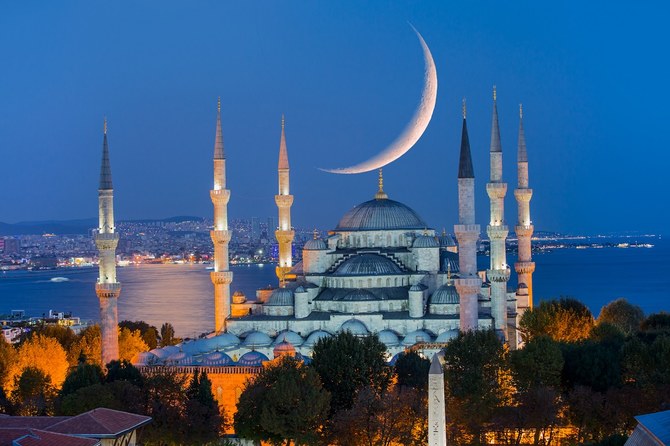
Sultanahmet is a UNESCO world heritage site and home to both the Hagia Sophia and The Blue Mosque, above. (Shutterstock)
2 / 2
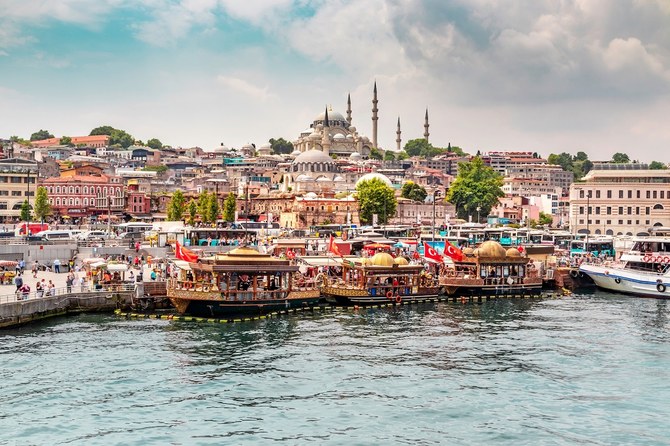
Istanbul. (Shutterstock)
Updated 22 April 2019
Follow

Irresistible Istanbul: Turkey’s cultural capital

  • The historic city — part European, part Asian — still has the power to capture hearts

DUBAI: Although the bulk of Istanbul’s historic sites lie across the Golden Horn in Sultanahmet, there’s something magnetic about Beyoğlu. It personifies Istanbul’s confidence and economic energy, is at the heart of the city’s most exciting nightlife, and has acted as a battleground for Istanbul’s modern cultural identity.

It is also home to the city’s main commercial artery — Istiklal Avenue, a wide pedestrianized thoroughfare that stretches from the steep cobbled gradients of Galata to the vast open space of Taksim Square. For most of the year it is populated by an endless sea of people either wrapped up against the onset of winter or basking in the glory of spring and summer.

Beyoğlu is where you’ll find much that relates to the world of art and culture. Orhan Pamuk, the Turkish Nobel laureate and author of novels including “My Name Is Red” and “Snow,” lives and breathes the district’s neighborhoods. You can follow in his footsteps if you like, tracing your way from Sahaflar Carsisi, the used-book bazaar that he used to frequent as a child, to the The Museum of Innocence and its quirky minutiae of 20th-century Istanbul life. The latter was created by the author as a companion to his novel of the same name and is located in a 19th-century timber house in Cukurcuma.

Then there’s the food. Take Ficcin as an example. Spread across a number of venues on either side of Kallavi Street, this wonderful restaurant serves both classic Turkish cuisine and Circassian specialties. That means kofta, artichokes, grilled chicken and an aubergine salad with yoghurt and garlic, and specials such as manti (Turkish dumplings) and the dish that the restaurant is named after — a meat-filled savory pastry baked like a pizza.

If you’re looking to stay in the Beyoğlu area, not far from Ficcin is the Pera Palace Hotel, a late 19th-century masterpiece designed by the French-Ottoman architect Alexandre Vallaury. Renovated and refurbished just under a decade ago, its grand, high-ceilinged interiors are awash with dark reds, velvet and gold, while the colors of the lobby, tea lounge and library are deeper and richer than when Agatha Christie and a cavalcade of early 20th-century celebrities made it their hotel of choice.

A short stroll from the Pera Palace is the former medieval Genoese citadel of Galata, now known as Karaköy and lying at the southern end of Istiklal. Its central, striking feature is the Galata Tower, built by the Genoese in 1348 and a reminder of the wonder of Istanbul’s pre-Ottoman past. Karaköy’s steep cobblestone streets are sprinkled generously with cafés and boutiques selling everything from Orientalist soap tins to Turkish towels and there’s a relaxed, laid-back kind of vibe.

From Galata you can walk down to the shores of the Golden Horn, crossing the Galata Bridge towards Sultanahmet and the district of Fatih (once the Byzantine city of Constantinople). It is here that you’ll realize the full impact of Istanbul’s allure. In peak holiday seasons it will be almost impossible to move within the maze of alleys that make up the Grand Bazaar, a colossal covered market that covers 64 streets and has 22 separate entrances. It’s easy to get lost, which is part of the appeal, but with up to half a million people visiting every day it can get extremely claustrophobic.

For a more sedate experience (although expect queues), Sultanahmet is a UNESCO world heritage site and home to both the Hagia Sophia and The Blue Mosque. At the latter you can sit beneath the continuous vaulted arcade that surrounds the mosque’s great courtyard, or marvel at the grandeur of its interiors, while the former’s magnificent giant dome and stunning mosaics remind you of Istanbul’s Byzantine past.

All of Sultanahmet’s main historic attractions are within easy walking distance of each other, including the Topkapi Palace, with its lavish courts and holy relics, and the underground delights of the Basilica Cistern. The sites are also within 10 minutes’ walk or so of the Ajwa Hotel Sultanahmet, a fully halal luxury boutique hotel that first opened just under two years ago.

If you find the time, head to Pandeli. First opened in 1901, the restaurant is reached via a steep set of stairs near the entrance to the Spice Bazaar and is defined as much by its shimmering blue iznik tiles as it is by its traditional Turkish food. Expect views of Eminonu Square and delights such as lamb stew served on a bed of mashed roasted aubergine.

One thing’s for sure, visitors to Istanbul will not be bored. The many delights of this city straddling two continents could keep anyone busy for months. As the French poet and politician Alphonse de Lamartine wrote in the 19th Century, “If one had but a single glance to give the world, one should gaze on Istanbul.”

Adrien Brody reflects on craft, collaboration and creative resolve at RSIFF 2025

Updated 20 sec ago
Follow

Adrien Brody reflects on craft, collaboration and creative resolve at RSIFF 2025

JEDDAH: Two-time Academy Award winner Adrien Brody captivated audiences at the Red Sea International Film Festival in Jeddah, where he spoke candidly about craft, collaboration, and the evolving landscape of global cinema.

Brody, who first made history in 2003 as the youngest-ever Best Actor Oscar winner for “The Pianist,” arrived at the festival following a triumphant year with Brady Corbet’s “The Brutalist,” a film that has earned him the Academy Award, BAFTA, Golden Globe, and Critics’ Choice Award for Best Actor.

The film, which premiered to acclaim at Venice and has since become an international success, features Brody as architect Laszlo Toth in one of his most demanding roles to date. His career, spanning decades and genres, includes standout performances in “Asteroid City,” “Blonde,” “Succession,” “The Grand Budapest Hotel,” “Peaky Blinders,” and “Winning Time.” He has collaborated with some of cinema’s most distinct voices, from Wes Anderson and Peter Jackson to Spike Lee and Roman Polanski.

Beyond acting, Brody leads Fable House Films and maintains a parallel career as a visual artist, exhibiting works in New York, Art Basel and international galleries. Raised in New York City, he trained at LaGuardia High School and the American Academy of Dramatic Arts, roots he often credits for shaping his artistic appetite.

Brody began his “In Conversation” session by expressing admiration for Saudi Arabia’s rapid creative growth: “It’s been pretty packed. Lots of activities but just wonderful to be here and witness the evolution of the festival and what Saudi’s doing in film and creative empowerment for so many people.”

He went on to praise the new generation of storytellers emerging from the region:

“New directors, women whose voices are underserved, and I find that really wonderful and admirable … It’s been very special.”

Before taking the stage, the packed audience was shown a clip from “The Brutalist,” a fitting prelude for a conversation that dove deeply into the complexity of portraying driven, conflicted characters.

Saudi director Hakeem Jomah, who moderated the session, asked Brody about the pressure of embodying characters shaped by real history.

Brody began by clarifying the creative space within “The Brutalist,” saying: “As real and true to life that ‘Brutalist’ is, it’s a fictional story … My journey primarily is about the struggle for driven artistic people to persevere and have their vision endure in spite of the wants and needs of the benefactor.”

He explained how the film reflects universal challenges faced by artists and creators, adding: “Sometimes you are blessed with the support of your financiers … and sometimes you’re not. This film really delves very deeply into the oppressiveness of that.”

Brody emphasized the personal and emotional toll these narratives carry.

“Every film, every role that an actor agrees to undertake is its own journey,” he said, describing acting as an intensely internal and empathetic process.

Brody described his method as one rooted in emotional truth and responsiveness:

“If you can find ways to connect at least to the emotionality and the circumstances that feel relatable … it is expressed somehow through the responsibility of carrying out the dialogue.”

He acknowledged the difficulties of portraying experiences far removed from his own, especially in films set in other eras or involving trauma. Actors, he said, must “find ways to understand those better, internalize them” and convey them responsibly.

When asked whether he prefers working collaboratively or in isolation during preparation, Brody emphasized balance: “I have to show up knowing who I am, what I’m here to do … There has to be a degree of malleability because making a movie is a collaboration … yet an actor has a very distinct responsibility.”

He added that defending a character’s authenticity is sometimes necessary, noting how fortunate he has been to work with directors who are “greatly respectful and inspiring.”

He explained that cinematography and performance must function as a unified language, saying the camera’s distance or intimacy can radically shape the emotional connection with the audience. This, he stressed, requires alignment among actor, director, and cinematographer to ensure that the visual storytelling truly serves the narrative.

Brody reflected briefly on his long experience in the industry, “I’ve been working professionally on camera since I was 12.”

He expressed gratitude for a lifetime in film, noting that his experience helps him support the process while also recognizing that the director ultimately shapes the final work. He spoke about the unpredictable nature of filmmaking, technical issues, lost footage, and the surprises of the editing room, reminding the audience that even the best work can be undone by a corrupted file or a physical flaw on celluloid.

Shifting to the physical and emotional demands of filmmaking, Brody explained that there is no such thing as holding back on set.

He noted that time feels distorted during a production, especially one as intense as “The Brutalist,” which, despite being a three-and-a-half-hour epic shot on VistaVision, was completed in just 23 days. The process left the entire team depleted but also bonded them through shared stamina and commitment.

Brody described his own methods of preserving emotional depth: “I don’t hang out with my fellow actors and crew when I have any heavy lifting … I’m often alone. I sometimes won’t eat lunch to not be tired.”

These disciplined rituals allow him to show up fully for demanding scenes, though he reminds younger actors that “it’s not a science, and you’re not a machine.”

When Jomah asked how Brody decides which scripts to accept, the actor joked warmly about the host’s career change: “These are wonderful questions and thank you … This man is a doctor as well … I’m very impressed by him.”

He then explained his criteria for choosing projects, calling each film “a journey” that must offer artistic meaning and the potential for personal discovery. Commercial success, he noted, is a consideration, but never the only one.

Asked whether his accolades make him feel freer or more pressured in his choices, Brody responded, “I assumed that I had less to prove … but you have a responsibility to a career trajectory … I’ve not taken films since ‘The Brutalist’ … They didn’t feel quite right.”

Brody closed with reflections on the transformations reshaping the industry: “We’re living in a time that there’s immense shifts in every field … Technology is a major factor.”

He spoke nostalgically about growing up before digital devices, learning from filmmakers who relied on physical stunts and in-camera effects. While he acknowledged the power of new tools, he stressed that technology must never overshadow human emotion.

“There is nothing to replace emotion … We should always cherish and support the creative process and the beauty of filmmaking.”