


KARACHI: Prime minister Imran khan’s Naya Pakistan Housing Program (NPHP), a massive project which aims to provide five million low-cost homes to the poor over five years, will kick-off in Islamabad on April 17 according to the housing and works ministry, but the project’s chief architect told Arab News that financing the multi-billion dollar project was not an issue for the government.
Earlier this year, Pakistan’s central bank governor estimated that the total cost of the affordable housing project would be between Rs. 15 to 17 trillion (over $100 billion) as the government addressed a critical shortage of homes in Pakistan’s cities where urbanisation has been among the fastest in South Asia and the population of city slums has been rapidly increasing.
The huge sum outlined by the state bank chief has raised questions about the financing and viability of the project, but in an exclusive interview to Arab News on Saturday, the Chairman of the NPHP Task Force, Zaigham Mehmood Rizvi, said money wouldn’t be a problem.
“These estimates are for the whole project. I don’t see any shortage of financing. Financing won’t be an issue because mostly housing projects will be built on government land,” he said.
Rizvi said financial instruments like mortgaged backed sukuk (Islamic bonds), mortgage bonds and housing bonds were being considered. “Besides, if needed, stock market-based instruments like a Real Estate Investment Trust will be considered.”
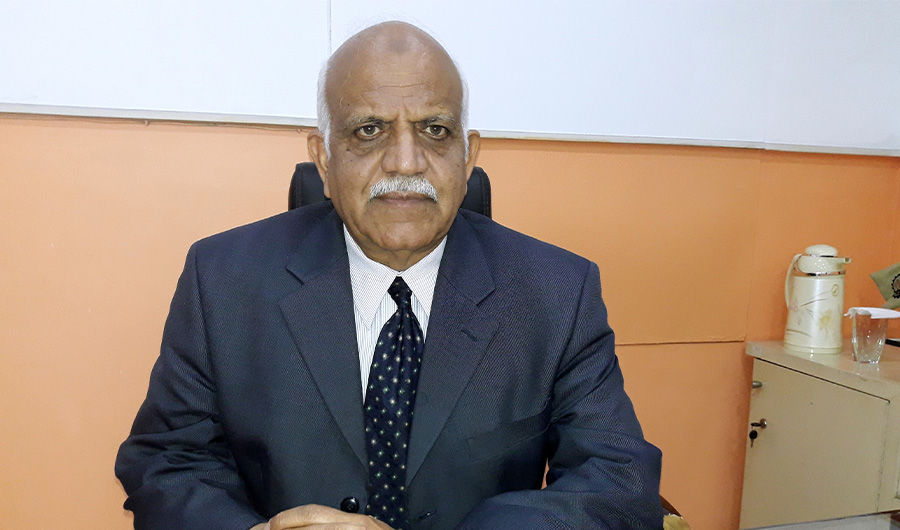
High-rise buildings will be planned in slums through master-planning with the help of Singapore, says Zaigham Mehmood Rizvi, Chairman Task Force of NPHP (Photo AN)
According to Rizvi, every home would carry a maximum price tag of PKR 3 million (approximately $21,000), with a maximum plot size of 120 yards and covered area of 850 sq. feet.
Last year, Pakistan’s Finance Minister, Asad Umar said that a part of the housing project would be financed by banks increasing their financing opportunities for Small and Medium Enterprises and reducing their cash to deposit ratio to increase credit.
“A policy for the financing of low-cost housing has been formulated by the central bank which allows banks to extend credit up to 90 percent of the price,” Rizvi said, and added that the scheme was part of empowering people, those who wanted “state intervention or support for shelter as per their affordability.”
Those unable to afford even 10 per cent of the equity would be facilitated through Islam’s principle of brotherhood or mawakhat, Rizvi said.
“The rich would be involved through... a website. Those who cannot afford (housing) will be able to get financial help from the rich that would not be given to the person but (for) the house,” he said with people able to raise equity up to 500,000 in this way while the rest would be financed by banks and philanthropists.
By the UN’s estimate, Pakistan’s current population of 208 million will cross 306 million by 2050, and with a current housing shortage of approximately 12 million units, the NPHP offers up a huge construction market for foreign and local builders and developers.
“We have received foreign interest from China, Turkey, Saudi Arabia’s Bin Ladin group, Emaar UAE, Malaysia , Europe and Canada,” Rizvi said and added that Pakistanis working in Saudi Arabia’s construction sector had approached the government as a group under the name ‘Pakistan Investment Forum,’ and offered technological help, as well as money and machinery.
Singapore is another possible collaborator, with a delegation expected to visit and suggest how to plan rapidly growing cities.
“High-rise buildings will be planned in slums through master-planning with the help of Singapore,” Rizvi said.


