PARIS: France has ruled out the repatriation of French terrorists and their families detained in Syria after the fall of Daesh’s “caliphate,” Interior Minister Christophe Castaner said on Friday.
France and other European nations have been wrestling with how to handle the hundreds of foreign fighters, many of whom are being held by the Kurdish-led Syrian Democratic Forces which led the final push against Daesh.
French daily Liberation reported Friday that in early March the government had been ready to bring home around 250 men, women and children before abandoning the plan given public hostility to the repatriations.
The issue is extremely sensitive in France, where a deadly 2015 attack on the capital claimed by Daesh killed 130 people and set off a wave of other deadly assaults since then.
 “It’s logical that our services considered all hypotheses. This was one of the hypothesis they prepared,” Castaner said at a press conference following a meeting of G7 interior ministers in Paris.
“No communal repatriation was under consideration to be carried out,” he said, reiterating that France would nonetheless study bringing back children of jihadist fighters on a “case-by-case basis.”
Last month, French authorities for the first time brought home five orphaned children of French extremists from camps in Syria.
According to the UN children’s agency UNICEF, around 3,000 foreign children from 43 countries are housed at the Al-Hol camp in Syria alone, which has taken in most of the people fleeing Daesh’s self-proclaimed “caliphate” in recent weeks.
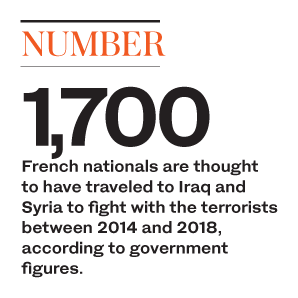
Up to 1,700 French nationals are thought to have traveled to Iraq and Syria to fight with the terrorists between 2014 and 2018, according to government figures. Around 300 are believed to have died in combat.
Kurdish officials have warned they do not have the resources to hold all the captured fighters indefinitely, and Washington is also urging its allies in the anti-Daesh coalition to take home their citizens.
But repatriation is a politically fraught issue, and governments fear they may not have enough evidence to convict IS members who claim they did not fight.