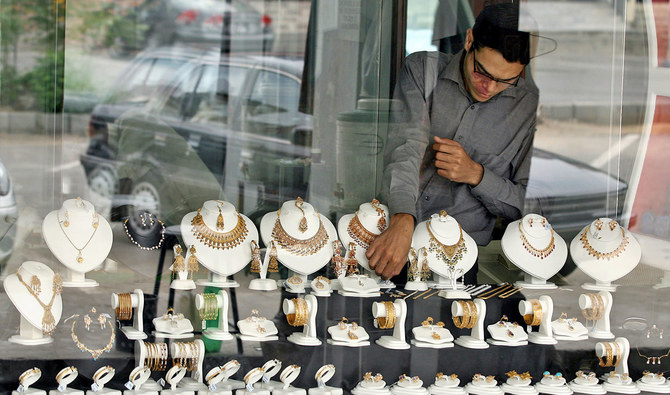
KARACHI: All preparations were in place for the wedding of her son, school teacher Salma Iqbal said, except one: she could no longer afford to buy jewelry for the bride as the price of gold hit a historic high in Pakistan this week.
On Wednesday the local bullion price hit an all-time high of Rs72,200 per tola (11.66 grams of gold) after adjustment for the devaluation of the Pakistani rupee against the dollar, trading at an all-time low at PKR 141.3953 in the interbank market.
Inflation at its highest in Pakistan in more than five years, shocking many Pakistanis who voted for Prime Minister Imran Khan and his promise to eradicate poverty, create jobs and build an Islamic welfare state.
“I am coming back without placing an order after arguments with the jeweler,” Iqbal said as she left a jewelry store on Karachi’s busy Tariq Road. “He is asking for PKR 72,200 a tola which is beyond my savings.”
The Pakistani rupee has witnessed 35 percent depreciation since December 2017 while financial experts foresee a further 6 percent devaluation by the end of 2019 as the country negotiates a bailout package with the International Monetary Fund.
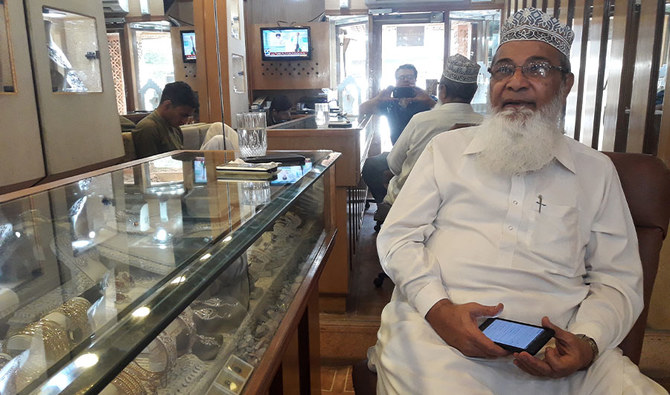
“Though in the international bullion market the price of gold has not witnessed a sharp increase, in the local market the impact of the falling rupee has been adjusted accordingly,” said Hajji Haroon Rasheed Chand, the President of the All Sindh Sarafa Jewellers Association.
The high rates are hurting both buyers and sellers.
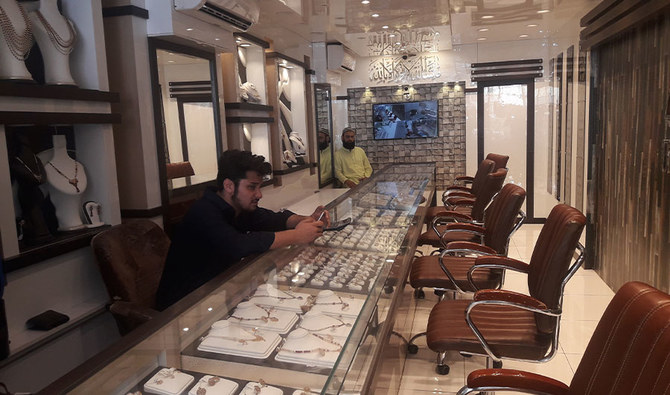
“Business is down almost 70 percent as the purchasing power of people is diminishing,” Adnan Qadri, the director of Qadri Gems and Jewellery, said pointing at deserted jewelry shops in the Saddar area of Karachi. “Those who used to buy 10 tola now buy only 5 tola while purchasers of 5 tola are down to 2 tola and those who would buy 2 have resorted to getting silver jewelry.”
Jeweler Arif Chotani said the business had slowed down to a large extent due to price fluctuations.
“We are facing an extremely difficult situation in delivering orders,” he said. “We are paying from our own pocket in this situation.”
Abdul Khalid Haroon, the CEO of Al Insaf Jewellers, said gold was not settling “at any level” due to the instability of the rupee.
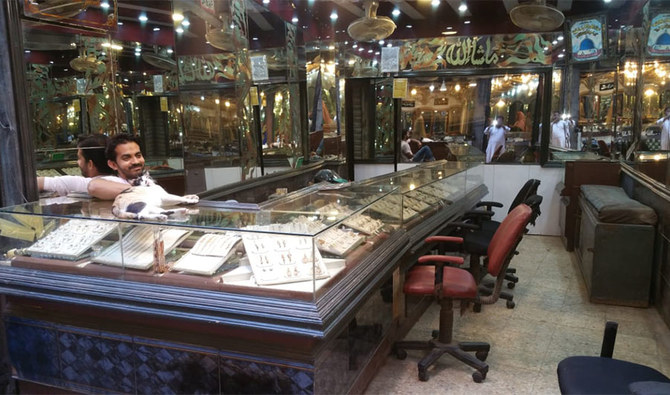
“We book orders at 10 percent advance but when prices shoot up it erodes our profit,” Haroon said. “People now find alternatives in the form of artificial jewelry. Most of our day is spent waiting for customers.”
“The local market is not for local buyers,” he added, “The government now should facilitate exports.”


In Pakistan, glittering gold becomes dreary business as prices at all-time high

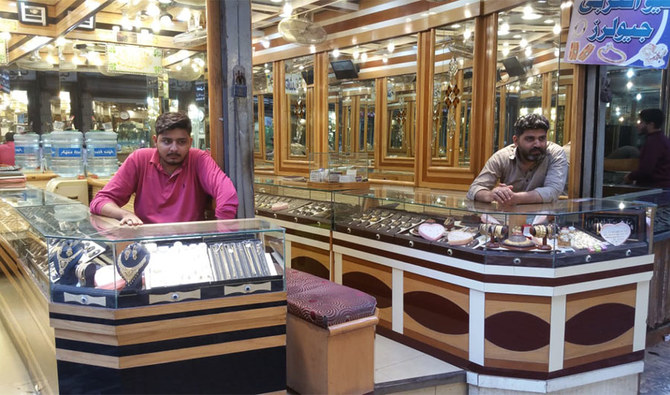

In Pakistan, glittering gold becomes dreary business as prices at all-time high

- On Wednesday, the price of gold hit all-time high of Rs72,200 per 11.66 grams of gold
- Inflation at its highest in Pakistan in more than five years

Security forces kill four militants in Pakistan’s volatile southwest, military says
- Balochistan, Pakistan’s largest province by land area bordering Iran and Afghanistan, has long been the site of a low-level insurgency
- The Balochistan government has recently established a threat assessment center to strengthen early warning, prevent ‘terrorism’ incidents
ISLAMABAD: Pakistani security forces gunned down four militants in an intelligence-based operation in the southwestern Balochistan province, the military said on Tuesday.
The operation was conducted in Balochistan’s Kalat district on reports about the presence of militants, according to the Inter-Services Public Relations (ISPR), the Pakistani military’s media wing.
The “Indian-sponsored militants” were killed in an exchange of fire during the operation, while weapons and ammunition were also recovered from the deceased, who remained actively involved in numerous militant activities.
“Sanitization operations are being conducted to eliminate any other Indian-sponsored terrorist found in the area,” the ISPR said in a statement.
There was no immediate response from New Delhi to the statement.
Balochistan, Pakistan’s largest province by land area bordering Iran and Afghanistan, has long been the site of a low-level insurgency involving Baloch separatist groups, including the Balochistan Liberation Army (BLA) and the Balochistan Liberation Front (BLF).
Pakistan accuses India of supporting these separatist militant groups and describes them as “Fitna Al-Hindustan.” New Delhi denies the allegation.
The government in Balochistan has also established a state-of-the-art threat assessment center to strengthen early warning and prevention against “terrorism” incidents, a senior official said this week.
“Information that was once scattered is now shared and acted upon in time, allowing the state to move from reacting after incidents to preventing them before they occur,” Balochistan Additional Chief Secretary Hamza Shafqaat wrote on X.
The development follows a steep rise in militancy-related deaths in Pakistan in 2025. According to statistics released by the Pakistan Institute for Conflict and Security Studies (PICSS) last month, combat-related deaths in 2025 rose 73 percent to 3,387.
These included 2,115 militants, 664 security forces personnel, 580 civilians and 28 members of pro-government peace committees, the think tank said.


