

South Korean ship detained for allegedly providing oil to North Korea

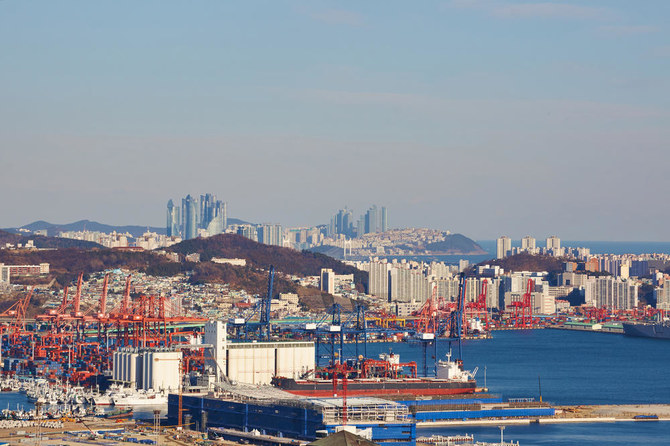
The ship has been held in Busan port since October. (Shutterstock/File)
Updated 03 April 2019
Follow

South Korean ship detained for allegedly providing oil to North Korea

  • South Korean officials did not specify the volume of the illegal oil shipments
  • Authorities say the shipments happened in 2017

SEOUL: A South Korean ship is being held at a domestic port over suspicions that it illegally provided oil to heavily sanctioned North Korea, Seoul officials said Wednesday.

The revelation comes amid growing concerns over wide-ranging efforts by North Korea to evade UN Security Council sanctions over its nuclear weapons and missiles program.

A South Korean coast guard official said the 5,160-ton P-PIONEER has been prevented from leaving Busan port since October over allegations that it was used to supply oil to North Korea through two ship-to-ship transfers in September 2017 in international waters in the East China Sea. He said the ship transferred diesel, but did not confirm how much was supplied.

Customs authorities have sent the case to state prosecutors, who are now examining whether to indict the ship’s captain and management company for violating laws governing maritime transport and exchanges with North Korea, he said.

An official from Seoul’s Foreign Ministry said it was the first time a South Korean ship was detained over allegations of violating UN sanctions against North Korea. South Korea is detaining three foreign vessels for illegally providing oil to North Korea or transporting North Korea-produced coal.

Both officials spoke on condition of anonymity, citing department rules preventing them from speaking to the press.

The UN Security Council in a report last month said North Korea was continuing to defy its resolutions through a “massive” increase in ship-to-ship transfers of petroleum products and coal. The report quoted one unnamed member state as saying North Korea obtained more than the cap of 500,000 barrels of refined petroleum products in 2018, but said another unnamed country questioned the figure.

UN sanctions against North Korea have strengthened significantly since 2016 as Pyongyang stepped up its weapons tests and now includes strict import restrictions on petroleum products and crude oil and export bans on coal and other minerals that had been key sources of foreign currency for the North.

South Korean prosecutors in December charged four people with illegally importing North Korean coal, saying they used falsified documents and transshipments at Russian ports to disguise the coal as Russian.

Following successful tests of long-range missiles potentially capable of reaching the US mainland in 2017, North Korean leader Kim Jong Un shifted to a diplomatic mode in 2018 and held summits with leaders of South Korea and the United States in an effort to leverage his nuclear arsenal for economic and security benefits. But Kim’s second summit with President Donald Trump in February collapsed over mismatched demands in sanctions relief and disarmament.


Indonesia reaffirms Yemen’s territorial integrity, backs stability efforts amid tensions

Updated 01 January 2026
Follow

Indonesia reaffirms Yemen’s territorial integrity, backs stability efforts amid tensions

  • Statement comes after Saudi Arabia bombed a UAE weapons shipment at Yemeni port city
  • Jakarta last week said it ‘appreciates’ Riyadh ‘working together’ with Yemen to restore stability

JAKARTA: Indonesia has called for respect for Yemen’s territorial integrity and commended efforts to maintain stability in the region, a day after Saudi Arabia bombed a weapons shipment from the UAE at a Yemeni port city that Riyadh said was intended for separatist forces. 

Saudi Arabia carried out a “limited airstrike” at Yemen’s port city of Al-Mukalla in the southern province of Hadramout on Tuesday, following the arrival of an Emirati shipment that came amid heightened tensions linked to advances by the UAE-backed Southern Transitional Council in the war-torn country. 

In a statement issued late on Wednesday, the Indonesian Ministry of Foreign Affairs said it “appreciates further efforts by concerned parties to maintain stability and security,” particularly in the provinces of Hadramout and Al-Mahara. 

“Indonesia reaffirms the importance of peaceful settlement through an inclusive and comprehensive political dialogue under the coordination of the United Nations and respecting Yemen’s legitimate government and territorial integrity,” Indonesia’s foreign affairs ministry said. 

The latest statement comes after Jakarta said last week that it “appreciates the efforts of the Kingdom of Saudi Arabia, as well as other relevant countries, working together with Yemeni stakeholders to de-escalate tensions and restore stability.” 

Saudi Arabia leads the Coalition to Restore Legitimacy in Yemen, which includes the UAE and was established in 2015 to combat the Houthi rebels, who control most of northern Yemen. 

Riyadh has been calling on the STC, which initially supported Yemen’s internationally recognized government against the Houthi rebels, to withdraw after it launched an offensive against the Saudi-backed government troops last month, seeking an independent state in the south.  

Indonesia has also urged for “all parties to exercise restraint and avoid unilateral action that could impact security conditions,” and has previously said that the rising tensions in Yemen could “further deteriorate the security situation and exacerbate the suffering” of the Yemeni people. 

Indonesia, the world’s biggest Muslim-majority country, maintains close ties with both Saudi Arabia and the UAE, which are its main trade and investment partners in the Middle East.