

ISLAMABAD: The Pakistani Foreign Minister said on Tuesday the government had revamped the country’s visa policy and rationalized visa fees to attract foreign tourists from around the world and boost foreign exchange reserves.
Last month, Prime Minister Imran Khan announced a new visa policy, saying citizens of 175 countries would be able to apply for online visas and business visas would be available to 96 countries. In January, Pakistan said it would offer visas on arrival to visitors from 50 countries.
The moves are part of a larger plan to revive Pakistan’s tourism industry, devastated by militant violence after the September 11, 2001, attacks in the United States.
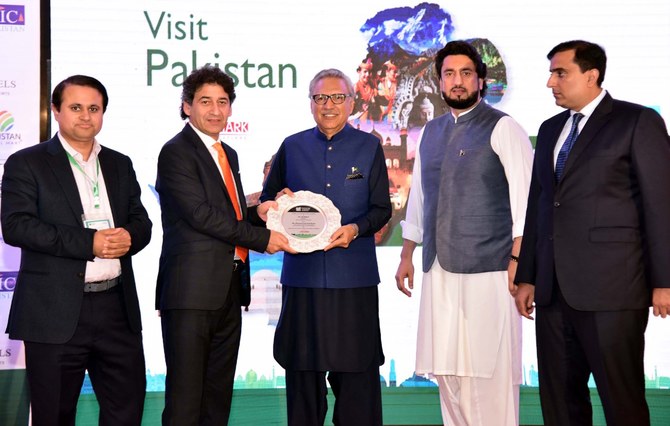
“Pakistan is faced with a forex reserves challenge at the moment and a quick way to generate dollars for our country is through promotion of tourism,” Foreign Minister Shah Mahmood Qureshi said in his address at the Pakistan Tourism Summit in Islamabad. “The tourism industry will also help create jobs for millions of the youth.”
He said the government was trying to create an enabling environment for private investors to build necessary infrastructure at tourist resorts, especially in the picturesque northern areas of the country.
Pakistan was last a prominent tourist destination in the 1970s when the “hippie trail” brought Western travellers through the apricot and walnut orchards of the Swat Valley and Kashmir on their way to India and Nepal.
Since then, deteriorating security and the imposition of a harsh interpretation of Islamic laws, particularly in the country’s northwestern belt, have chipped away at the number of visitors.
But law and order has improved dramatically in recent years, with militant attacks down sharply in the mainly Muslim country of 208 million people.
Qureshi said the government was also trying to revive tourism by tapping into over nine million overseas Pakistani.
“We are trying to package family vacations for Pakistani expatriates,” he said. “This way they will reconnect to their culture, history and families as well.”
Tourism currently contributes less than one percent to Pakistan’s GDP while arch-rival India’s annual tourism contribution to its $2597 billion GDP is $244 billion, or 9.4 percent.
Speaking at the tourism summit, Azad Jammu and Kashmir president Sardar Masood Khan said tourists to the scenic valley had increased from 500,000 in 2010 to 1.5 million in 2017.
“We are giving utmost priority to the up-gradation of road infrastructure, hotels, accommodation and quality food to entertain our guests,” he said.
The Azad Kashmir government has recently passed legislation to seek investments from Pakistani entrepreneurs and foreign investors.
“All AJK banks have agreed to spend at least 15 percent on the promotion of tourism and culture in the area,” he said.
Raja Yasir Humayun Sarfraz, the tourism minister for Pakistan’s largest and richest Punjab province, said his department had identified tourist locations in at least eight districts in the province that would be developed in the next five years.
“We are also coming up with a legal mechanism to encourage businessmen to invest in the tourism industry,” he added.
Qazi Israr of the Hajj Organizers Association of Pakistan said Pakistan could follow the example of Saudi Arabia, United Arab Emirates, Malaysia and Turkey, among other Muslim nations, that were earning billions of dollars annually through religious tourism.
“Pakistan is blessed with sacred religious places of Sikhs, Hindus and Buddhists, and private tour operators can play their part in their promotion,” Israr said.