ALGIERS: Algerian President Abdelaziz Bouteflika will step down before his fourth term ends on April 28, a statement issued by his office said on Monday.
The short statement said Bouteflika would take “important steps to ensure the continuity of the functioning of state institutions” after he leaves the office he’d held since 1999.
Massive weekly protests demanding Bouteflika’s departure along with his cadre of loyalists have challenged the political status quo of his two-decade rule. The 82-year-old president has been in public rarely since he suffered a stroke in 2013.
It’s unclear if Monday’s announcement will satisfy anti-government protesters, who have said they don’t just want Bouteflika out, but Algeria’s entire power structure overhauled.
The Algerian Constitution calls for the head of the upper house of parliament to act as interim leader for a maximum of 90 days while an election is organized.
Algerian national television reported Sunday night that Bouteflika and Prime Minister Noureddine Bedoui had named a new government after weeks of the mass protests and political tensions in this gas-rich North African country. The new government must stay in place during the transition period.
Ending his presidency amid the protests was a stunning decision for Bouteflika.
His declaration that he was running for a fifth term in a presidential election originally scheduled for April 18 initially fueled the protests. He withdrew and postponed the election in response to growing demonstrations.
The protests have been driven mostly by young Algerians, who make up a growing part of the population. Demonstrators say they think Bouteflika and his generation are out of touch with the contemporary problems of the country’s people. Many Algerian youth struggle to find jobs, and desperation has driven some to attempt to migrate to Europe on rickety boats.
Bouteflika has been known as a wily political survivor ever since he fought during the 1950s and 1960s for Algeria’s independence from France.
He became foreign minister at the age of 25, and stood up to the likes of Henry Kissinger at the height of the Cold War, when Algeria was tethered to the former Soviet Union.
Bouteflika famously negotiated with the Venezuelan terrorist known as Carlos the Jackal to free oil ministers who were taken hostage in a 1975 attack on OPEC headquarters in Vienna and flown to Algiers.
Most crucially, he helped reconcile Algeria’s citizens after a decade of civil war between radical Muslim militants and Algerian security forces left some 200,000 people dead in the 1990s and nearly tore Algeria apart.
During his 20 years in office, age and illness took its toll on the once-charismatic figure. Corruption scandals over infrastructure and hydrocarbon projects have also dogged him for years and tarnished many of his closest associates.
Algeria is Africa’s biggest country by land mass and a major natural gas producer, but its energy riches have not trickled down to reach the pockets of its people.
Algeria is also a key partner to the United States and Europe in fighting Islamic extremism. The recent political crisis has caused concern among Western allies.


![]()

Algeria’s president Bouteflika says he will step down before April 28
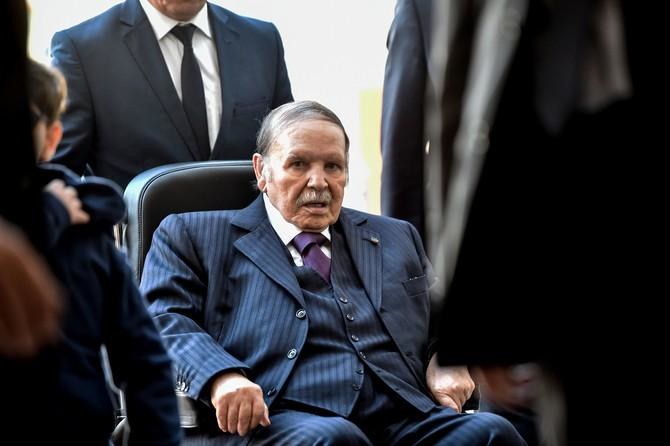
Algeria’s president Bouteflika says he will step down before April 28
- Massive weekly protests demanding Bouteflika’s departure along with his cadre of loyalists have challenged the political status quo
- Ending his presidency amid the protests was a stunning decision for Bouteflika


Latest updates


© 2026 SAUDI RESEARCH & PUBLISHING COMPANY, All Rights Reserved And subject to Terms of Use Agreement.