TRIPOLI: Libya held rare municipal elections in nine communities on Saturday, although turnout in the country’s first voting for five years reached only about 38 percent.
The North African state, which has been mired in conflict and chaos since the 2011 toppling of Muammar Qaddafi, has not held any elections since 2014, when a heavily contested national vote ended up splitting the country into rival administrations and parliaments.
Only nine out of 69 municipal councils in southern and western Libya voted on Saturday, officials said. No violence or sabotage was reported.
Libya created 120 municipal councils in 2013 in a bid to end 42 years of centralization and one man rule under Qaddafi. Some councils held elections in 2014.
The municipal board of each council includes seven members, which then elects a mayor.
“We’ll go on each Saturday until 33 councils hold their elections then we resume after the holy month of Ramadan so all councils are elected,” Salem Bentahia, head of the elections commission, told Reuters.
The Muslim fasting month of Ramadan ends in early June.
In Zuwara, a town west of Tripoli near the Tunisian border, there was a modest turnout in the morning.
“We wish every success to this board and for it to achieve all the aspirations of this city’s residents in all areas,” Abdulsalam Ramdan Abdulsalam said as he cast his vote.
The United Nations is holding a national conference in April in a bid to end the political conflict between the internationally recognized government in Tripoli in the west of Libya and a parallel administration version in the east.
The UN efforts aim to prepare the country for long-delayed national elections.

Libya holds municipal elections in first vote for five years
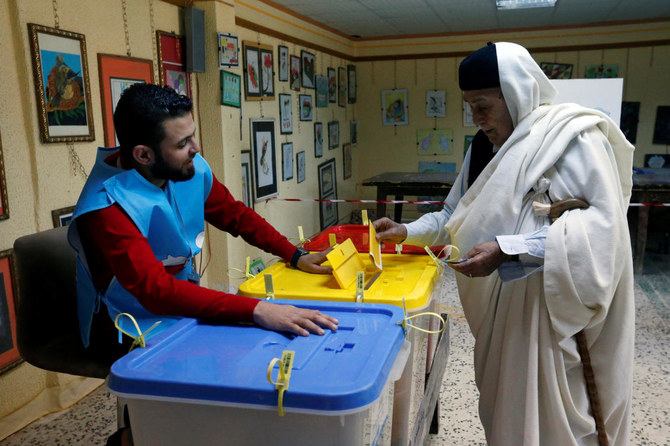
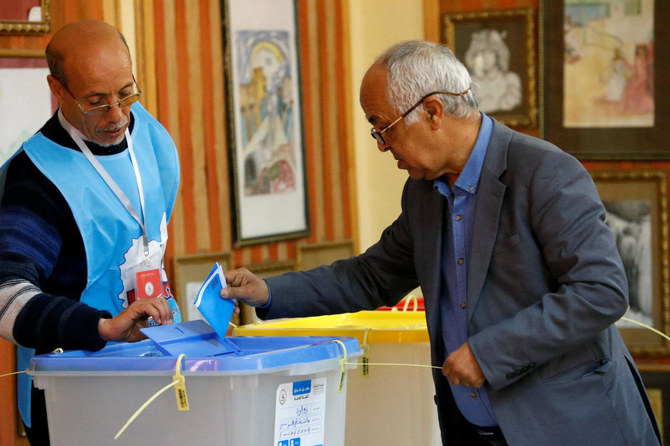
- Only nine out of 69 municipal councils in southern and western Libya voted on Saturday, officials said
- Libya created 120 municipal councils in 2013 in a bid to end 42 years of centralization and one man rule under Qaddafi
Hezbollah says targeted 3 Israeli bases after strikes on Lebanon
BEIRUT: Lebanese militant group Hezbollah on Tuesday said it targeted three Israeli military bases in response to Israeli strikes on the group’s strongholds in Lebanon, including the south Beirut suburbs.
Israel continues to carry out successive air raids, particularly on Beirut’s southern suburbs and the south of the country, after issuing evacuation warnings to residents, while Lebanese authorities on Monday recorded the displacement of around 29,000 people from areas hit by the strikes.
Israel announced Tuesday morning it had begun a new round of “simultaneous strikes in Tehran and Beirut.”
The Israeli military also said it had deployed troops to several locations in southern Lebanon in what it described as a “forward defense” measure along the border.
Defense Minister Israel Katz said he “authorized the Israel Defense Forces (IDF) to advance and take control of additional strategic positions in Lebanon in order to prevent attacks on Israeli border communities.”
Lebanon was drawn into the regional war on Monday after an initial attack on Israel by Hezbollah, which said it wanted to “avenge” the killing of Iranian supreme leader Ali Khamenei during the US-Israeli strikes.
Israel promptly launched large-scale strikes on Lebanon, where the government on Monday declared an immediate ban on Hezbollah’s military activities.
In separate statements, Hezbollah said it used attack drones to target both the Ramat David air base and the Meron monitoring base in northern Israel.
It also said it targeted the Naffakh base, known as Camp Yitzhak, in the occupied Golan Heights with a rocket salvo.
These attacks came “in response to the criminal Israeli aggression on dozens of Lebanese cities and towns,” Hezbollah said.
Since the early morning hours, Beirut’s southern suburbs have been subjected to a series of airstrikes targeting several buildings after evacuation warnings.
AFP photographers saw huge plumes of smoke rising into the air and obscuring the sky.
Hezbollah’s Al-Manar TV broadcaster said its Beirut headquarters had been targeted overnight and announced on Tuesday morning that Israel targeted the offices of Hezbollah’s Al-Nour radio broadcaster as well.
In a statement, Hezbollah condemned the strikes on “two civilian media outlets” saying they were aimed at “silencing the voice and image of the resistance.”
Israel continues to carry out successive air raids, particularly on Beirut’s southern suburbs and the south of the country, after issuing evacuation warnings to residents, while Lebanese authorities on Monday recorded the displacement of around 29,000 people from areas hit by the strikes.
Israel announced Tuesday morning it had begun a new round of “simultaneous strikes in Tehran and Beirut.”
The Israeli military also said it had deployed troops to several locations in southern Lebanon in what it described as a “forward defense” measure along the border.
Defense Minister Israel Katz said he “authorized the Israel Defense Forces (IDF) to advance and take control of additional strategic positions in Lebanon in order to prevent attacks on Israeli border communities.”
Lebanon was drawn into the regional war on Monday after an initial attack on Israel by Hezbollah, which said it wanted to “avenge” the killing of Iranian supreme leader Ali Khamenei during the US-Israeli strikes.
Israel promptly launched large-scale strikes on Lebanon, where the government on Monday declared an immediate ban on Hezbollah’s military activities.
In separate statements, Hezbollah said it used attack drones to target both the Ramat David air base and the Meron monitoring base in northern Israel.
It also said it targeted the Naffakh base, known as Camp Yitzhak, in the occupied Golan Heights with a rocket salvo.
These attacks came “in response to the criminal Israeli aggression on dozens of Lebanese cities and towns,” Hezbollah said.
Since the early morning hours, Beirut’s southern suburbs have been subjected to a series of airstrikes targeting several buildings after evacuation warnings.
AFP photographers saw huge plumes of smoke rising into the air and obscuring the sky.
Hezbollah’s Al-Manar TV broadcaster said its Beirut headquarters had been targeted overnight and announced on Tuesday morning that Israel targeted the offices of Hezbollah’s Al-Nour radio broadcaster as well.
In a statement, Hezbollah condemned the strikes on “two civilian media outlets” saying they were aimed at “silencing the voice and image of the resistance.”
© 2026 SAUDI RESEARCH & PUBLISHING COMPANY, All Rights Reserved And subject to Terms of Use Agreement.