

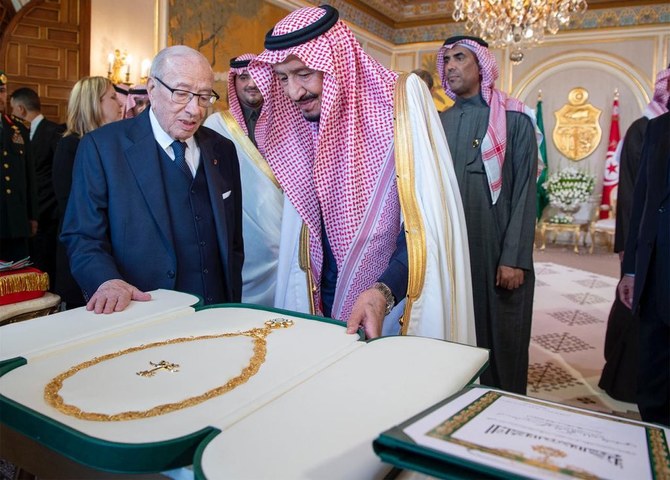
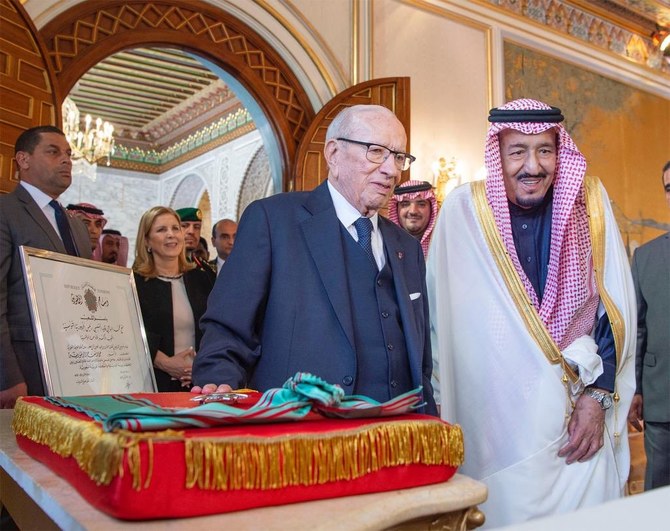
King Salman and Tunisian President hold bilateral talks

1 / 9
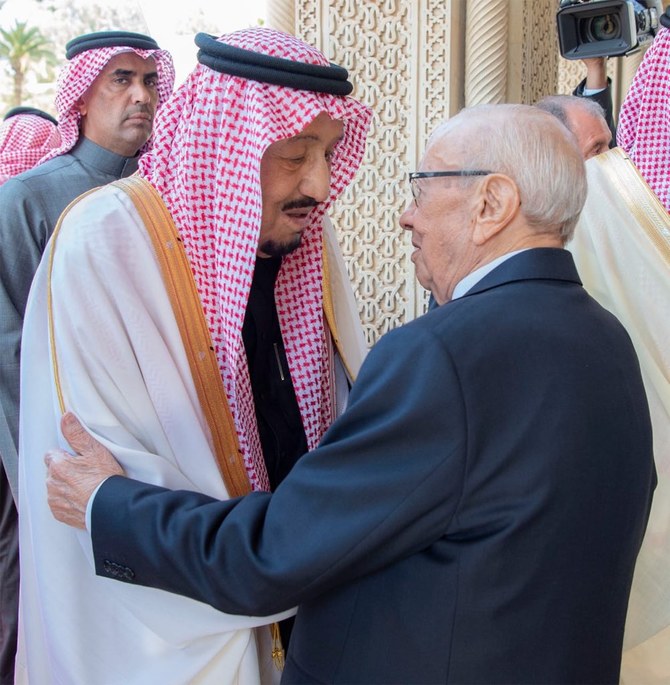
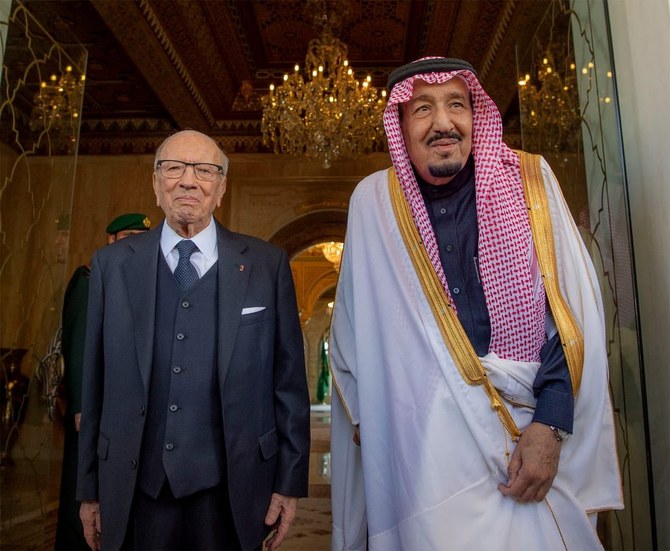
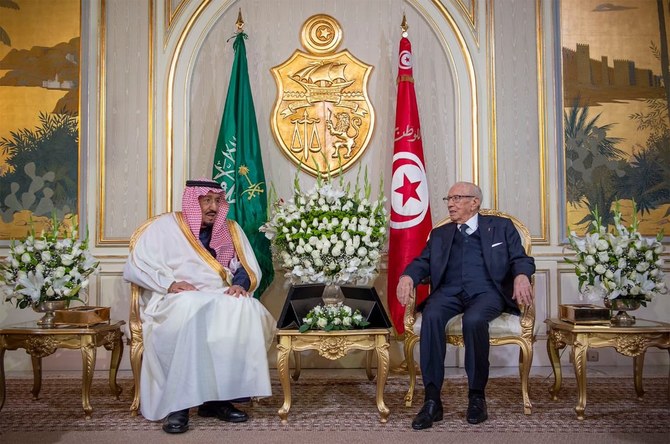
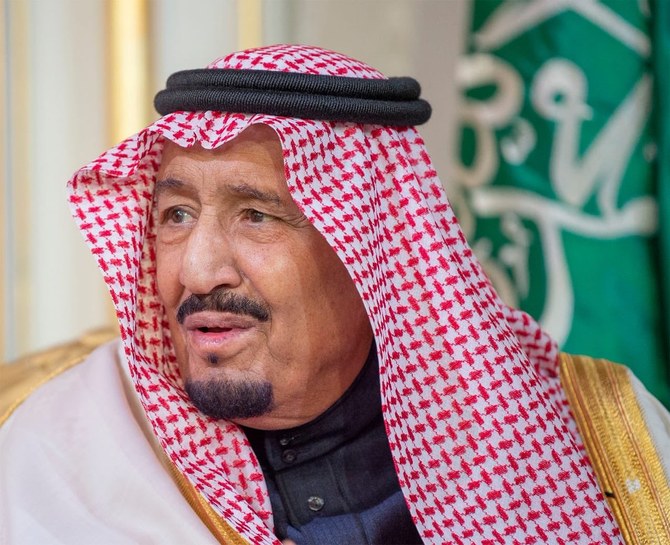
Saudi Arabia's King Salman and Tunisian President Beji Caid Essebsi held bilateral talks on Friday. (SPA)
2 / 9
Saudi Arabia's King Salman and Tunisian President Beji Caid Essebsi held bilateral talks on Friday. (SPA)
3 / 9
Saudi Arabia's King Salman and Tunisian President Beji Caid Essebsi held bilateral talks on Friday. (SPA)
4 / 9
Saudi Arabia's King Salman and Tunisian President Beji Caid Essebsi held bilateral talks on Friday. (SPA)
5 / 9
Saudi Arabia's King Salman and Tunisian President Beji Caid Essebsi held bilateral talks on Friday. (SPA)
6 / 9
Saudi Arabia's King Salman and Tunisian President Beji Caid Essebsi held bilateral talks on Friday. (SPA)
7 / 9
Saudi Arabia's King Salman and Tunisian President Beji Caid Essebsi held bilateral talks on Friday. (SPA)
8 / 9
Saudi Arabia's King Salman and Tunisian President Beji Caid Essebsi held bilateral talks on Friday. (SPA)
9 / 9
Saudi Arabia's King Salman and Tunisian President Beji Caid Essebsi held bilateral talks on Friday. (SPA)
Updated 31 March 2019
Follow

King Salman and Tunisian President hold bilateral talks

  • Two agreements were signed by Saudi Arabia and Tunisia
  • President Essebsi awarded King Salman the republic’s medal, the highest official award

RIYADH: Saudi Arabia's King Salman and Tunisian President Beji Caid Essebsi held bilateral talks at the Carthage Palace in Tunisia on Friday. 

During the meeting, King Salman and President Essebsi discussed bilateral cooperation and ways of enhancing and developing them. They also reviewed regional and international developments.

King Salman and President Essebsi witnessed the signing of two agreements between Saudi Arabia and Tunisia.

An agreement was signed for a developmental loan to fund projects to protect cities and urban areas from flooding in Tunisia.

Another agreement was signed in relation to Saudi exports to The Tunisian Company of the Refining Industries (STIR).

The agreements were signed by Saudi Arabia’s Minister of Foreign Affairs Ibrahim Al-Assaf and Tunisia’s Foreign Minister Khemaies Jhinaoui. 

King Salman and President Essebsi also launched three projects in Tunis on Friday. They include the restoration of the Uqba bin Nafe mosque and the city of Utaiqah in Kairouan, the King Salman project to restore the Al-Zaytuna mosque, and the building of the King Salman bin Abdulaziz University hospital in Kairouan.

President Essebsi also awarded King Salman the republic’s medal, the highest official award.

King Salman presented President Essebsi with the King Abdulaziz Medal.
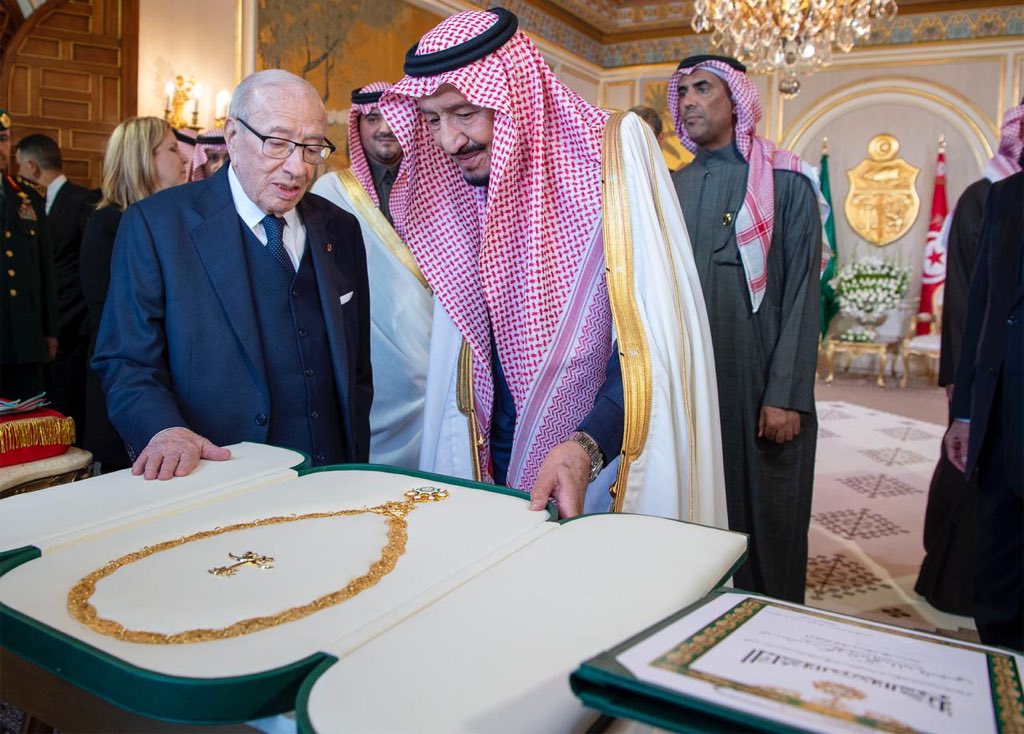
A luncheon was also held in honour of King Salman.

The king will head Saudi Arabia’s delegation at the 30th Arab League summit that will take place in Tunis on Sunday. 

His visit comes as a response to an invitation by President Essebsi. 

Essebsi said on Thursday that King Salman’s visit confirms that relations between Saudi Arabia and Tunisia are at the highest level. 


Klija Festival in Buraidah empowers small businesses

Updated 31 min 57 sec ago
Follow

Klija Festival in Buraidah empowers small businesses

  • Half a million attend 15-day celebration of heritage; event creates 1,500 seasonal jobs

RIYADH: The 17th Klija Festival in Buraidah drew more than half a million visitors during its 15-day run, celebrating the region’s heritage and entrepreneurial spirit.

Organized by the Qassim Chamber of Commerce, the event highlighted small businesses, providing a platform for entrepreneurs to showcase local products.

More than 340 sales outlets, marketing corners and points of sale welcomed attendees, while the festival provided 1,500 seasonal job opportunities, the Saudi Press Agency reported.

The small business pavilions featured families in the cottage industry, artisans and startups presenting traditional foods, and handicrafts and heritage items that reflect the region’s identity.

Participants said that the festival was a key marketing platform, boosting sales, increasing brand awareness, facilitating knowledge exchange and fostering connections with organizations supporting SMEs.

Mohammed Al-Hanaya, Qassim Chamber secretary-general and festival supervisor, said that the event brought together families, artisans, SMEs, companies and institutions, stimulating commercial activity, opening direct marketing channels and enhancing economic returns.

He added that the festival provided seasonal jobs for more than 1,500 young men and women across operations, marketing and services, supporting the labor market, empowering national talent, and connecting youth to the events and creative economy.

Klija, a traditional cookie made from wheat flour, dates or sugar, date syrup and natural ingredients such as cardamom and lemon, is a rich source of energy, carbohydrates, dietary fiber and natural proteins.

A cultural icon rooted in Qassim’s traditions, the cookie has gained international exposure through the festival, expanding the availability of packaged products.

Starting next year, the festival will be renamed the International Klija Festival, a rebranding approved by Qassim Gov. Prince Faisal bin Mishaal, who described it as a “successful model for turning local initiatives into global economic engines.”

This year’s festival, held at the King Khalid Cultural Center, included international participants from Egypt, Turkiye and Morocco, marking its evolution into a cross-cultural platform.