

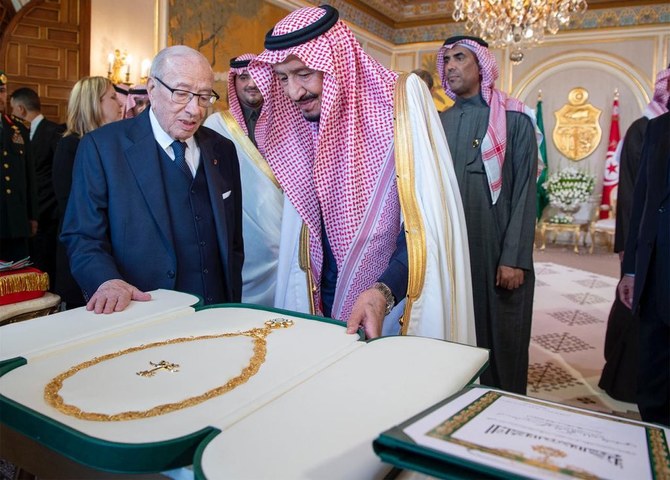
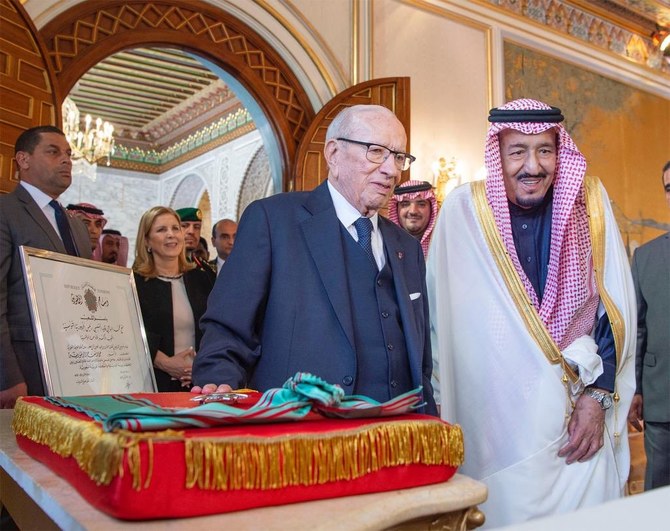
King Salman and Tunisian President hold bilateral talks

1 / 9
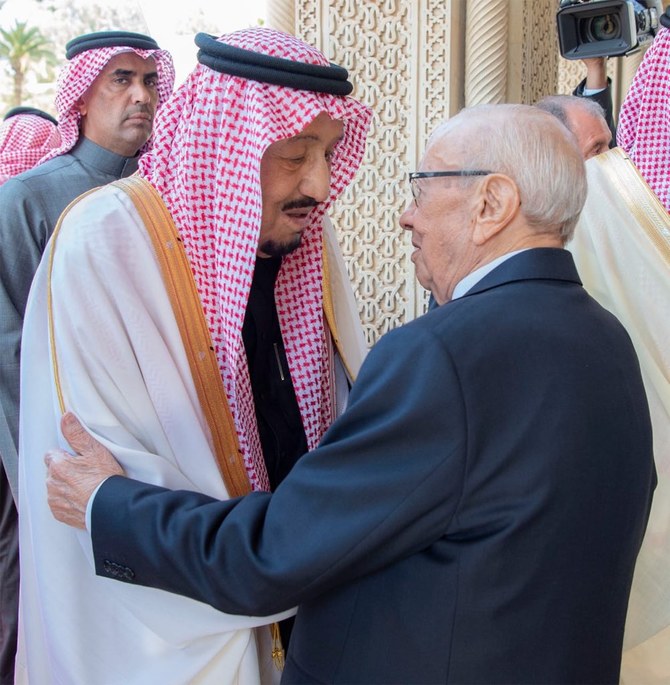
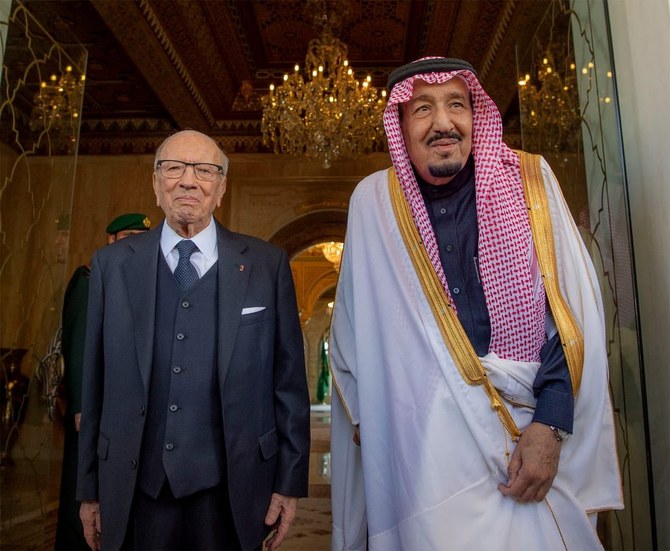
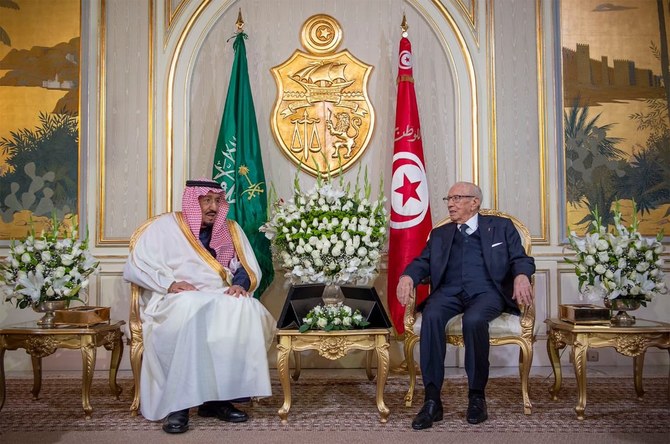
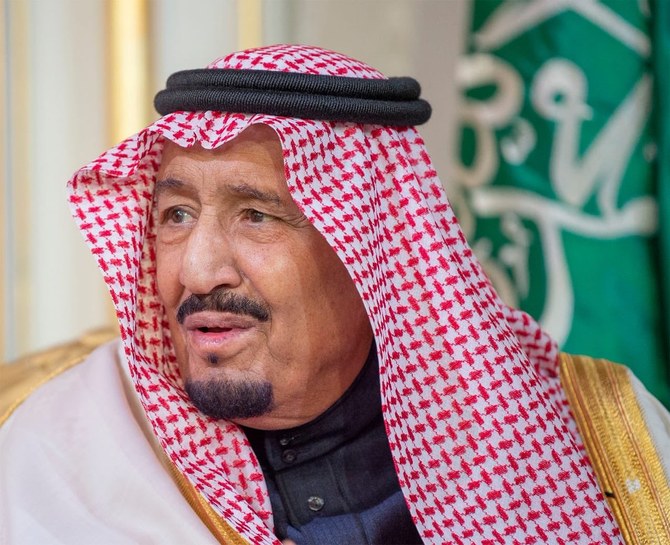
Saudi Arabia's King Salman and Tunisian President Beji Caid Essebsi held bilateral talks on Friday. (SPA)
2 / 9
Saudi Arabia's King Salman and Tunisian President Beji Caid Essebsi held bilateral talks on Friday. (SPA)
3 / 9
Saudi Arabia's King Salman and Tunisian President Beji Caid Essebsi held bilateral talks on Friday. (SPA)
4 / 9
Saudi Arabia's King Salman and Tunisian President Beji Caid Essebsi held bilateral talks on Friday. (SPA)
5 / 9
Saudi Arabia's King Salman and Tunisian President Beji Caid Essebsi held bilateral talks on Friday. (SPA)
6 / 9
Saudi Arabia's King Salman and Tunisian President Beji Caid Essebsi held bilateral talks on Friday. (SPA)
7 / 9
Saudi Arabia's King Salman and Tunisian President Beji Caid Essebsi held bilateral talks on Friday. (SPA)
8 / 9
Saudi Arabia's King Salman and Tunisian President Beji Caid Essebsi held bilateral talks on Friday. (SPA)
9 / 9
Saudi Arabia's King Salman and Tunisian President Beji Caid Essebsi held bilateral talks on Friday. (SPA)
Updated 31 March 2019
Follow

King Salman and Tunisian President hold bilateral talks

  • Two agreements were signed by Saudi Arabia and Tunisia
  • President Essebsi awarded King Salman the republic’s medal, the highest official award

RIYADH: Saudi Arabia's King Salman and Tunisian President Beji Caid Essebsi held bilateral talks at the Carthage Palace in Tunisia on Friday. 

During the meeting, King Salman and President Essebsi discussed bilateral cooperation and ways of enhancing and developing them. They also reviewed regional and international developments.

King Salman and President Essebsi witnessed the signing of two agreements between Saudi Arabia and Tunisia.

An agreement was signed for a developmental loan to fund projects to protect cities and urban areas from flooding in Tunisia.

Another agreement was signed in relation to Saudi exports to The Tunisian Company of the Refining Industries (STIR).

The agreements were signed by Saudi Arabia’s Minister of Foreign Affairs Ibrahim Al-Assaf and Tunisia’s Foreign Minister Khemaies Jhinaoui. 

King Salman and President Essebsi also launched three projects in Tunis on Friday. They include the restoration of the Uqba bin Nafe mosque and the city of Utaiqah in Kairouan, the King Salman project to restore the Al-Zaytuna mosque, and the building of the King Salman bin Abdulaziz University hospital in Kairouan.

President Essebsi also awarded King Salman the republic’s medal, the highest official award.

King Salman presented President Essebsi with the King Abdulaziz Medal.
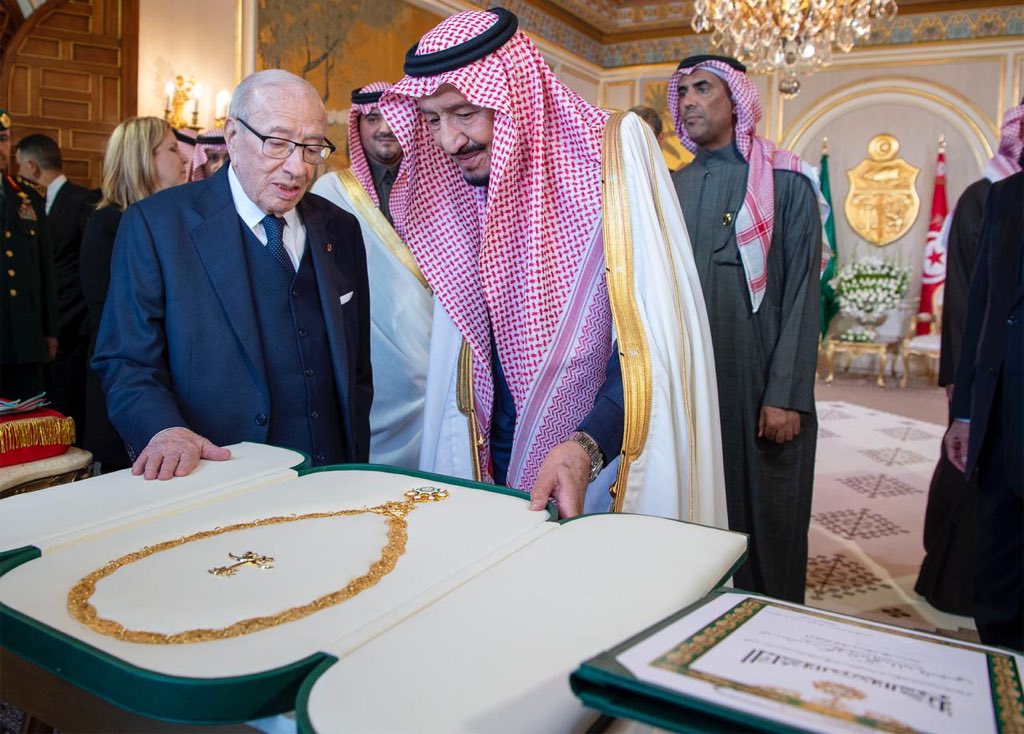
A luncheon was also held in honour of King Salman.

The king will head Saudi Arabia’s delegation at the 30th Arab League summit that will take place in Tunis on Sunday. 

His visit comes as a response to an invitation by President Essebsi. 

Essebsi said on Thursday that King Salman’s visit confirms that relations between Saudi Arabia and Tunisia are at the highest level. 


Saudi Arabia expresses regret over damage to Qatar’s embassy building in Ukraine

Updated 14 sec ago
Follow

Saudi Arabia expresses regret over damage to Qatar’s embassy building in Ukraine

  • Qatar said that its embassy in the Ukrainian capital was damaged during Russian strikes the night before but that its staff were unharmed

RIYADH: Saudi Arabia has expressed regret over damages sustained by the building of Qatar’s embassy in the Ukrainian capital during a Russian attack. 

Qatar said that its embassy in the Ukrainian capital was damaged during Russian strikes the night before but that its staff were unharmed.

The Saudi foreign ministry said in a statement shared on X that the kingdom “expresses its profound regret over the damage sustained by the embassy building of the fraternal State of Qatar due to shelling in the Ukrainian capital, Kyiv.” 

Saudi Arabia also “renews its supporting position for diplomatic efforts aimed at resolving the Russian-Ukrainian crisis by peaceful means,” it added. 

The ministry also affirmed the need to provide protection for members of diplomatic missions, and their premises, in accordance with the Vienna Convention on Diplomatic Relations.