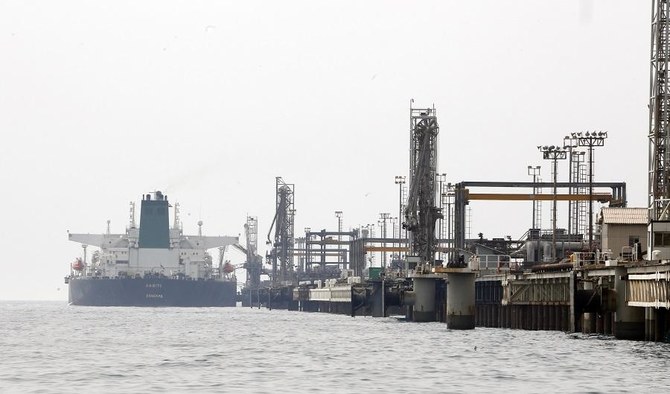
TOKYO: Japanese refineries have put a halt on imports of Iranian oil after buying 15.3 million barrels between January and March ahead of the expiry of a temporary waiver on US sanctions, according to industry sources and data on Refinitiv Eikon.
The waiver, which allowed Japan to buy some Iranian oil for another 180 days, expires in early May. However, Japanese refiners want to ensure enough time for all cargoes already loaded to arrive in Japan and for payments to be completed.
“We think it would be difficult to keep on lifting Iranian oil after March,” a Fuji Oil spokesman said, noting that banks and insurance companies want to make sure all the transactions and deliveries are done well before the waivers expire.
The last Iranian oil cargo onboard supertanker Kisogawa is expected to arrive at Chiba, Japan, on April 9, the data showed.
The United States last year demanded that nations cut all Iranian oil imports when it reimposed sanctions on the country’s petroleum sector on Nov. 4 over Tehran’s nuclear program.
However, Washington granted temporary exemptions to Iran’s biggest oil clients — Japan, China, India, South Korea, Taiwan, Italy, Greece and Turkey.
Refiners in Japan, the world’s fourth-biggest oil consumer, had stopped loading Iranian oil by mid-September, and only resumed loading in late January after banks received government assurances about processing payments to Iran.
Japan has loaded 15.3 million barrels of Iranian crude in the first three months this year, which is equivalent to 86,430 barrels per day (bpd) during the six-month waiver period, according to Refinitiv data and Reuters calculations.
This represents a 33 percent drop from an average of 129,300 bpd that Japanese companies lifted between January and September last year before the sanctions kicked in, Refinitiv data showed.
The drop was more than the 20 percent reduction in supplies that Washington was said to have sought from each country over the six-month waiver period.
Japan has increased imports from the Middle East, Russia and the Americas as its Iranian imports fell, according to government data.
Japanese refiners have been pushing the government to seek an extension of the US sanctions waivers after the initial exemption period expires.
Japanese officials and their US counterparts met earlier this month in Washington to discuss the US sanctions.
“I think the waiver could be extended, but maybe for a smaller volume and for a smaller number of countries,” said Takayuki Nogami, chief economist at Japan Oil, Gas and Metals National Corp.
“If the US government does not extend the waiver, it could push crude oil prices up significantly as the gasoline season approaches and it could hurt Trump’s reputation,” he said.
On Wednesday, Japan extended state-backed insurance to cover imports of oil from Iran for another year.


![]()
Japanese refiners halt Iran oil imports as waiver expiry looms

Japanese refiners halt Iran oil imports as waiver expiry looms
- The last Iranian oil cargo onboard supertanker Kisogawa is expected to arrive at Chiba, Japan, on April 9
- The US last year demanded that nations cut all Iranian oil imports when it reimposed sanctions


Latest updates


Recommended


© 2026 SAUDI RESEARCH & PUBLISHING COMPANY, All Rights Reserved And subject to Terms of Use Agreement.