

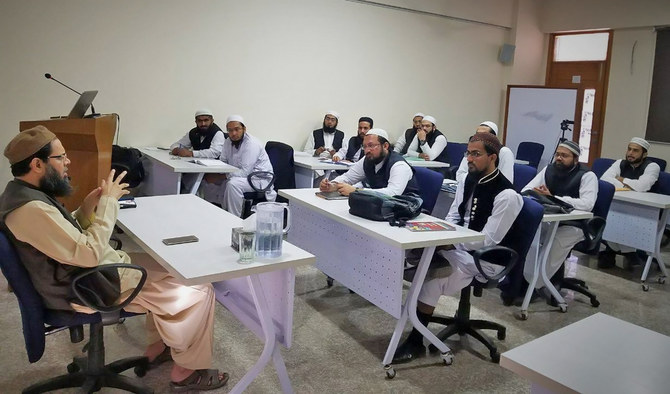
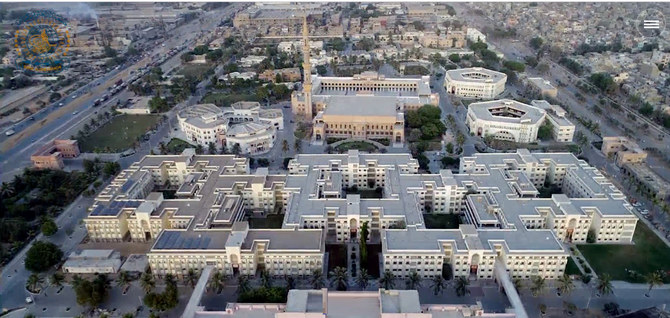

KARACHI: A leading religious school in Pakistan's port-side city of Karachi has announced to offer one-year diploma in business management for graduates and final-year students of seminaries, which experts say, will set a trend for other seminaries to open up to modern education.
“Hira Institute of Emerging Science (HIES) Darul Uloom Karachi in collaboration with Pakistan Institute of Management (PIM) is launching one-year Diploma in Business Management,” Adeel Zeerak, PIM official told Arab News on Sunday.
He said the program, which the PIM aims to take to more seminaries in future, will train clergies passing out from various Madaris in worldly knowledge to increase “their employability in the corporate sector and to train them to become entrepreneurs”.
“There were many fields identified during the designing of this diploma, where such Ulema [religious scholars] can contribute in the business world,” the official said, adding that “lack of required modern education” was key focus when the seminary and PIM authorities were designing the course.
“So initially we have identified the areas where the madrasah students after getting proper education may excel,” he said. “They can either have their own start-ups or may find jobs in other sectors.”
PIM will have its faculty teach the madrasa’s students and train them in entrepreneurship, content creation, digital marketing, retail operations, tooling and machining, spare parts, livestock and office supplies. The official said that the students will also be able to find jobs at Corporate Sharia advisory position, sales and marketing including tele-sales, administration and HR departments, accounts department, purchasing and contract management, call centers , front desk and customer service, and supply chain functions like warehousing, and distribution and transportation.
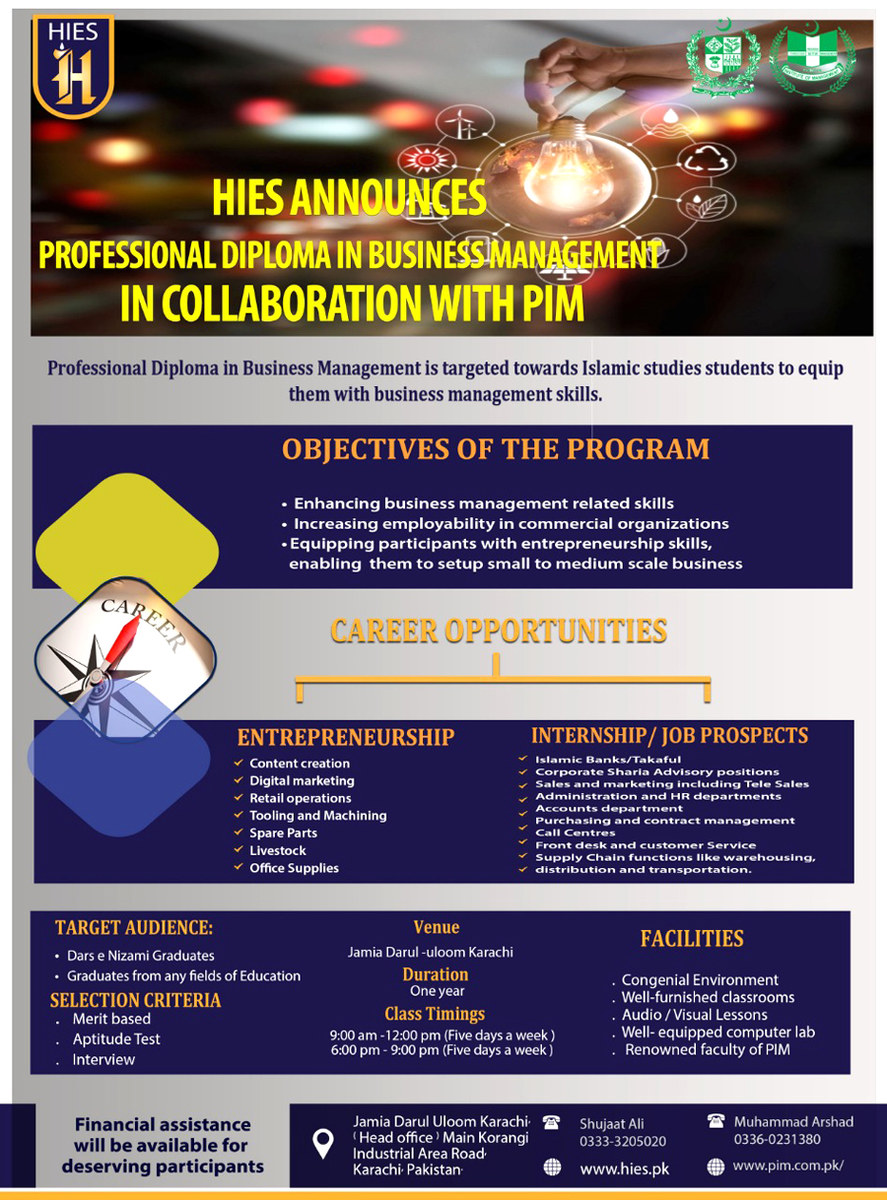
The enrollment criteria, he said, is merit based. “The admission will be granted to those clearing aptitude [test] and interview.”
The course will formally start after the month of Ramazan, however admission and orientation process will commence from next week, Zeerak said.
Dr Muhammad Imran Usmani, in-charge of the course and son of Mufti Taqi Usmani, told Arab News that the introductory session initially scheduled for March 26 at HIES, Darul Uloom Karachi, has been postponed and will be held next week.
There are more than 37,000 Islamic seminaries in Pakistan which cater to more than four million students. Out of these, nearly 30,000 Madaris are registered with all five madrassa boards. Darul Uloom Karachi, although a major modern seminary with thousands of enrollments, is only one of them.
Realizing the fact that the program might be too small for a major informal religious sector of education, the PIM official says that upon successful completion of the program his institution will take the project to other seminaries.
Zeerak says there had been resistance to the teaching of modern education. “But the successful completion of the program will increase its acceptability.”
Dr Amir Tauseen, former chairman of Madrassa Education Board, a government board formed by former military dictator Gen (R) Pervez Musharraf to regularize madarra education, says the program can be an excellent pilot project and will persuade others to follow suit.
“The successful completion of program will definitely make it a step towards reforms in madrasa education,” Tauseen told Arab News. However, unless and until the program becomes a policy of the Wafaq ul Madaris Al-Arabia, Pakistan, a Deobandi board which Darul Uloom is affiliated with, it cannot obtain the required results, he said.
“Once the board recognizes the program, it will make its status sustainable,” he said. “It’s, however, definitely a major step,” he admired.


