

Energy giants spent $1bn on climate lobbying, PR since Paris: watchdog

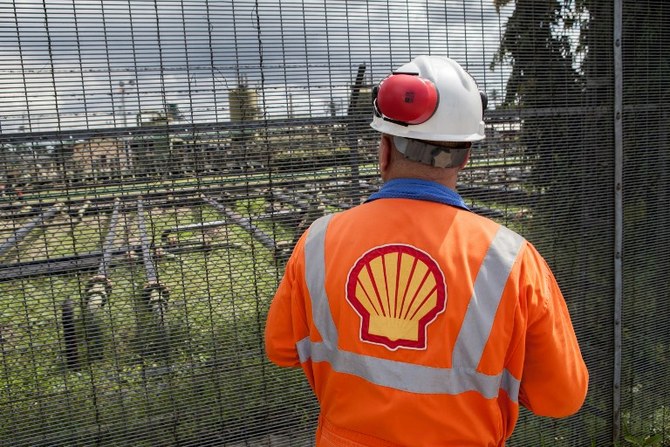
BP and other oil and gas giants are being challenged over their spending on lobbying and climate branding. (File photo/AFP)
Updated 23 March 2019
Follow

Energy giants spent $1bn on climate lobbying, PR since Paris: watchdog

  • Firms under pressure to explain how greener laws will hit business models

PARIS: The five largest publicly listed oil and gas majors have spent $1 billion since the 2015 Paris climate deal on public relations or lobbying that is “overwhelmingly in conflict” with the landmark accord’s goals, a watchdog said Friday.
Despite outwardly committing to support the Paris agreement and its aim to limit global temperature rises, ExxonMobil, Shell, Chevron, BP and Total spend a total of $200 million a year on efforts “to operate and expand fossil fuel operations,” according to InfluenceMap, a pro-transparency monitor.
Two of the companies — Shell and Chevron — said they rejected the watchdog’s findings.
“The fossil fuel sector has ramped up a quite strategic program of influencing the climate agenda,” InfluenceMap Executive Director Dylan Tanner told AFP.
“It’s a continuum of activity from their lobby trade groups attacking the details of regulations, controlling them all the way up, to controlling the way the media thinks about the oil majors and climate.”
The report comes as oil and gas giants are under increasing pressure from shareholders to come clean over how greener lawmaking will impact their business models.
As planet-warming greenhouse gas emissions hit their highest levels in human history in 2018, the five companies wracked up total profits of $55 billion.
At the same time, the International Panel on Climate Change — composed of the world’s leading climate scientists — issued a call for a radical drawdown in fossil fuel use in order to hit the 1.5C (2.7 Fahrenheit) cap laid out in the Paris accord.
InfluenceMap looked at accounts, lobbying registers and communications releases since 2015, and alleged a large gap between the climate commitments companies make and the action they take.


It said all five engaged in lobbying and “narrative capture” through direct contact with lawmakers and officials, spending millions on climate branding, and by employing trade associations to represent the sector’s interests in policy discussions.
“The research reveals a trend of carefully devised campaigns of positive messaging combined with negative policy lobbying on climate change,” it said.
It added that of the more than $110 billion the five had earmarked for capital investment in 2019, just $3.6bn was given over to low-carbon schemes.
The report came one day after the European Parliament was urged to strip ExxonMobil lobbyists of their access, after the US giant failed to attend a hearing where expert witnesses said the oil giant has knowingly misled the public over climate change.
“How can we accept that companies spending hundreds of millions on lobbying against the EU’s goal of reaching the Paris agreement are still granted privileged access to decision makers?” said Pascoe Sabido, Corporate Europe Observatory’s climate policy researcher, who was not involved in the InfluenceMap report.
The report said Exxon alone spent $56 million a year on “climate branding” and $41 million annually on lobbying efforts.
In 2017 the company’s shareholders voted to push it to disclose what tougher emissions policies in the wake of Paris would mean for its portfolio.
With the exception of France’s Total, each oil major had largely focused climate lobbying expenditure in the US, the report said.
Chevron alone has spent more than $28 million in US political donations since 1990, according to the report.
AFP contacted all five oil and gas companies mentioned in the report for comment.
“We disagree with the assertion that Chevron has engaged in ‘climate-related branding and lobbying’ that is ‘overwhelmingly in conflict’ with the Paris Agreement,” said a Chevron spokesman.
“We are taking action to address potential climate change risks to our business and investing in technology and low carbon business opportunities that could reduce greenhouse gas emissions.”
A spokeswoman for Shell — which the report said spends $49 million annually on climate lobbying — said it “firmly rejected” the findings.
“We are very clear about our support for the Paris Agreement, and the steps that we are taking to help meet society’s needs for more and cleaner energy,” they told AFP.
BP, ExxonMobil and Total did not provide comment to AFP.
FASTFACTS

$ 28m

Chevron alone has spent more than $28 million in US political donations since 1990, according to the report.


Kuwait PMI climbs to 54.5; Egypt falls to 48.9 in February: S&P Global 

Updated 7 sec ago
Follow

Kuwait PMI climbs to 54.5; Egypt falls to 48.9 in February: S&P Global 

RIYADH: Kuwait’s non-oil private sector continued to expand in February, supported by growth in output and new orders, while business conditions in Egypt weakened, an economy tracker showed. 

According to the latest Purchasing Managers’ Index surveys released by S&P Global, Kuwait’s PMI rose to 54.5 in February from 53 in January, extending the current run of improving business conditions to a year and a half. 

The expansion in Kuwait’s non-oil sector aligns with a broader trend across the Gulf Cooperation Council region, where countries are pursuing diversification strategies to reduce reliance on crude revenues. 

The surveys were conducted before regional tensions escalated following US and Israeli strikes on Iran and Tehran’s retaliatory attacks across the Gulf, which have since disrupted markets and energy trade. 

Commenting on the February survey, Andrew Harker, economics director at S&P Global Market Intelligence, said: “Growth momentum strengthened in Kuwait’s non-oil private sector in February as companies were again successful in securing new business.”  

According to the report, key factors supporting expansions in new orders and business activity included the provision of good-quality products at competitive prices and successful marketing efforts. 

The rate of job creation was modest in February and unchanged from January. 

Firms continued hiring staff for advertising and project-related work, resulting in a twelfth consecutive monthly increase in employment. 

“The main issue facing firms at present is being able to grow workforce numbers quickly enough to keep up with workloads,” said Harker. 

He added: “With backlogs rising at a fresh record pace for three months in a row now, fulfilling customer requirements in a timely manner is becoming more difficult, although companies did expand their purchasing activity at a near-record pace in February to help make sure the necessary materials are available going forward.”

Overall input cost inflation hit a nine-month high in February, with both purchase prices and staff costs rising at faster rates compared to January. 

The report added that some companies increased their selling prices in response to higher input costs. 

Regarding the outlook, companies expressed optimism, with sentiment reaching a 26-month high in February, driven by product variety, competitive pricing and good-quality customer service. 

Egypt’s non-oil sector contracts 

Egypt’s non-oil private sector contracted in February, driven by rising costs and softer demand, according to S&P Global. 

The country’s PMI fell to 48.9 in February from 49.8 in January. 

Although the reading remained below the 50 neutral threshold, it was still above its long-run average of 48.3, the report said. 

Output declined for the first time in four months in February, and all five sub-components of the PMI indicated weaker business conditions compared to January. 

“The February PMI data pointed to a slowdown in the Egyptian non-oil private sector as activity curtailed and new order volumes weakened,” said David Owen, senior economist at S&P Global Market Intelligence.

That said, he added that the dip followed an unusually strong run in business performance, and that the latest figures are consistent with annual GDP growth of approximately 4.5 percent. 

Egyptian non-oil companies also reported a decline in order book volumes during the month. 

Sales fell across manufacturing, wholesale and retail, and services, while construction was the only monitored sector where new orders improved. 

Employment fell for the third consecutive month in February, though at a slower rate, as companies continued active job cuttings and hiring freezes. 

The report revealed that cost pressures accelerated across the month, driven by rising ⁠global commodity prices, particularly oil and metals. 

Selling prices, however, were up only fractionally, with just a small proportion of firms choosing to pass cost increases onto their customers.

“Egyptian non-oil companies were notably exposed to the uplift in global commodity prices, with firms emphasising the impact of higher prices for oil and metals, resulting in the sharpest increase in business costs for nine months and hitting margins at a time when firms are reluctant to raise their selling prices,” said Owen. 

He concluded: “Firms will therefore be keen to see commodity markets settle, especially as recent periods of high input cost inflation have typically constrained business output.”