

Pakistan plans to boost space program with UAE collaboration

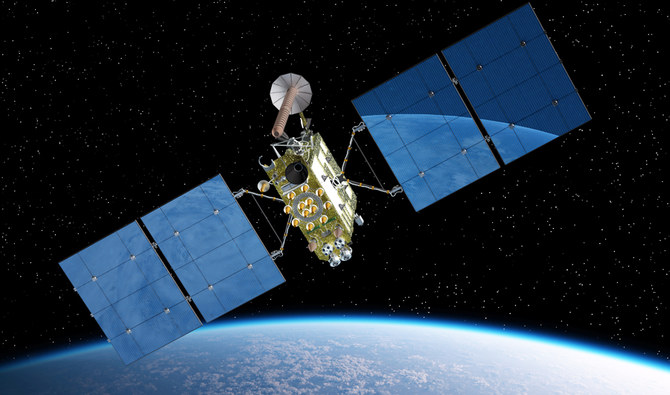
Pakistan is exploring options to collaborate with the United Arab Emirates for its nascent space program, a senior official said on Thursday. (Shutterstock)
Updated 21 March 2019
Follow

Pakistan plans to boost space program with UAE collaboration

  • Pakistan in talks with the UAE for help in “satellite manufacturing and relevant applications”
  • Signed last year an agreement with China to send its first mission into space by 2022

ISLAMABAD: Pakistan is exploring options to collaborate with the United Arab Emirates for its nascent space program, a senior official at Pakistan’s bureaucratic space agency said on Thursday, in joint ventures that could potentially boost the country’s socioeconomic development and national security.

Last year, Pakistan announced that it had signed an agreement with China to send the country’s first mission into space by 2022. 

“The UAE is one of our best friends in the Muslim world and collaboration in space-related activities will help both the Emirates and Pakistan,” Hassam Muhammad Khan, spokesman for the Pakistan Space and Upper Atmosphere Research Commission (Suparco), told Arab News.

He said that space technology required “huge funds and special skills” and thus Pakistan was in talks with the UAE “in satellite manufacturing and relevant applications.” 

Khan said Pakistan was a strong believer in the peaceful use of outer space and wanted to use technology only for socioeconomic development and national security. 

“The UAE has its own strengths in space technology and we want to benefit from them,” he added.

Pakistan currently has four remote-sensing and communications satellites in total – two ground stations and two in orbit. In July last year, Pakistan launched two satellites with the help of China, enhancing its ability to predict and ascertain levels of precipitation, and runoff water, for a given area in the country.

Dr. Qamar ul Islam, the head of the Department of Space Science at the Institute of Space Technology, Islamabad, said Pakistan lacked satellite launch facilities and capabilities and thus had “to seek assistance of friendly countries.”

“The real issues Pakistan faces at the moment are lack of funding, but our collaboration with the UAE in the space sector can really prove beneficial for both countries,” he told Arab News. “It has become crucial for Pakistan to have a good presence in outer space to protect its sovereignty and ensure security.”

Pakistan participated in this year’s Global Space Congress held in Abu Dhabi on March 19 for the first time and shared the details about their satellite related projects with the audience. SUPARCO was representing Pakistan in this event in UAE where the secretary of SUPARCO Dr. Arif Ali said that the commission was in initial level talks with the UAE for potential collaboration in its space program.

Pakistan’s Punjab deploys satellites, drones, AI to combat smog

Updated 5 sec ago
Follow

Pakistan’s Punjab deploys satellites, drones, AI to combat smog

  • Senior minister warns industrial masks may become necessary without a change in public attitudes toward pollution
  • Cities in Punjab face worsening smog each winter, driven by crop burning, vehicle emissions and industrial pollution

ISLAMABAD: Punjab Senior Minister Marriyum Aurangzeb on Wednesday said Pakistan’s most populous province deployed satellites, drones and artificial intelligence to tackle smog, warning that industrial masks may become necessary if public attitudes toward air pollution did not change.

Punjab cities face worsening smog each winter, driven by crop burning, vehicle emissions and industrial pollution that threatens public health and daily life. The smog season typically begins in late October, peaks between November and January and can persist through February.

Smog causes symptoms such as sore throats, eye irritation and respiratory illnesses, while prolonged exposure raises the risk of stroke, heart disease and lung cancer. Children are more vulnerable due to higher breathing rates and weaker immune systems.

“We have the AI machine-learning forecasting system in place, surveillance drones and technology cameras,” Aurangzeb said while addressing an event.

“At present, what is considered one of the world’s best environmental protection forces — with training, equipment, technology and digitally integrated data — is operating in Punjab,” she added.

Aurangzeb said surveillance is now being carried out through drones.

“There is monitoring, technology, cameras,” she continued. “Everything is digital.”

The minister maintained the eastern corridor from India was a major source of smoke which becomes active during the winter season.

She said this was the first time a complete testing system was introduced by the Environmental Protection Agency to measure pollution released by vehicles.

She added the government has loaned 5,000 super seeders to farmers, which are agricultural machines that plant crops directly into fields without removing leftover stubble, reducing crop burning, and helping curb winter smog.

Aurangzeb warned the situation could reach a point where people may have to use industrial masks and carry therm around like a “purse or wallet.”

“This will become a mandatory item if we do not change our attitudes and habits toward air quality, climate and conservation.”

Pakistan’s main urban centers routinely rank among the most polluted cities in the world, with vehicular emissions remaining one of the top contributors to air pollution.

The severe air pollution also undermines economic productivity and diminishes the quality of life for millions of residents.