

Sharqiah Season’s opening weekend electrifies Saudi Arabia’s Eastern Province

1 / 3
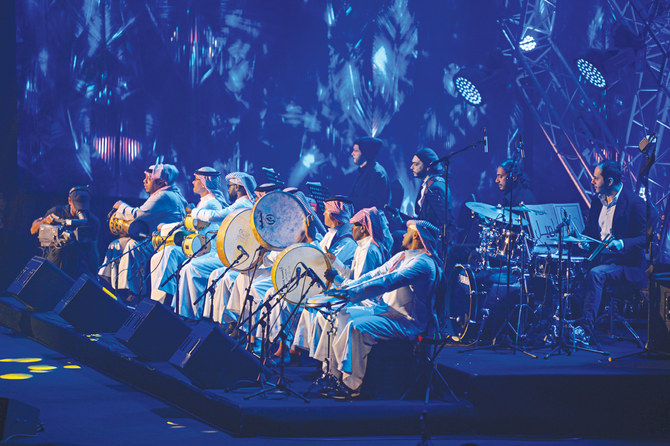
Sharqiah festivities drew crowds from far and wide on its opening weekend as part of the first of 11 festivals planned across the Kingdom in 2019. Festivities are set to run until March 30. Arab News photo by Essam Al Ghalib/EP Media Center
2 / 3
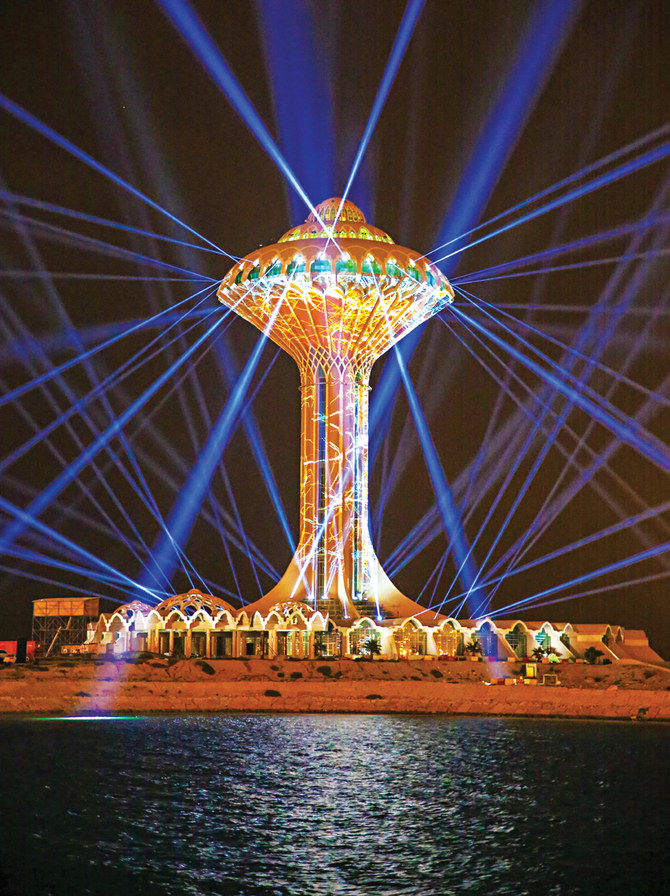
Sharqiah festivities drew crowds from far and wide on its opening weekend as part of the first of 11 festivals planned across the Kingdom in 2019. Festivities are set to run until March 30. Arab News photo by Essam Al Ghalib/EP Media Center
3 / 3
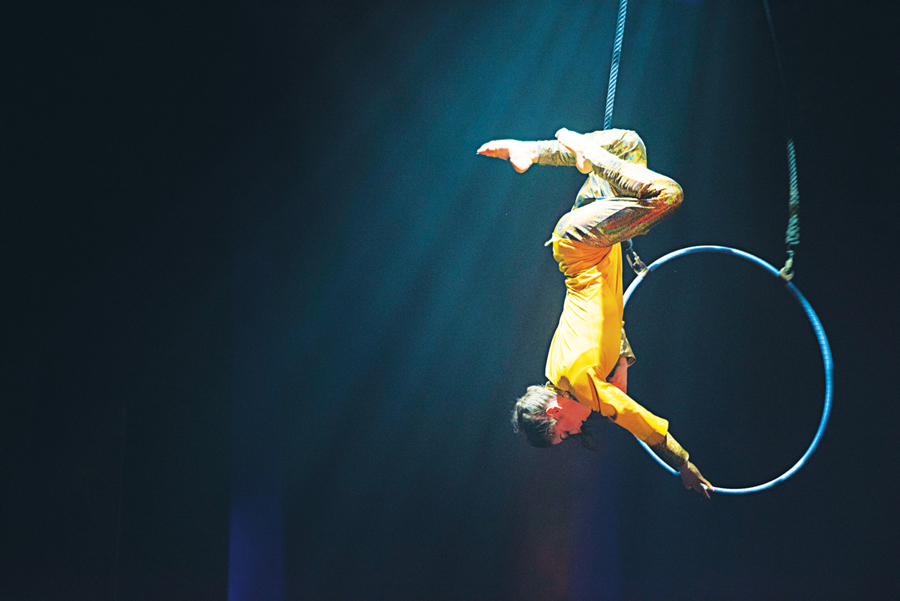
Sharqiah festivities drew crowds from far and wide on its opening weekend as part of the first of 11 festivals planned across the Kingdom in 2019. Festivities are set to run until March 30. Arab News photo by Essam Al Ghalib/EP Media Center
Updated 19 March 2019
Follow

Sharqiah Season’s opening weekend electrifies Saudi Arabia’s Eastern Province

  • Visitors to the first of 11 Saudi Seasons were treated to skateboarders, stilt walkers, concerts, forums and fireworks
  • The 17-day festival features more than 80 entertainment and sporting events and continues until March 30 

ALKHOBAR: You could feel the electricity in the air, and not just from the lightning on Thursday night. Visitors at the first Sharqiah Season turned out in their thousands all along the East Coast, despite high winds and the odd sprinkling of rain, and were treated to everything from skateboarders and stilt walkers to music, motorbikes, fireworks and concerts on the first weekend of the 17-day festival.
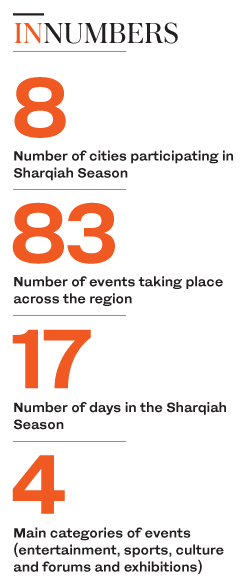
Sharqiah Season, featuring more than 80 events in Eastern Province cities, is the first of 11 festivals planned for the Kingdom in 2019, organized by the Saudi Commission for Tourism and National Heritage, with the General Entertainment Authority, the General Culture Authority and the General Sports Authority. 

It was impossible to miss the buzz in Alkhobar on the opening night, with searchlights in the sky marking the sites of two large areas set up on the Corniche: One for entertainment, the other for a cultural village. 

“What’s happening in Sharqiah is humongous, to tell you the truth, and it’s only the first day,” said Labeed Assidmi, a vendor in the Crystal Market zone near the entrance. “Saudi is changing for the better, and everyone is so excited.”

Assidmi said he had watched big events elsewhere in the Kingdom with anticipation. “I’m a huge fan of music, so when the concerts in Riyadh and Jeddah happened, like those at Formula E, I was  jealous. It feels so good to finally have Sharqiah recognized.”

While international music acts Pitbull, Akon and DJ Tiesto perform next weekend, big-name Arabic singers Mohammed Abdo and Rashed Al-Majed entertained the crowds this weekend.In Dammam’s Life Park, the Montreal troupe Cirque Eloize played to a packed house on opening night.

Strong winds put off the fireworks planned the night of the opening, but the crowds were still treated to a light show on the Khobar Water Tower. Hind Mubarak, who had come to the Corniche with her family, said: “It is a little disappointing, especially for the kids, but the light show was fun
to watch.”


Sharqiah festivities drew crowds from far and wide on its opening weekend . (Arab News photo by Essam Al Ghalib/EP Media Center)

See more photos from Sharqiah Season’s opening weekend here

Those who came out to watch the fireworks in Al-Ahsa on Friday night were not disappointed. Ghuneim Abdelatee, 57, was there with his granddaughter.

“She has never seen fireworks before,” he said. “In fact, there are many firsts that she is experiencing here now in Saudi. You can say the same for me, too. The music concerts, the cinemas, so much to see and do here now.

“People used to go to Bahrain for entertainment. Now I think they will be going less.”
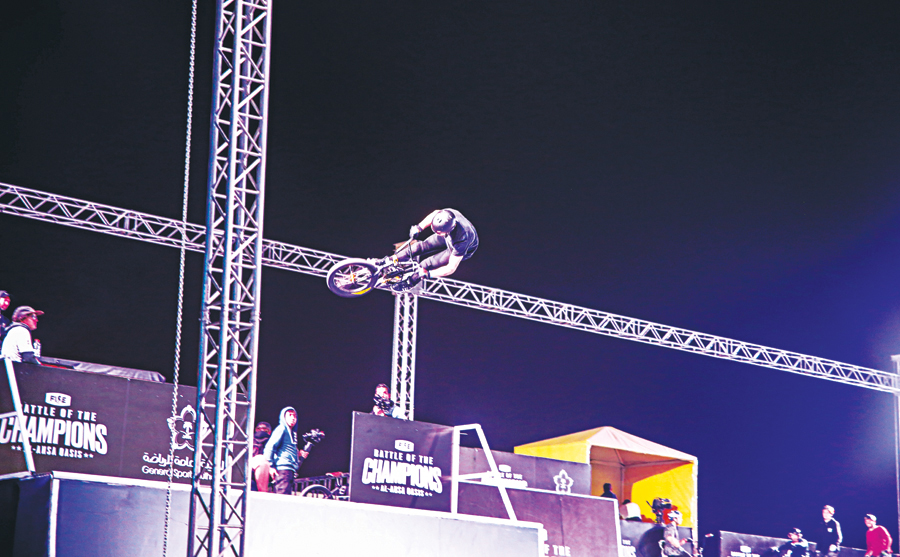


Sharqiah festivities drew crowds from far and wide on its opening weekend . (Arab News photo by Essam Al Ghalib/EP Media Center)

Also taking place at King Abdullah Adventure Park was the FISE “Battle of the Champions,” bringing together the top 12 skateboarders in the world, all vying for the number one position.

“To practice on a ramp like this is a dream come true,” said Moaiyad Al-Salmi, 20. “We need a proper skate park built here, something that would bring the community of Saudi and non-Saudi skaters together. If we had events like this every weekend, and skate parks like this everywhere, we would find a Saudi competing for the World Series.”

The Ithra Forum, organized in various cities throughout the month, will provide people with more intellectual pursuits.
“Curiosity” was the opening

topic at Dhahran’s King Abdul Aziz Center for World Culture, where speakers included Faisal Al-Saif, founder of TechPills, filmmaker Hakeem Jomah, and “Telfaz11” personalities Faris and Sohayb Godus.

While not all the events went as planned — Friday’s Naseer Shamma concert in Al-Ahsa’s Ibrahim Palace was rescheduled at the last minute — one thing is certain. If you were wondering what to do at the weekend, the coming weeks will give you plenty of choice.

*****

Sharqiah Season continues until March 30, with upcoming weekends featuring sports events such as the Red Bull Air Race and the Formula 1 H20 boat race, as well as concerts in Dammam featuring Akon, Deadmau5, Pitbull and French Montana.


Saudi House kicks off Davos with push on Vision 2030, AI platform and ‘humanizing’ tourism

At Saudi House, ministers and executives set out how the Kingdom sees the next phase of its transformation. (Supplied)
Updated 20 January 2026
Follow

Saudi House kicks off Davos with push on Vision 2030, AI platform and ‘humanizing’ tourism

  • Saudi ministers dominate pre-summit spotlight at Saudi pavilion, touting Vision 2030’s next phase and human capital as key to global edge
  • Ministry of Economy and Planning announced the SUSTAIN Platform which aims to accelerate AI-enabled, cross-sector collaboration for sustainable development

DAVOS: For regulars at the World Economic Forum, Monday in Davos is usually a chance to ease into the week, a time to reconnect, plan meetings and prepare for the intense schedule ahead.

This year, Saudi Arabia moved quickly to fill that lull, taking center stage with a packed program of panels ahead of Tuesday’s official opening.

At the Saudi House — the Kingdom’s official pavilion on the Promenade, returning after its debut as a standalone venue at the 2025 WEF Annual Meeting — Saudi ministers and global executives set out how the Kingdom sees the next phase of its transformation.

Monday’s speakers at the Saudi House included Minister of Finance Mohammed Al-Jadaan, Minister of Investment Khalid Al-Falih, Minister of Tourism Ahmed Al-Khateeb, and President and Vice Chairman of Meta Dina Powell McCormick. (Supplied)

Established by the Ministry of Economy and Planning, the venue is pitched as a platform for international thought leaders to tackle the challenges, opportunities and solutions shaping the global economy.

Opening a session on the Kingdom’s role at this year’s Forum and the next phase of Vision 2030 — now in its 10th year and roughly two-thirds complete — Princess Reema bint Bandar, Saudi Arabia’s ambassador to the US, said human capital “is the actual driver if you want a competitive, modern economy.”

She described one of the biggest achievements of the past decade as the emergence of a highly qualified cohort of young Saudis who could work anywhere in the world but “choose to come home, choose to build at home and choose to deliver at home,” calling this “the biggest symbol of the success of Vision 2030.”

Who can give you optimum access to opportunities while addressing risks? I contend that Saudi Arabia has been able to provide that formula.

Khalid Al-Falih, Saudi minister of investment

On the same panel, Minister of Finance Mohammed Aljadaan said this success is rooted in a “behavioral change” that has strengthened the Kingdom’s credibility with both international partners and its own citizens.

“Credibility comes from being very pragmatic, making sure that you maintain your fiscal policy discipline, but at the same time refocus your resources where it matters,” he said, warning that “markets will call your bluff if you’re not serious.”

The Saudi House, a cross-ministerial initiative led by the Ministry of Economy and Planning, is intended to underscore the Kingdom’s “commitment to global cooperation” by offering “a platform where visionary ideas are shared and shaped,” while showcasing opportunities and lessons from its “unprecedented national transformation.”

Lubna Olayan, Chair of the Corporate Board, Olayan Group

Echoing earlier comments to Arab News, Economy and Planning Minister Faisal Alibrahim said the Kingdom’s role as an anchor of stability has helped unlock its potential, stressing that while the objective is to decouple from reliance on a single commodity, “2030 is not the finishing line.”

Khalid Al-Falih, Saudi minister of investment, said Saudi Arabia has been able to enable access to opportunities while addressing major risks, arguing that few countries can match the Kingdom’s overall mix.

“No country has all of those to 100 percent,” he said. “But who can give you the mix that gives you optimum access to opportunities while addressing all of those risks?

Dr. Bedour Alrayes, Deputy CEO, Human Capability Development Program, Saudi Arabia

“I contend that Saudi Arabia has been able to provide that formula and the proof is in the pudding,” noting that local investment has doubled in recent years to reach levels comparable with India and China.

While societal transformation dominated the morning discussions, the afternoon turned to technology, tourism, sport and culture, four strategic sectors expected to spearhead Vision 2030’s next phase.

The Ministry of Economy and Planning used the day to announce the SUSTAIN Platform, due to launch in 2026, which aims to accelerate AI-enabled, cross-sector collaboration for sustainable development.

The ministry said SUSTAIN will translate the Kingdom’s public and private-sector coordination mandate into a practical national tool to help government entities, businesses, investors, academia and civil society identify credible partners, form trusted coalitions and move initiatives “from planning to implementation more efficiently,” addressing a global challenge where fragmented partnerships often slow delivery and blunt impact.

“We are in a moment in time where technology may well impact the face of humanity,” said Dina Powell McCormick, recently appointed president and vice chairman of Meta, welcoming the Kingdom’s “desire” to partner with technology companies and its embrace of innovation.

Minister of Tourism Ahmed Alkhateeb, discussing how technology is being deployed in his sector, underlined that “in travel and tourism, people are very important. We learn about other people’s culture through interacting with people. We digitalize the unnecessary and humanize the necessary.”

He added that while technological transformation is a priority, “we don’t want to replace this big workforce with technology. I think we need to protect them in Saudi Arabia, where we’re being a model. I’m an advocate of keeping the people.”

Throughout the week, Saudi House will host more than 20 sessions, including over 10 accredited by the WEF, across six themes: Bold Vision, Insights for Impact, People and Human Capability, Quality of Life, Investment and Collaboration, and Welcoming the World.

The pavilion will also launch “NextOn,” a new series of influential and educational talks featuring leading global voices.