


Family, friends remember Pakistani man who died trying to disarm Christchurch gunman

1 / 11
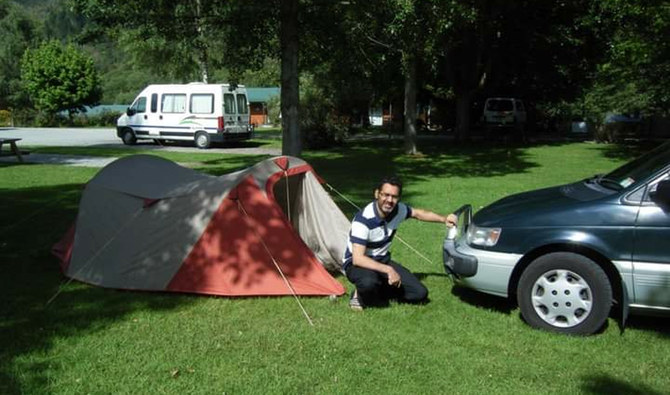
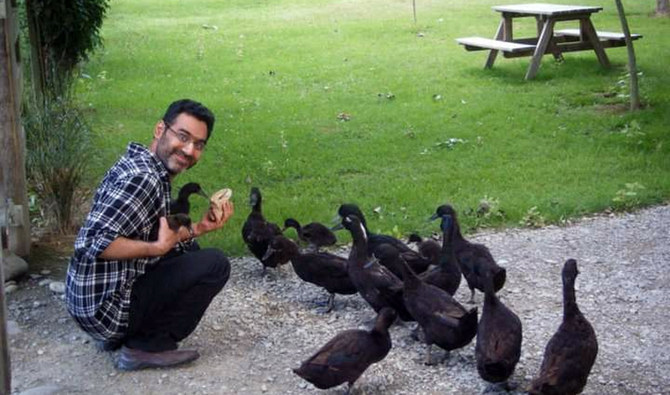
Pakistani-born Naeem Rasheed who tried to overpower the attacker who killed 50 Muslims in Christchurch mosques.
2 / 11
Ayan Naeem, the youngest son of Pakistani-born Naeem Rasheed who was killed while trying to overpower the Christchurch mosque attacker who gunned down 50 worshipers.
3 / 11
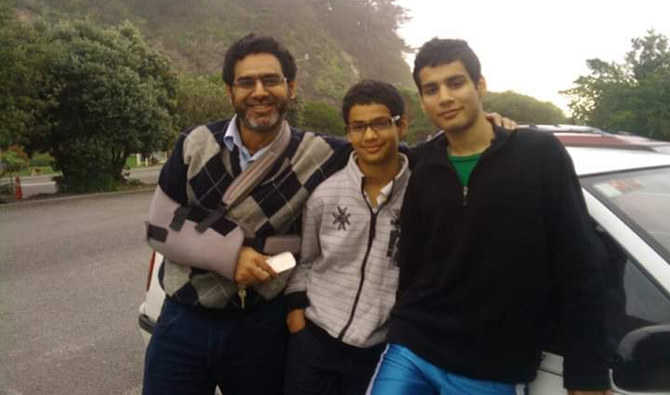
Pakistani-born Naeem Rasheed with his sons Talha Naeem (21) and Abdullah Naeem (19). Talha was also killed in the Christchurch mosque shooting.
4 / 11
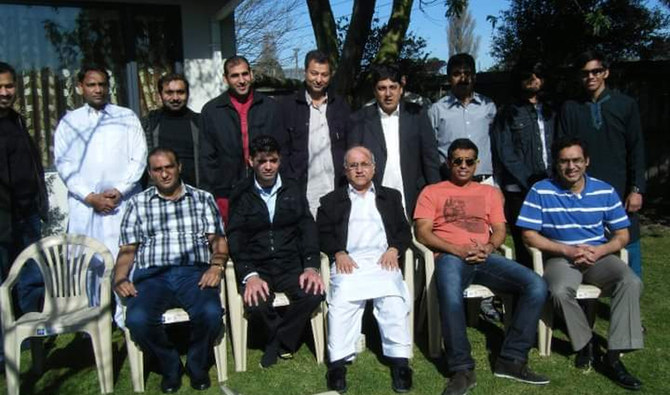
Naeem Rasheed can be seen here sitting to the right (wearing blue shirt with white strips) with other members of the Pakistani community in Christchurch, New Zealand. He was known to his friends as a friendly, kind and generous man.
5 / 11
Pakistani-born Naeem Rasheed with his sons Talha Naeem (21) and Abdullah Naeem (19). Talha was also killed in the Christchurch mosque shooting.
6 / 11
Pakistani-born Naeem Rasheed was a quiet, generous and kind man who always tried to help the weak and needy people.
7 / 11
Pakistani-born Naeem Rasheed who tried to overpower the attacker who killed 50 Muslims in Christchurch mosques.
8 / 11
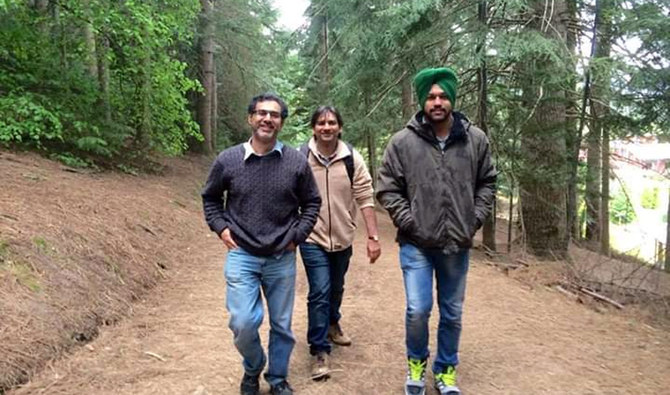
Pakistani-origin Naeem Rasheed (left) and Haroon (centre) were both killed in the Christchurch mosque attack in New Zealand on Friday.
9 / 11
Pakistani-born Naeem Rasheed who tried to overpower the attacker who killed 50 Muslims in Christchurch mosques.
10 / 11
Pakistani-born Naeem Rasheed who tried to overpower the attacker who killed 50 Muslims in Christchurch mosques.
11 / 11
Christchurch mosque hero, Pakistani-born Naeem Rasheed, was known to his friends and family as a humble, kind-hearted and God fearing man.
Updated 16 March 2019
Follow

Family, friends remember Pakistani man who died trying to disarm Christchurch gunman

  • In footage live streamed by attacker on Facebook, Naeem Rasheed could be seen lunging at the gunman in an effort to block him
  • He had moved to New Zealand in 2009 to pursue postgraduate studies, became a university professor and recently wanted to launch a honey business

PESHAWAR: The shock, disgust and disbelief over the killing of 50 people in attacks on two mosques in New Zealand reverberated thousands of miles away in Pakistan’s northwestern town of Abbottabad where a steady procession of family, friends and neighbours arrived on Saturday to offer condolences at the home of Naeem Rasheed.

In the footage of the assault at one of the mosques, live streamed by the attacker on Facebook, Rasheed, 52, could be seen launching himself at the gunman in an effort to stop him. He was gunned down.

By Saturday morning, Rasheed’s four brothers had not yet mustered the courage to tell their 75-year-old mother that her son was dead.

“We had told her he was seriously injured and put her to sleep after much struggle,” Rasheed’s brother Khurshid Alam, a doctor, said. “She woke up at 5am this morning and sat in front of the TV.”

When she learnt of her son’s fate, she went into shock but slowly, calm settled in after she was told that he had “embraced martyrdom while trying to save others.”

The twin attacks in the city of Christchurch on Friday, one at Al Noor Mosque in the center of the city and the other at Linwood Mosque, about three miles away, were ostensibly carried out by a white nationalist extremist who posted live video of the assault and a racist manifesto online.

Rasheed, and his son Talha Naeem, 21, both died in the attack at Al Noor Mosque.

His brother, Rizwan Rasheed, a retired air force officer, said Naeem was the fourth child among five brothers and their mother’s favourite. “He helped everyone … He was everybody’s favourite,” he said.

Rasheed worked as a banker in Pakistan for many years before moving to New Zealand in 2009 for postgraduate studies. His wife and three sons followed him in 2010. After getting a Master’s and a PhD from the University of Christchurch, Rasheed became a professor of business management and marketing there. His son Talha was a civil engineer and only recently employed.

The father and son are survived by Rasheed’s widow, a teacher at a college in Christchurch, and sons Abdullah Naeem, 19, a second-year engineering student, and six-year-old Ayan Naeem, who goes to the second grade.

Nadeem Khan, a resident of Christchurch whose wife is the sister of Rasheed’s widow, described Rasheed as a down to earth, humble man who lived to take care of his family and neighbours and always offered a helping hand to the poor. Recently, he said, Rasheed had purchased some beehives and wanted to start a honey business.

“He had been doing well,” Khan said. “And now the media here is full of praise for Naeem. One local newspaper published a flashing story about his bravery. It is a matter of pride for the Pakistani community here.”

Tariq ur Rahman, a hotel manager who missed the prayers at the Al Noor Mosque on Friday, remembered his “good friend” as a “very pious and kind man.”

“An eyewitness told us that they were hiding in a room inside the mosque when Naeem said he had to do something to stop the attacker,” Rahman said. “He left and ran towards the shooter. Unfortunately, he was shot just before his hands could reach for the gun.”

Rasheed’s uncle Professor Saleem Afzal, a retired teacher at Ayub Medical College, said his nephew had been an upstanding, brave man for as long as he had known him.

“I am proud of what he did inside the mosque,” the professor said.

Ramadan tests Pakistan’s daily wage workers but faith endures

Updated 8 sec ago
Follow

Ramadan tests Pakistan’s daily wage workers but faith endures

  • Reduced work hours during fasting month cut already fragile incomes
  • Charities, local businesses step in as laborers try to support families back home

ISLAMABAD: Abdul Waqif grips a worn-out shovel and digs into the earth beneath the harsh midday sun, his body bent with age but still moving steadily. Moments later, the 70-year-old hoists a heavy bag of cement onto his shoulders and carries it toward an under-construction house, all while fasting.

For Waqif and thousands of daily wage laborers across Pakistan, Ramadan is not just a month of spiritual devotion. It is also a month of shrinking incomes.

Waqif migrated from Mohmand tribal district in northwestern Pakistan to Islamabad two decades ago in search of work. Like many laborers from rural and former tribal areas, he left behind limited local opportunities to earn a living in larger cities such as Islamabad, Lahore and Karachi.

In Pakistan, daily wage workers, particularly in construction and manual labor, are among the most economically vulnerable. They are paid only for days worked, receive no job security or benefits, and often rely on informal arrangements. Any slowdown in economic activity directly affects their ability to feed their families.

Economic activity typically slows during Ramadan, when Muslims fast from dawn to sunset. Employers often reduce work hours or postpone physically demanding projects to ease the burden on fasting workers. While intended as a gesture of consideration, it means fewer working hours and fewer earnings.

For laborers such as Waqif, who earns between Rs1,000-1,200 [$3.59-4.31] per day, even a slight reduction in work can be devastating.

His suhoor, the pre-dawn meal before fasting begins, usually consists of a few chapatis from a nearby hotel. The hunger and thirst that follow him through the day are constant companions as he lifts bricks and mixes cement in the heat.

But so is his faith.

“Allah gives me courage. I am hungry and thirsty, but I keep working,” Waqif said while wiping the sweat off his brow.

Back in Mohmand district, his wife, four daughters and two sons depend on the money he sends home. Every rupee matters.

“I support them with this work,” Waqif said. “I eat three meals a day here and I also have to save money for my children and send it to them.”

The reduction in work during Ramadan weighs heavily on him.

“I don’t find much work in Ramadan, and I’m worried for my family,” Waqif said.

‘HONEST LIVING’

Finding food for suhoor is sometimes a challenge. On some mornings, someone offers him a piece of flatbread. Other times, he buys what little he can afford from a nearby eatery.

Muhammad Sajid, owner of Al-Hadi restaurant in Islamabad’s G-15 sector, says he tries to ease that burden by offering meals to laborers at half price.

“We don’t let anyone go hungry,” Sajid told Arab News. “We offer sehri and iftar as much as anyone can afford.”

The restaurant serves tea, yogurt, several types of curries and parathas.

Charity groups also expand operations during Ramadan, when community support traditionally increases. The Junaid Welfare Foundation runs a roadside dastarkhwan, or communal meal spread, serving hundreds daily.

Haq Rawan Shareefi, a manager at the foundation, said around 500 people are provided iftar meals each day. The cost of one person’s iftar is Rs200 [$0.72].

“That means, on iftar and sehri, our expenses range from Rs150,000 [$538.97] to Rs200,000 [$718.63],” Shareefi said.

For Waqif, breaking his fast at sunset brings temporary relief from the physical strain of the day. But the financial uncertainty remains.

“I ask Allah for this,” he said. “May Allah give me strength to earn honest living for my children.”