


MARDAN: It was just before dawn in March 2016. Gul Kausar and Faryal Mushtaq lay crouched on the ground, their guns pointed at a suspected militant hideout on the outskirts of Mardan.
For what seemed like hours, only the sound of dogs howling in the distance punctured the silence. Then the storm of gunfire began as the team of Pakistani commandos, men and women, exchanged fire with Taliban insurgents until the night went still again.
“In about 45 minutes, we gunned down both Taliban militants,” Kausar Gul, one of 70 women police commandos in the northwestern Khyber Pakhtunkhwa province, told Arab News at the main police station in Mardan. “We have faced dozens of such raids, and if not daily, at least once a week, we have to carry out these operations.”
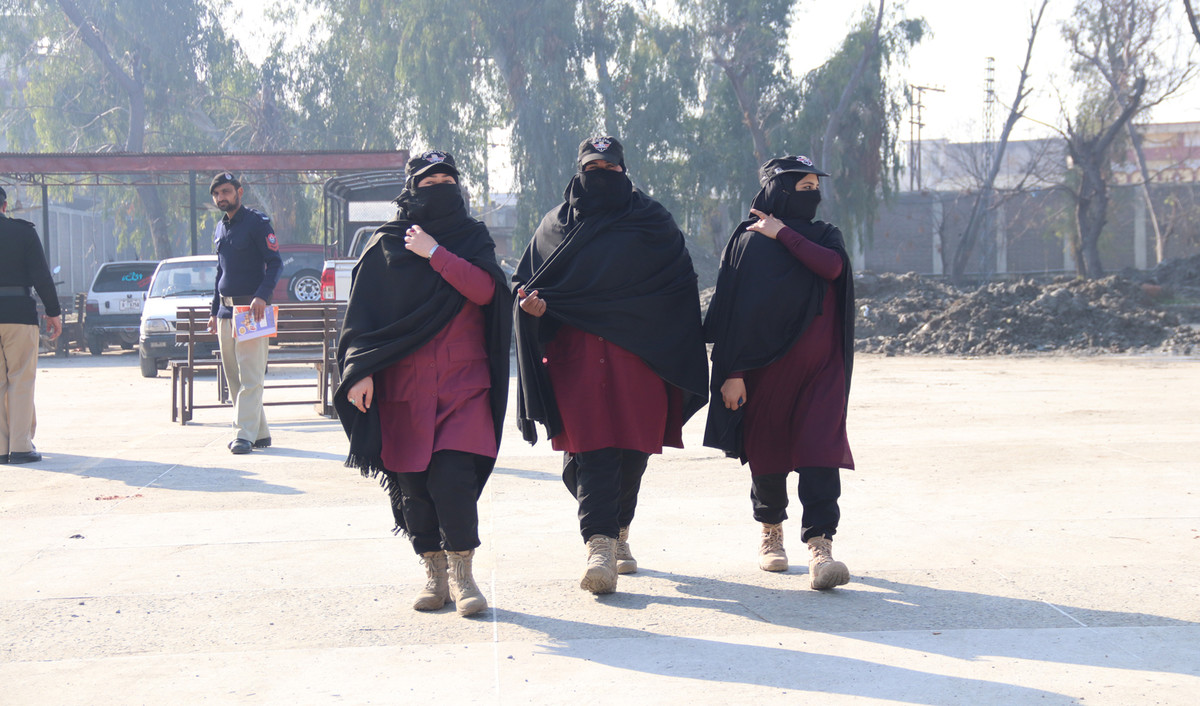
Three women police commandos walk together outside a police station in Mardan city in Pakistan’s Khyber Pakhtunkhwa province on March 5, 2019. (AN photo)
Before 2007, Pakistan’s police women had rarely seen ground combat, their jobs mostly keeping them away from enemy lines. But as Pakistan became embroiled in a long war against an indigenous Taliban insurgency over a decade ago, women have repeatedly had to prove their mettle in battle.
They have patrolled streets with riffles, diffused bombs, and driven police vans down explosive-laden streets. A small number like Gul, and her colleague Faryal Mushtaq, have even done the hardest job of all: engaging the enemy directly in dangerous raids.
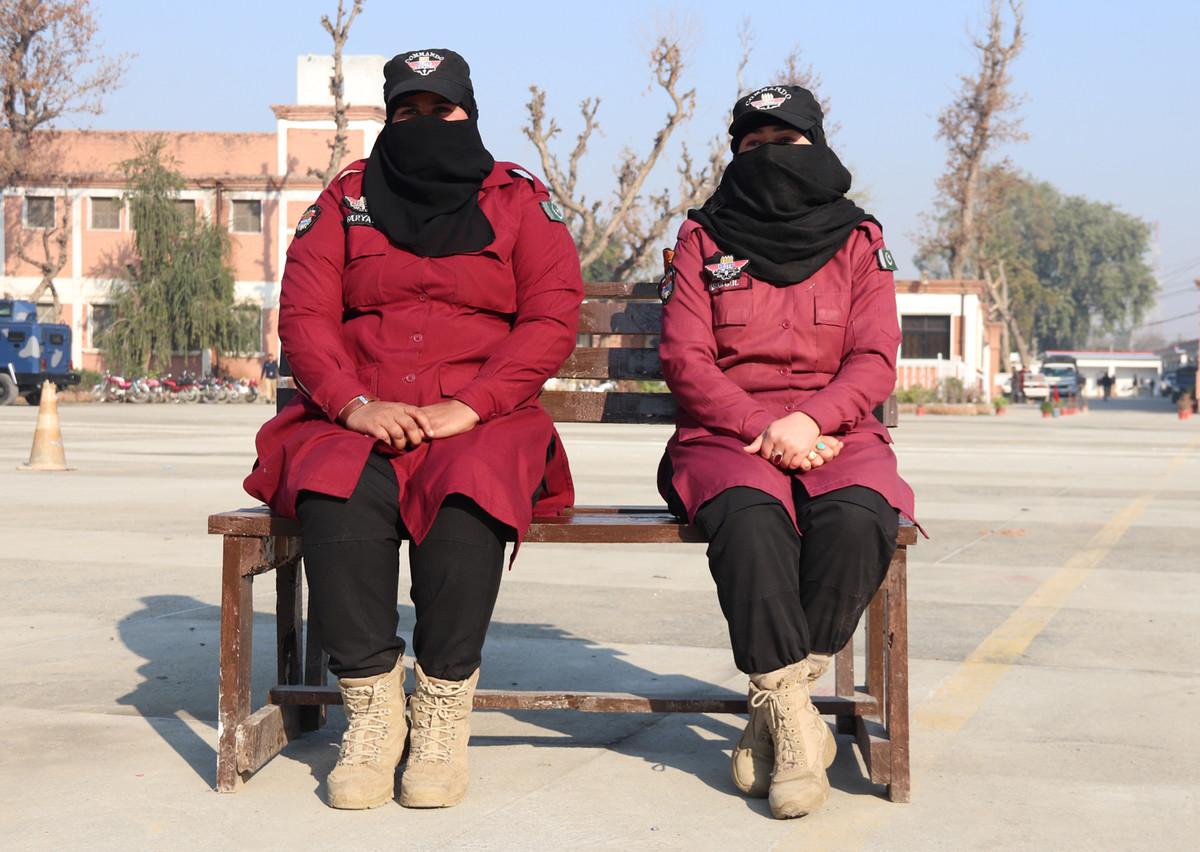
Faryal Mushtaq and Kausar Gul, women elite police commandos in Khyber Pakhtunkhwa police, sit outside a police station in Mardan on March 5, 2019. (AN photo)
In the deeply conservative Khyber Pakhtunkhwa province, where women’s lives are heavily policed and a tiny percentage work outside the home, Mushtaq said she decided to become a cop after her father, Mushtaq Ali, was killed in a clash with militants in 2008.
“My mother was scared when I told her my plans, and rightly so,” Mushtaq said as she adjusted her “Commando Elite Police” cap. “But this was not an emotional decision for me, it was a well thought-out one.”
“Following my father’s footsteps was my biggest dream,” she added, her voice dropping to a whisper.
When the government of Khyber Pakhtunkhwa announced in 2014 that women could also train in combatting terrorism under the supervision of the army’s Special Services Group, Mushtaq immediately signed up. She graduated from the six-month-long course, considered one of the toughest in the police force, in 2016 and is one of six women commandos in Mardan.
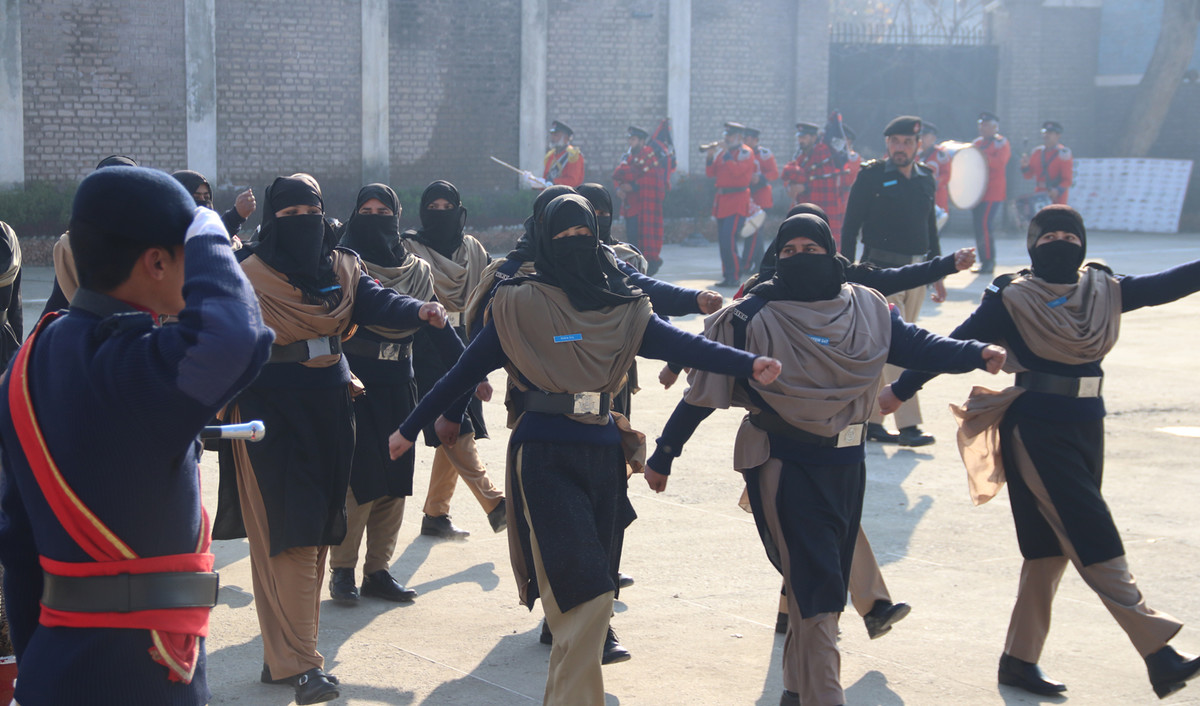
Police women train in Mardan city in Pakistan's Khyber Pakhtunkhwa province on March 5, 2019. (AN photo)
On a balmy day in early March, Mushtaq sat with three colleagues outside the Mardan police station, the silver-lined name-tag on her maroon jacket glistening in the sunlight.
“Since 2016, I’ve been fighting shoulder to shoulder with my male colleagues,” she said. “I take part in search and strike operations against militants and criminals, which is the high point of being a cop.”
Khyber Pakhtunkhwa has a total number of 6,570 elite police commandos. Since 2007, as many as 1,655 officers of the provincial police force have died in the line of duty, according to official figures. Hundreds more are injured, spending out their remaining days quietly in wheelchairs, trauma centers and hospitals.
Rabia Ali, 27, said she was inspired to join the force when she was still in high school where her favorite part of the day was the parade drill. She joined the police at the peak of Taliban militancy in 2009 and became a trained elite commando in 2015.
“The badge and elite force caps make us look different from the rest,” Ali said, chuckling.
But she got serious when asked how she felt about being a commando. “I have learnt the art of using heavy weapons as well as many other tactics, including how to defuse bombs,” she said. “Elite training has given me such a sense of power.”
Next to her, Gul, who hails from the remote village of Hatian, said she was the first person in her family to get an education and join the police. Her first visit to a major city, Mardan, was only after her selection in the force.
“Elite training kills your fear and improves combat skills, ” Gul said. “Now we can take part in any raid and fight wanted persons and their women.”
Senior policeman Malik Shaki said in many of the raids, the women commandos led from the front.
“This is unprecedented in this conservative Pashtun society,” he said.
But though these women have come far, they have had to face their share of obstacles and opposition from family, friends and colleagues. One said her relatives had disowned her when she became a commando, and almost all said they had had family members taunt them for doing a “man’s job.”
“But I have never cared because I am carrying my father’s flag,” Mushtaq said. “Despite all dangers and risks,” Gul piped in, “we have to protect Pakistan.”


