Train service between Pakistan and India fully restored

1 / 7
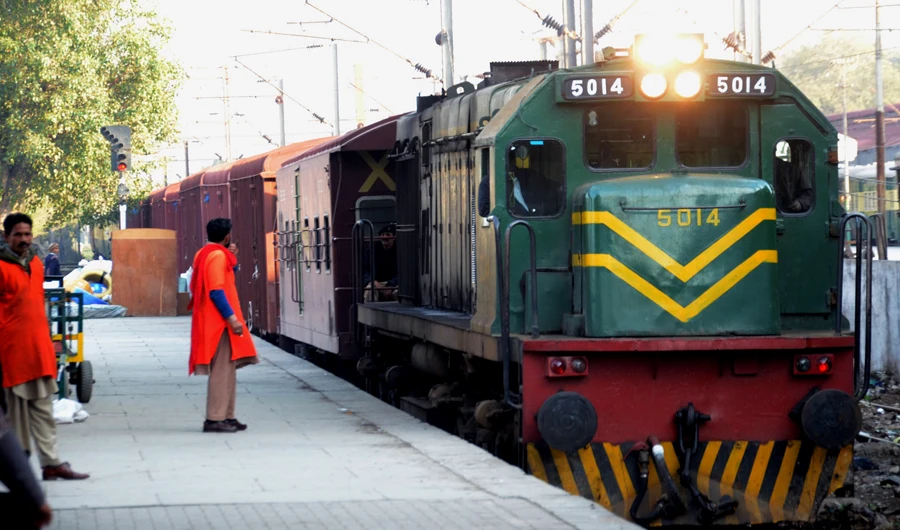
The Samjhota Express reaches the Lahore Railway station carrying 12 passengers.
2 / 7
The Samjhota Express reaches the Lahore Railway station carrying 12 passengers.
3 / 7
The Samjhota Express reaches the Lahore Railway station carrying 12 passengers.
4 / 7
The Samjhota Express reaches the Lahore Railway station carrying 12 passengers.
5 / 7
The Samjhota Express reaches the Lahore Railway station carrying 12 passengers.
6 / 7
The Samjhota Express reaches the Lahore Railway station carrying 12 passengers.
7 / 7
The Samjhota Express reaches the Lahore Railway station carrying 12 passengers.
Updated 04 March 2019
Follow

Train service between Pakistan and India fully restored

  • Samjhota express took 155 passengers to New Delhi and returned with 12 to Lahore
  • The train had been suspended for four days in light of the ongoing crisis along the border

LAHORE: A train service between India and Pakistan, which had been suspended due to a diplomatic crisis between the two countries, was finally restored on Monday evening after a four-day break, officials told Arab News.

The Samjhota Express reached the Lahore Railway Station on Monday evening with 12 passengers on board from Attari, India.

Earlier in the day, nearly 155 passengers who had been stranded at the railway station for the past four days, left for New Delhi from Lahore.

Set up in 1976 after the Simla agreement, the train service runs twice a week between Lahore and New Delhi on every Monday and Thursday morning and from New Delhi on every Saturday and Wednesday night.

It was suspended on February 28 following an escalation along the border which had brought the two South Asian nuclear neighbors on the verge of war, too.  

On Monday, Pakistan announced that it would restore the service -- a move which was reciprocated by India, following which, the general manager for operation of North Indian Railways issued a letter to Pakistan Railways’ officials to restart the service.

Prior to the decision, Indian passengers who had been left stranded at the Lahore Railway Station said they were being taken care of by the railway authorities. With the restoration of the service, 155 passengers left for Attari, India, on Monday morning.

The same train returned to Lahore from Attari carrying 12 passengers.

“Only twelve passengers boarded the train from New Delhi on Sunday night because the passengers did not know that the service was being restored. The train took us to Attari in the morning. From there the train left for Wagah at 2pm,” Kamran Ahmad, a traveler, told Arab News.

Several other passengers urged the two governments not to suspend the train service in the future, pointing out that it was the cheapest means of meeting their families across the border.

“War is no solution to the problems. The two governments should sit on the table to find the solution of issues. Train service should continue as it is the source of getting together the families split in two countries,” Ameena Begum, a resident of Karachi coming from Merith (India), said.

Talking about the situation in India after escalation, Nadeem Shams, another passenger told Arab News that the behavior of the masses had been very hostile towards Pakistan but all of that changed for the better following Prime Minister Imran Khan's peace gesture to release a captured Indian pilot.

“The attitude of the people was aggressive as the leaders were talking about war. The atmosphere became normalized after the release of pilot,” he said.


Pakistan’s Sharif hopes to further ties with Bangladesh as Rahman takes oath as PM

Updated 5 sec ago
Follow

Pakistan’s Sharif hopes to further ties with Bangladesh as Rahman takes oath as PM

  • Tarique Rahman’s election comes amid a thaw in relations between Pakistan and Bangladesh
  • Planning Minister Ahsan Iqbal also met Rahman after oath-taking, invited him to visit Pakistan

ISLAMABAD: Pakistan Prime Minister Shehbaz Sharif on Tuesday said he hoped to further strengthen relations with Bangladesh as Tarique Rahman took oath as the country’s new premier.

Rahman was sworn in on Tuesday after his Bangladesh Nationalist Party’s landslide win in parliamentary elections last week, the country’s first since the massive 2024 uprising and a vote billed as key to the nation’s future political landscape after years of intense rivalry and disputed polls.

The 60-year-old, whose term will last for five years, is the son of former prime minister Khaleda Zia and former president Ziaur Rahman. He is also Bangladesh’s first male prime minister in 35 years. Since 1991, when Bangladesh returned to democracy, either Rahman’s mother or her archrival Sheikh Hasina had served as PMs.

His election as PM comes at a time when Pakistan and Bangladesh appear to be coming increasingly closer, following a thaw in their relations since the ouster of Hasina, who was widely viewed as an India ally. Ties between Bangladesh and New Delhi remain strained over India’s decision to grant asylum to Hasina.

“Warmest felicitations to Tarique Rahman on having been sworn in as the Prime Minister of the People’s Republic of Bangladesh,” Pakistan’s Sharif said on X Tuesday evening.

“I look forward to close and meaningful engagements with my brother, to further strengthen our bilateral cooperation across mutually beneficial areas and to deepen the historic ties between our two countries.”

Earlier in the day, Pakistani Planning Miniter Ahsan Iqbal called on Rahman after his oath-taking ceremony in Dhaka and conveyed warm congratulations on behalf of the government and people of Pakistan on his election, according to the Pakistani information ministry.

“He extended best wishes for the peace, progress and prosperity of Bangladesh under his leadership,” the ministry said. “Iqbal conveyed a formal invitation from the prime minister of Pakistan to Prime Minister Tarique Rahman to undertake an official visit to Pakistan at a mutually convenient date.”

Pakistan and Bangladesh were part of the same country until Bangladesh’s secession following a bloody civil war in 1971. However, Islamabad and Dhaka have lately been looking to strengthen institutional linkages to broaden their cooperation, following a reset of ties.