

Families across Pakistan ecstatic over Saudi’s decision to release prisoners

1 / 4
File photo of Zahir Hussain, with his children from Khyber tribal district, is in jail in Makah for the last six years. Saudi Crown Prince Muhammad bin Salman pledges to release 2,107 Pakistani prisoners in Saudi jails. (By Family)
2 / 4
Daughters and sons of Zakir Hussain pose for a picture, demanding release of their father. Saudi Crown Prince Muhammad bin Salman pledges to release 2,107 Pakistani prisoners in Saudi jails. (By Family)
3 / 4
File photo of Zahir Hussain from Khyber tribal district who is in jail in Makah for the last six years. Saudi Crown Prince Muhammad bin Salman pledges to release 2,107 Pakistani prisoners in Saudi jails. (By Family)
4 / 4
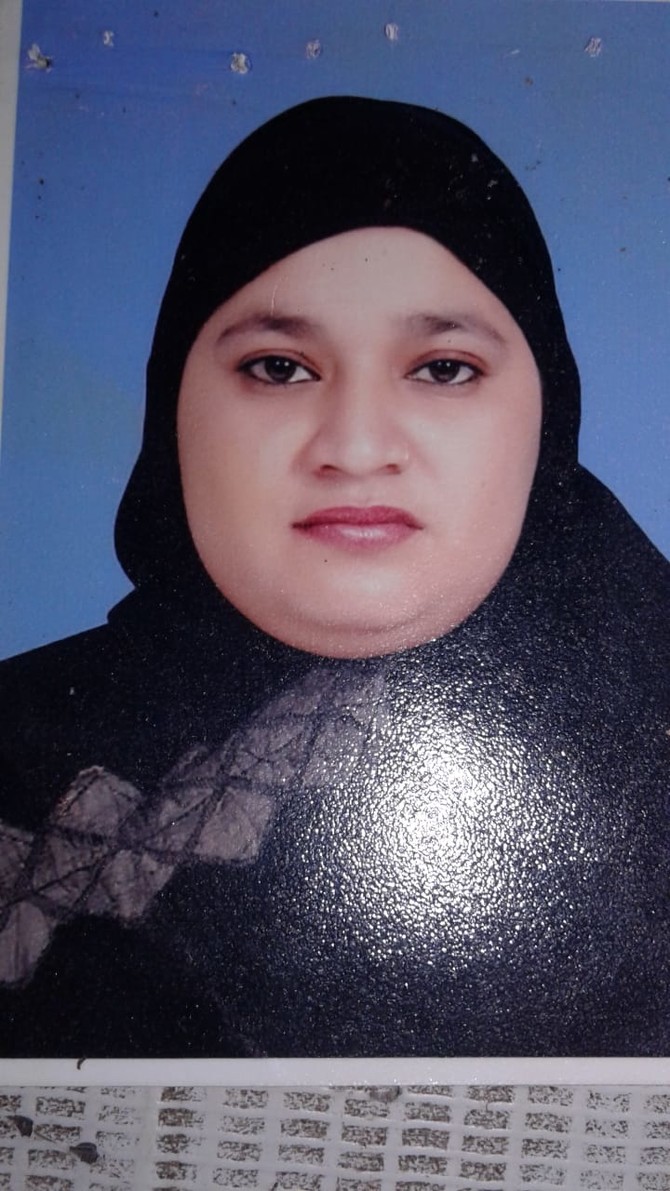
Salma Bibi, a resident of Karachi was arrested for allegedly taking Xanax tablet to the kingdom in June 2015 (Photo provided by family)
Updated 19 February 2019
Follow

Families across Pakistan ecstatic over Saudi’s decision to release prisoners

  • Several said they had lost hope of seeing their loved ones in their lifetime
  • Crown prince issues directive for more than 2,100 languishing in the Kingdom’s jails

PESHAWAR, KARACHI, and DUBAI: A directive issued by Saudi Crown Prince Mohammed bin Salman on Monday has brought back a ray of hope in the lives of a daughter, an ailing father, a husband, and 2,104 other families across Pakistan.

Several said they were overjoyed at the prospect of seeing their loved ones released in their lifetime.  

Zahir Hussain – a father of four and a resident of Khyber tribal district -- has been languishing in a jail near Makkah for the past six years. His brother, Hidayatullah Afridi said that Hussain met with an accident in 2012 which resulted in the deaths of four Saudi nationals in Makkah. 

Since then, Afridi said they had lodged four appeals with the authorities in Saudi Arabia to pardon Hussain and release him, but to no avail. “I hope my father’s name will be on the list of those who will be pardoned,” Afrin Afridi, Hussain’s eight-year-old daughter told Arab News. 

Afridi said that their father had died of a cardiac arrest months after he was informed about Hussain. “We are unable to pay the Diyat but we can pray for a long life with good health for the crown prince. We will remember this favor… for as long as we are alive,” he said. 

Hussain’s case is one of several where the people involved were dealt a bad hand by their circumstances. 

Zakim Wazir, who hails from the North Waziristan tribal district, was caught by security officials for using an expired work permit or iqama and has been in prison for the past four months, his relative, Faiz-ur-Rehman told Arab News. 

"We still haven’t told his parents that he is in detention, otherwise his mother could die of shock. The announcement is the only ray of hope for his release,” he said. 

The "announcement" which Faiz-ur-Rehman is referring to is the decision taken by the crown prison to free 2,107 Pakistani prisoners with immediate effect. It follows Prime Minister Imran Khan's request for the same, with the crown prince reasoning that “we cannot say no to Pakistan”. 

The decision has given those residing in the home of Munawar Ali a reason to celebrate, who said they hoped that Ali’s wife, Salma Bibi, could be one among the prisoners being released. 

Detained in a Dammam jail to serve a 20-year prison sentence, Salma was 30 when she was caught in 2015 at the Jeddah airport for the illegal possession of drugs. 

Ali says he remembers every single detail of that incident vividly when he, along with Salma and their family members, was enroute to Makkah for Umrah. “The charges leveled against her were related to smuggling of drugs into the Kingdom,” the 40-year-old father of five said. 

It was only later that Ali learned that a woman at Jinnah International airport Karachi had given Salma a parcel and had requested her to hand it over to a relative at the Jeddah airport. 

That parcel turned out to be a box of drugs.

The past three and a half years have been extremely tough for the family which depends on Ali's meagre income of $214 every month. “Traveling from Karachi to Islamabad to lodge appeals for clemency has added to the cost,” he said.

Even though he has not received any official confirmation, Ali is confident that Salma would be home soon. “I cannot thank Prime Minister Imran Khan and the crown prince enough for taking such a huge humanitarian decision. Every freedom should be celebrated,” he said.

An emotion that Sarim Burney, chairman of the Sarim Burney Welfare Trust International, agrees with.

Burney, who has been helping Ali in his case, added that by taking the landmark decision, the crown prince has “proved to be a real friend and brother of Pakistan”. 

“We are so grateful to him. He has brought smiles and hope to thousands of people in the country,” Burney said.



EU, Pakistan sign €60 million loan agreement for clean drinking water in Karachi

Updated 17 December 2025
Follow

EU, Pakistan sign €60 million loan agreement for clean drinking water in Karachi

  • Project will finance rehabilitation, construction of water treatment facilities in Karachi city, says European Investment Bank
  • As per a report in 2023, 90 percent of water samples collected from various places in city was deemed unfit for drinking

ISLAMABAD: The European Investment Bank (EIB) and Pakistan’s government on Wednesday signed a €60 million loan agreement, the first between the two sides in a decade, to support the delivery of clean drinking water in Karachi, the EU said in a statement. 

The Karachi Water Infrastructure Framework, approved in August this year by the EIB, will finance the rehabilitation and construction of water treatment facilities in Pakistan’s most populous city of Karachi to increase safe water supply and improve water security. 

The agreement was signed between the two sides at the sidelines of the 15th Pak-EU Joint Commission in Brussels, state broadcaster Radio Pakistan reported. 

“Today, the @EIB signed its first loan agreement with Pakistan in a decade: a €60 million loan supporting the delivery of clean drinking water for #Karachi,” the EU said on social media platform X. 

Radio Pakistan said the agreement reflects Pakistan’s commitment to modernize essential urban services and promote climate-resilient infrastructure.

“The declaration demonstrates the continued momentum in Pakistan-EU cooperation and highlights shared priorities in sustainable development, public service delivery, and climate and environmental resilience,” it said. 

Karachi has a chronic clean drinking water problem. As per a Karachi Water and Sewerage Corporation (KWSC) study conducted in 2023, 90 percent of water from samples collected from various places in the city was deemed unsafe for drinking purposes, contaminated with E. coli, coliform bacteria, and other harmful pathogens. 

The problem has forced most residents of the city to get their water through drilled motor-operated wells (known as ‘bores’), even as groundwater in the coastal city tends to be salty and unfit for human consumption.

Other options for residents include either buying unfiltered water from private water tanker operators, who fill up at a network of legal and illegal water hydrants across the city, or buying it from reverse osmosis plants that they visit to fill up bottles or have delivered to their homes.

The EU provides Pakistan about €100 million annually in grants for development and cooperation. This includes efforts to achieve green inclusive growth, increase education and employment skills, promote good governance, human rights, rule of law and ensure sustainable management of natural resources.