

IDEX 2019: UAE armed forces sign new defense deals

1 / 3
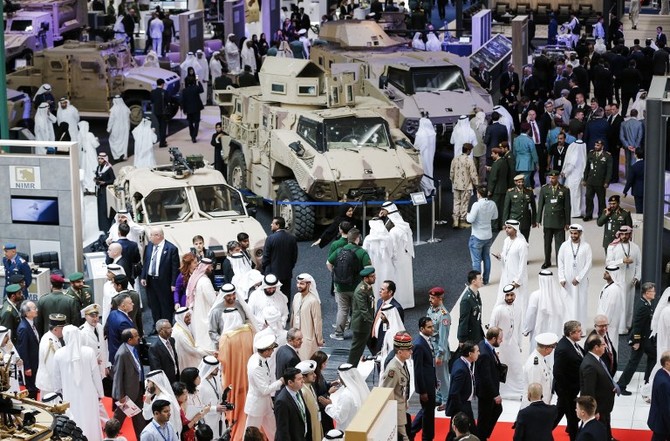
The defense deals were signed at the week-long IDEX military exhibition in Abu Dhabi
2 / 3
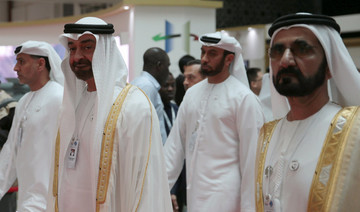
Sheikh Mohammed bin Rashid Al-Maktoum, left, Vice-President and Prime Minister of the UAE and Ruler of Dubai, attends the opening of the International Defense Exhibition and Conference on February 17, 2019. (AFP)
3 / 3
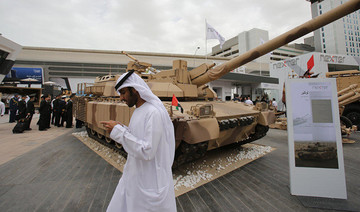
Members of the UAE armed forces show their military skills during the opening of the International Defence Exhibition and Conference on Sunday, February 17, in Abu Dhabi. (AFP)
Updated 19 February 2019
Follow

IDEX 2019: UAE armed forces sign new defense deals

  • Falcon was developed in response to the UAE’s request to replace the Hawk Air Defense System

ABU DHABI: The UAE armed forces has signed $1.17 million worth of defense contracts with local companies and $514.8 million with international companies, military spokesperson Brigadier General Mohammed Al-Hassani said on Tuesday.

The Emirates on Monday also awarded Raytheon a $1.55 billion contract to supply its air force with platform systems to launch missiles.

The agreement was signed at the week-long IDEX military exhibition in Abu Dhabi and followed the award on Sunday of a 1.3 billion-dirham contract to Raytheon to supply the UAE with patriot missiles.

The UAE armed forces signed a total of 7.2 billion dirhams in contracts on Monday, including 5.8 billion dirhams with international companies, Brig. Gen. Mohammed Al-Hassani said, speaking through a translator.

The UAE has signed a total of 12 billion dirhams in contracts since the IDEX exhibition started on Sunday, he said.

Lockheed Martin, Germany’s Diehl Defense, and Sweden’s Saab on Monday launched at IDEX the Falcon air defense weapon system, billed as a replacement to the Hawk system used by countries in the Middle East.

Falcon was developed in response to a UAE request for a replacement for the Hawk system and talks are underway to sell it to the Gulf state, Scott Arnold, Lockheed Martin’s vice president and deputy head of Integrated Air and Missile Defense said.

Weapons sales to the UAE have come under scrutiny over the past year due to the country’s involvement in the Yemen war that has killed tens of thousands of people and pushed the country to the brink of starvation.

The UAE and Saudi Arabia are leading a military coalition, which includes local forces drawn from Yemeni factions, that is trying to restore the internationally recognized government ousted from power in 2014 by the Iran-aligned Houthi movement.
Free trade negotiations between GCC, India mark new phase of partnership, says sec-gen

Updated 24 February 2026
Follow

Free trade negotiations between GCC, India mark new phase of partnership, says sec-gen

RIYADH: The Gulf Cooperation Council’s secretary-general affirmed that the negotiations for a free trade agreement between the GCC and India, and the signing of the joint statement, represents a new phase of strategic partnership.

Jasem Mohamed Al-Budaiwi said that this contributes to enhancing close cooperation and strengthening economic and trade ties, according to the Saudi Press Agency.

This came during the signing ceremony of the joint statement on launching the free trade agreement negotiations between the Al-Budaiwi and India’s Minister of Commerce and Industry, Piyush Goyal, which took place in New Delhi, on Tuesday.

During the signing ceremony, Al-Budaiwi said that the Terms of Reference, signed on Feb. 5, provide a comprehensive and clear framework for these negotiations. The two nations agreed to discuss enhancing cooperation in vital strategic areas, including trade in goods, customs procedures, and services.

Additionally, the framework covers Sanitary and Phytosanitary measures, intellectual property rights, cooperation on Micro, Small, and Medium Enterprises, along with other topics of mutual interest. This reflects the comprehensive nature of the agreement and its ability to keep pace with the future economy.

Al-Budaiwi expressed hope that these negotiations would lead to a comprehensive and ambitious free trade agreement that works to remove customs and non-customs barriers, enhance the flow of quality investments in both directions, and achieve further liberalization in trade and investment cooperation between the GCC and India for mutual benefit. 

This would provide a stimulating economic environment and an investment climate that opens broad horizons for the business sector, supports supply chains, and accelerates the pace of economic growth in line with the ambitious developmental visions of the GCC states. 

The top official affirmed the full readiness of the General Secretariat to host the first round of negotiations at its headquarters in Riyadh during the second half of this year.

The two sides held a meeting during which they reviewed the existing cooperation relations between the GCC and India and discussed ways to develop and elevate them to broader horizons, serving mutual interests and enhancing opportunities for strategic partnership between the two sides, particularly in the economic, investment, and trade fields.

They praised the role undertaken by the negotiating teams from both sides, appreciating the efforts contributing to reaching a comprehensive agreement that enhances economic integration and supports the smooth flow of trade between the two nations.