

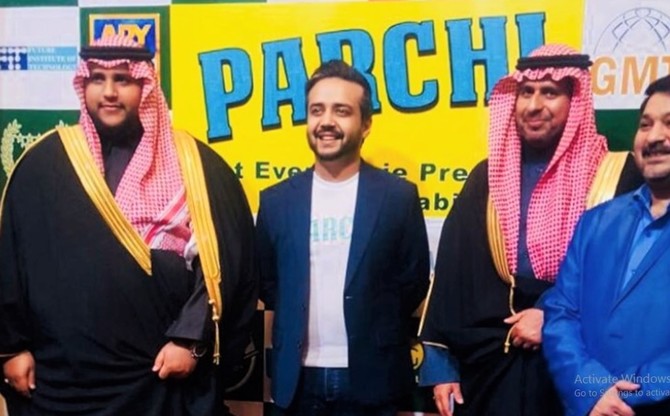

ISLAMABAD: Pakistani film director Azfar Jafri said he hoped his next film, Heer Maan Ja, would premier in Saudi Arabia to packed crowds just as his last film Parchi had exactly one year ago.
In January 2018, Parchi became the first Pakistani film ever to release in Saudi Arabia and one of the first international films to release in the Kingdom after it ended a nearly 40-year ban on cinemas under a push by the crown prince to modernize the deeply conservative Muslim kingdom.
“I hope that my fourth film Heer Maan Ja has a premiere in Riyadh as its predecessor Parchi did and I hope the response is bigger than it was before,” Jafri told Arab News.
Last year’s cinema opening and film premiers in Saudi Arabia mark another milestone for reforms spearheaded by Crown Prince Mohammed bin Salman to open the country culturally, including by easing restrictions on public concerts, women driving and gender mixing. The kingdom also held its first-ever fashion show last year with a women-only audience.
“To say it was the best experience is an understatement,” said Parchi producer and CEO of IRK films Imran Raza Kazmi, describing the film premier in Riyadh. “I was completely overwhelmed with the amazing response we received. We weren’t expecting a crowd of that intensity to come. They had to increase the number of shows and seats because of the overwhelming response.”
He said the release of Parchi had paved the path for future filmmakers from Pakistan to go to the Kingdom and showcase their work. Recently, Kazmi has joined hands with a Saudi production and distribution company to distribute Pakistani movies in the Kingdom.
“We have some interesting projects lined up and we will recruit talent from there as well, so that should be interesting,” Kazmi said.
The Kingdom shutdown cinemas in the early 1980s under pressure from Islamists but its citizens have remained avid consumers of Western media and culture and Hollywood films and television series are widely watched at home and private film screenings.
In 2017, the government said it would lift the ban and set up around 350 cinemas with over 2,500 screens by 2030, which it hopes will attract nearly $1 billion in annual ticket sales.
“It is matter of pride to be the torch bearer of sharing entertainment, culture and our unique voice with audience in the Kingdom of Saudi Arabia,” Jafri said.
The Parchi premiere at the Pakistani embassy in Riyadh was attended by senior officials including Prince Abdul Aziz Bin Matab Bin Thenayan Bin Mohamed Al Saud.
“We had a great discussion on the Pakistani film and drama industry and it was great to know that he was a big fan of Pakistani dramas and movies,” Jafri said.
“Pakistani talent must spread out and work in other countries as well,” Jafri said. “I believe it’s a good time for the Pakistani film industry and who knows one day we would have Saudi Arabia holding film festivals for all Muslim countries! Wouldn’t that be great?”


