SYDNEY: Strong winds on Sunday are expected to fan forest fires that have been burning for a week through New Zealand’s South Island, forcing thousands of people from their homes, with more residents expected to flee, officials said.
The Pigeon Valley fire covers 2,300 ha (5,700 acres) with a 25 km (15 mile) perimeter, NZ Civil Defense said in a statement on its website.
No deaths have been reported and only one home destroyed.
“There is some concern about predicted high winds this afternoon, which are expected to test the control lines,” the agency said.
Early on Sunday, 155 firefighters were battling the blaze on the ground with air support from 23 helicopters and 3 fixed wing planes, the agency said, making it the largest aerial firefight on record in New Zealand.
Up to 3,000 people have been forced to leave the Wakefield and Pigeon Valley areas, NZ Civil Defense Controller Roger Ball told a Saturday news conference on Saturday.
More people were likely to be forced from their homes on Sunday.
New Zealand Red Cross Communications Manager Ellie van Baaren said evacuees were tired and frustrated.
“When you have to leave your home and in some cases your livestock and animals and you don’t know what’s become of them, and you’re staying with friends and family, then it’s an uncertain situation for everybody,” she told Reuters by telephone.
Much of the affected area south of Nelson was used for forestry but it also has many small farms. Some livestock has also been moved to safety.
Fires started on Monday and Tuesday and quickly spread. On Wednesday, authorities declared a state of emergency.
Hundreds of volunteer and professional firefighters, police, civil defense and military personnel are battling the fires.

New Zealand wildfires show no sign of easing, 3,000 flee
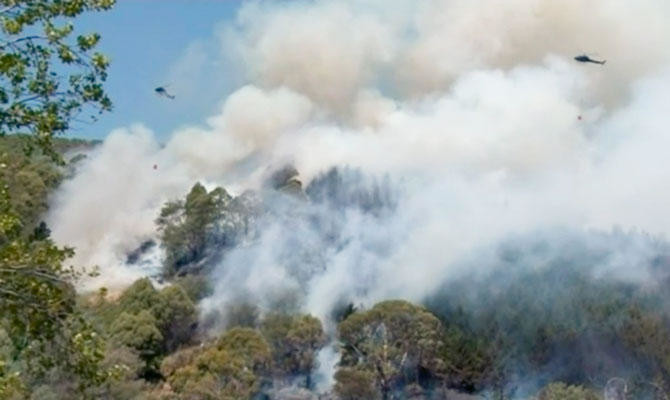
- Up to 3,000 people have been forced to leave the Wakefield and Pigeon Valley areas, NZ Civil Defense Controller Roger Ball told a Saturday news conference on Saturday
Trump administration steps up efforts to scrutinize foreign funding of universities
- US colleges and universities disclosed 8,300 transactions totaling $5.2 billion in 2025 — which includes funding from governments as well as private companies and individuals
WASHINGTON: The Trump administration is stepping up work to uncover what it sees as malign foreign influence at US colleges and universities, officials said on Monday as they announced that the State Department would assist the Department of Education in that effort. President Donald Trump has threatened to cut federal funding to universities over issues such as pro-Palestinian protests against US ally Israel’s war in Gaza, transgender policies, climate initiatives and diversity, equity and inclusion programs, raising free speech and academic freedom concerns. Trump in April 2025 issued an executive order calling for enforcement of Section 117 of the Higher Education Act, which requires colleges that receive federal funding to report gifts or contracts worth more than $250,000 from any foreign source, and the Department of Education in December launched a new portal for universities to report that funding.
Under Secretary for Public Diplomacy Sarah Rogers said the State Department’s new role would “ensure an invigorated compliance assurance effort by the federal government.”
“The Department of State will be applying our national security expertise and our expertise countering foreign malign influence to bolster oversight efforts by the Department of Education,” Rogers told reporters in a briefing at the State Department.
Officials declined to spell out specific examples of how foreign funding had unduly influenced higher education institutions, and said they were primarily seeking to boost compliance by the universities and improve transparency. The US Senate subcommittee on investigations in 2019 issued a report documenting China’s impact on the US education system, sparking renewed enforcement of the disclosure rules. US colleges and universities disclosed 8,300 transactions totaling $5.2 billion in 2025 — which includes funding from governments as well as private companies and individuals, the education department said in a statement. The largest source of funding last year was Qatar ($1.1 billion), followed by Britain ($633 million) and China ($528 million), it said.


