Pakistan aims to cash in on ‘donkey business’ with China

1 / 12
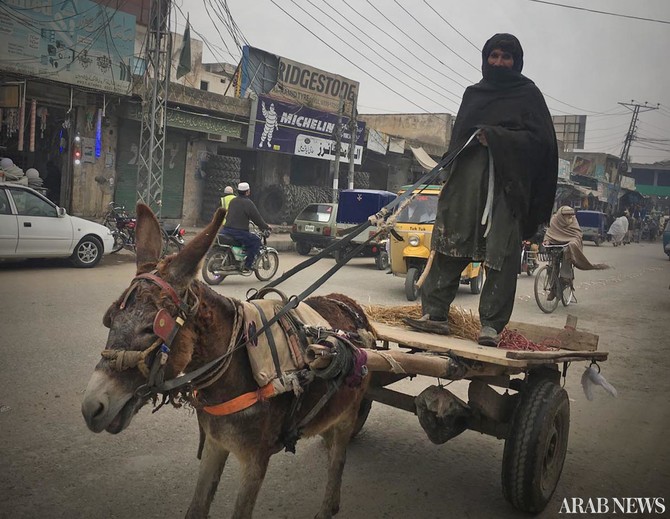
Donkey cart is less expensive and slow transportation business in the region. (AN photo)
2 / 12
Lal Zameen daily visits along with his donkey cart to earn for his family. For last 2 decades his livelihood is attached to this business. (AN photo)
3 / 12
More than 70,000 families are dependent on donkeys in Khyber Pakhtunkhwa. (AN photo)
4 / 12
Dozens of donkey cart owners daily carry vegetables, unrefined sugar and other season cash crops to city markets. (AN photo)
5 / 12
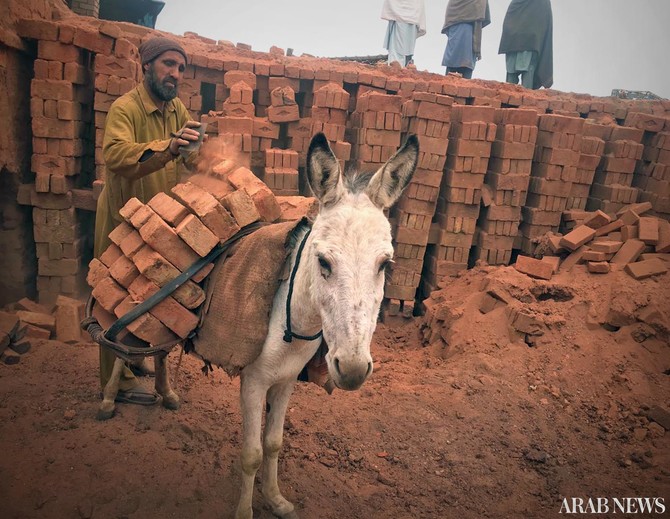
Donkeys are used effectively in bricks kiln. (AN photo)
6 / 12
Donkey takes bricks from few feet oven to the proper stock area. (AN photo)
7 / 12
Mumtaz Khan is in bricks profession since 15 years, he has four kids all of them study in schools. (AN photo)
8 / 12
WazeerGul has purchased his donkey on 16,000 rupees few months ago for kiln. (AN photo)
9 / 12
Section of Entomology at Agriculture Research Institute, Peshawar. (AN photo)
10 / 12
Live Stock Department. (AN photo)
11 / 12
This donkey dependency could not diminish as small farmers like their own cheap transportation for their crops. (AN photo)
12 / 12
Piled the bricks in order with the help of a donkey. (AN photo)
Updated 05 February 2019
Follow

Pakistan aims to cash in on ‘donkey business’ with China

  • Chinese firm will invest $2 billion in donkey farms and export
  • Deal to be signed after Chinese New Year

PESHAWAR: Pakistan is poised to sign a $2 billion deal with China to set up donkey farms in Pakistan’s northwestern Khyber Pakhtunkhwa (KP) province and export the animals to the neighboring country, a representative at the provincial livestock department said on Monday.
China is Pakistan’s closest ally and the two countries are partners in a $60 billion China-Pakistan Economic Corridor of energy and infrastructure projects, which Beijing touts as the flagship infrastructure program in its vast Belt and Road Initiative.
Sher Muhammad, the director general of the provincial livestock department, said a deal would be signed with a government-owned company from Kashgar after the Chinese New Year (February 5, 2019) whereby China would set up donkey farms in Pakistan and export donkeys.
This idea of investing in donkeys was floated by the previous chief minister of the province, Pervaiz Khattak, during the Beijing Road Show in April 2017.
Under the deal, donkey farms will be established in Mansehra, Dera Ismail Khan and the provincial capital of Peshawar.
“Donkeys die on the sea path and luckily, the Chinese border touches the northern [Khyber Pakhtunkhwa] province and is good for road export,” Muhammad said.
Muhamad said the livestock department and Brooke Hospital for Animals, a non–profit, had conducted surveys to determine that the livelihood of at least 70,000 families was attached to the province’s 0.5 million donkeys used in farming, brick kilns, construction and transportation.
Only in Beijing city alone, 500 restaurants serve donkey meat, the director said. The Chinese are interested in donkeys not just for food consumption but also to use its meat, bones, skin and other parts in cosmetics, medicines and other decoration pieces and its milk in shampoos and beauty soaps.
Muhammad said the government would export only 80,000 tagged animals annually under strict supervision to control smuggling and would start a “parallel process of artificial insemination” so that local donkey populations on which Pakistanis are dependent did not dwindle.


Pakistan Airports Authority reports ‘historic’ twin-engine aircraft landing in Lahore

Updated 13 December 2025
Follow

Pakistan Airports Authority reports ‘historic’ twin-engine aircraft landing in Lahore

  • Twin-engine aircraft are usually larger, heavier and require better airport infrastructure, navigation systems to land
  • Pakistan Airports Authority says landing reflects its commitment to enhance aviation sector, strengthen infrastructure

ISLAMABAD: The Pakistan Airports Authority (PAA) announced on Saturday that the New General Aviation Aerodrome achieved a significant milestone when it handled the landing of a twin-engine aircraft. 

A twin-engine aircraft has two engines that provide it redundancy and increased performance compared to single-engine counterparts. These aircraft range from small twin-engine propeller planes to large commercial jetliners. The presence of multiple engines enhances safety by allowing the aircraft to continue flying in the event of an engine failure.

However, twin-engine aircraft are usually larger, heavier and more complex than single-engine planes. They require advanced airport infrastructure such as better runways, navigation systems and air traffic coordination. 

“The New General Aviation Aerodrome, Lahore achieved another significant operational milestone today with the successful landing of a twin-engine aircraft, following the recent arrival of a single-engine aircraft,” the PAA said in a statement. 

It said the flight was also boarded by Air Vice Marshal Zeeshan Saeed, the director general of the PAA. The move reflected “strong institutional confidence” in the aerodrome’s safety standards, operational capability, and overall readiness, it added. 

“The landing was conducted with exceptional precision and professionalism, demonstrating the aerodrome’s robust operational framework, technical preparedness, and effective airside coordination in accordance with contemporary aviation requirements,” the PAA said. 

It said the landing represented a “major advancement” in Pakistan’s general aviation sector and underscores the PAA’s commitment to enhancing regional aviation capacity, strengthening infrastructure and promoting excellence in aviation development.