

Review: Netflix’s first Emirati show is fascinating but lacks wit

The show was just released on Netflix. Image Supplied
Updated 26 January 2019
Follow

Review: Netflix’s first Emirati show is fascinating but lacks wit

CHENNAI: Ahmed Khaled’s web series, “Qalb Al-Adalah,” or “Justice” as it is titled in English, is the first Emirati series to run on Netflix and is being streamed with subtitles in 20 different languages.

The 18-episode production was created by Oscar-nominated Walter Parkes, producer of “He Named Me Malala,” along with Emmy Award-winning producer William Finkelstein, creator of “L.A. Law, NYPD Blue.”

The series is based on actual cases that explore Islamic law and was produced in partnership with the Abu Dhabi Judicial Department, who acted as consultants on the show and provided access to real the cases.
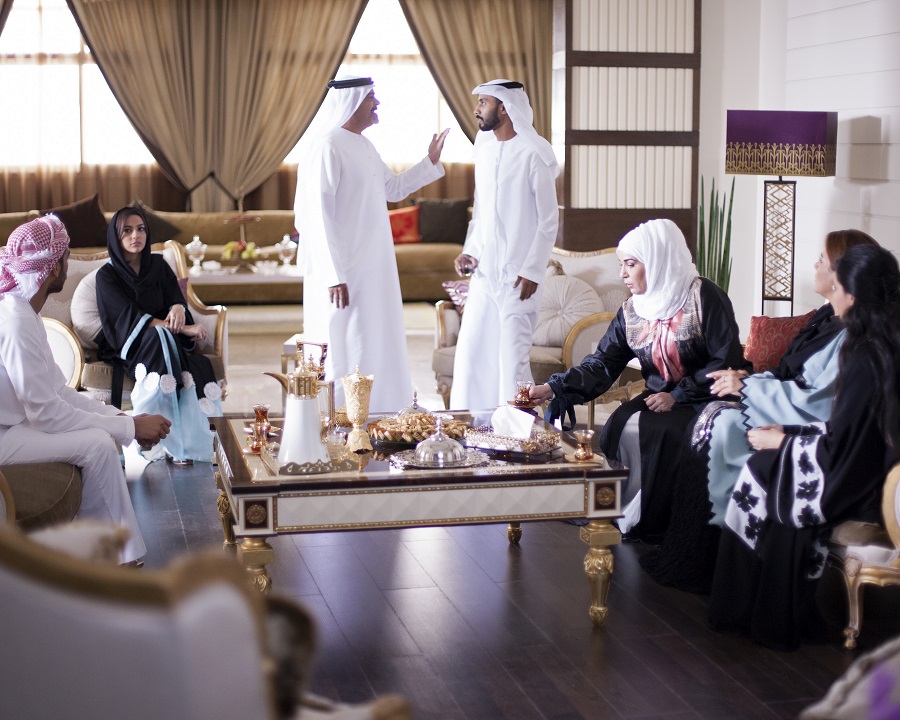


A still from 'Justice.' Image Supplied

The series has a long arc as it follows the series protagonist, Farah, played by Fatima Al-Taei.

Armed with a US law degree, she returns home to Abu Dhabi, but does not conform to her the wishes of her father, Hassan (played by Mansoor Al-Feeli), to join his law firm.

“Justice” explores the subtle personal and professional tension between the two, deftly weaving into the plot several legal cases, some of them quite interesting.



A still from 'Justice.' Image Supplied

The storyline of Nadine, played by Lebanese actress Nicole Saba, who spends nightmarish days in jail and the courtroom after being accused of murdering her husband, allows for fascinating revelations, as does a case about child rape by a school bus driver and a paternity suit in which Farah throws religion and legal conventions to the winds when she asks for the exhumation of a body.

Fortunately, the show is not confined within the chambers of law.

We see Leila (Farah’s younger sister, played by Neven Madi) struggling with feelings for a married professor. We watch Farah’s own emotional upheaval after Khaled, a public prosecutor played by Mohamed Al-Amiri, declares his love for her. We also journey through Hassan’s own struggles with the misfortunes of his wife, Fatima, portrayed by Malak Al-Khalidi.
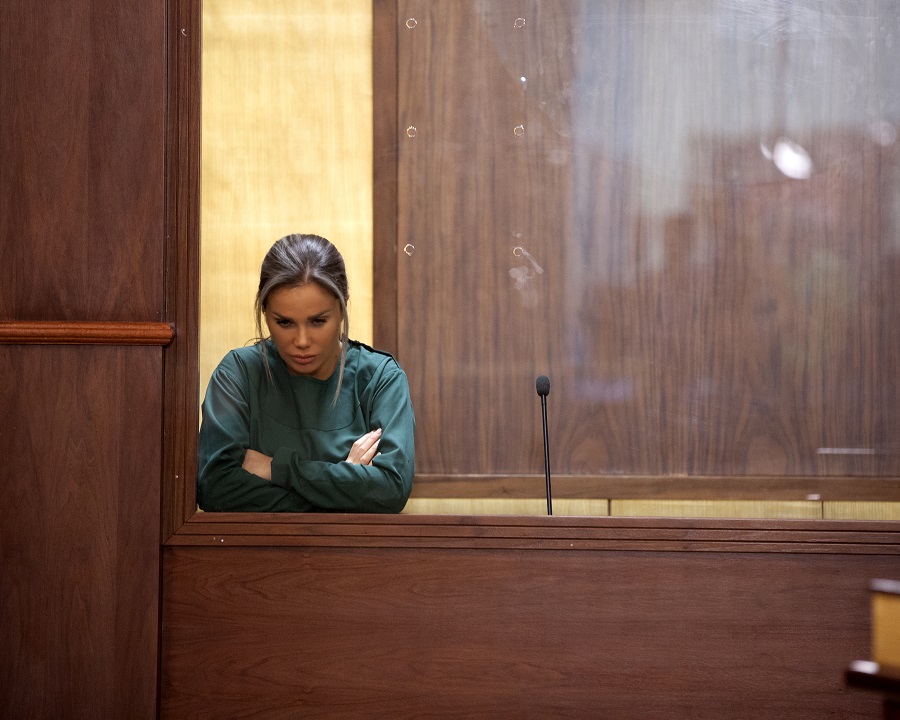


A still from 'Justice.' Image Supplied

Nevertheless, what pulls “Justice” several notches down is its inability to liven up the narrative. Indeed, much of the arguments in the courts are long and devoid of wit or even a trace of lighter moments.

They are invariably sombre, even repetitive, and the 18 episodes can be a drag. Even the lead performances are monotonous, leaving us yearning for humorous and dramatic courtroom scenes.


Living Pyramid to bloom beyond Desert X AlUla

Updated 01 March 2026
Follow

Living Pyramid to bloom beyond Desert X AlUla

ALULA: Desert X AlUla officially closed on Feb. 28, but one of its most striking installations — the Living Pyramid —will continue to flourish. 

Tucked away within a lush oasis surrounded by ancient rock formations, Agnes Denes’ creation fuses art and nature, offering a living testament to resilience and connection.

Through her current rendition of The Living Pyramid for Desert X AlUla 2026, Denes seeks connection, likening it to bees constructing a new hive after disaster.

The pyramid structure is teeming with indigenous plants, forming layered patterns that echo the surrounding desert landscape. 

It blends harmoniously with the rocky backdrop while proudly standing apart.

“There is no specific order for the plants other than not to place larger plants on the very top of the pyramid and increase the number of smaller plants up there,” Iwona Blazwick, lead curator at Wadi AlFann in AlUla, told Arab News.

Native plants cascading down the pyramid include Aerva javanica, Leptadenia pyrotechnica, Lycium shawii, Moringa peregrina, Panicum turgidum, Pennisetum divisum, Periploca aphylla and Retama raetam. 

Aromatic and flowering species such as Thymbra nabateorum, Rhanterium epapposum, wild mint, wild thyme, Portulaca oleracea, tamarisk shrubs, Achillea fragrantissima, Lavandula pubescens, Salvia rosmarinus, and Ruta graveolens form distinct layers, adding color, texture and subtle fragrance to the pyramid.

“Each Living Pyramid is different. The environment is different, the people are different. I’m very interested in the different societies that come together on something so simple,” Denes said in a statement.

“Connection is what’s important; connection is what the world needs. I keep comparing us to a lost beehive or an anthill. And I wrote a little poem: This. And this is. Bee cries out. Abandon the hive. Abandon the hive,” she said.

Denes was born in Budapest, Hungary, in 1931 and is now based in New York. While the 95-year-old has not made it physically to the site in Saudi Arabia, she designed this structure to cater to the native plants of the area.

Her Living Pyramid series has certainly taken on reincarnations over the past decade. 

It debuted at Socrates Sculpture Park in New York in 2015, was recreated in Germany in 2017, appeared in Türkiye in 2022, and then London in 2023. 

In 2025, she showcased a version at Desert X 2025 in Palm Springs, California, and Luxembourg City. 

Most recently, in 2026, at Desert X AlUla.

While officially part of Desert X AlUla, the Living Pyramid stands apart and is housed separately, a short drive away from the other art works.

“The (Living Pyramid) artwork will stay for around a year, to showcase a full year’s effect on the plants throughout the different seasons,” Blazwick said.

After the year is up, it won’t go down. The plants will continue its metamorphosis beyond the pyramid. 

“The plants will be replanted and will have a new home within an environment that will suit their needs,” Blazwick concluded.