ISLAMABAD: Pakistan has loosened travel restrictions in the hope of reviving tourism by offering visas on arrival to visitors from 50 countries and electronic visas to 175 nationalities, the government said on Friday.
The reforms, approved by the cabinet, would open up a new era for the tourism industry, which was devastated by violence after the September 11, 2001, attacks in the US, Minister of Information Fawad Chaudhry said.
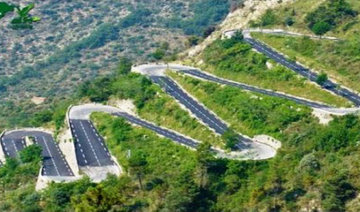
“We have mountain tourism, we have beach tourism,” Chaudhry told reporters in Islamabad, referring to Himalayan peaks and Arabian Sea beaches seldom visited by foreigners.
“Pakistan is a heaven for tourists.”
Chaudhry did not identify the countries that would benefit from the new rules but in December, he told Reuters that citizens of most European countries would be granted a visa on arrival.
Tourists would also be allowed to visit the politically sensitive Himalayan region of Kashmir and other northern areas, which now require special permission.
The new rules would also ease travel restrictions on foreign journalists, Chaudhry said.
The new visa regime comes after some countries eased travel advisories on Pakistan in light of improvements in security.
Pakistan was last a prominent tourist destination in the 1970s when the “hippie trail” brought Western travelers through the apricot and walnut orchards of the Swat Valley and Kashmir on their way to India and Nepal.
Since then, deteriorating security and the imposition of a harsh interpretation of Islamic laws has chipped away at the number of visitors.
But security has since improved dramatically in recent years, with militant attacks down sharply in the mainly Muslim country of 208 million people.
The state Pakistan Tourism Development Corporation said last year tourist arrivals rose to 1.75 million in 2017, media reported.

Pakistan eases visa rules to ‘heaven for tourists’
- The reforms, approved by the cabinet, would open up a new era for the tourism industry
- Tourist arrivals rose to 1.75 million in 2017
Russian cyclist finds warm welcome on Saudi Arabia’s roads
- Anna Rodnishcheva’s ride through Kingdom is defining chapter in solo expedition
- Rodnishcheva cycled to Aqaba, crossed the border into Saudi Arabia, and has since traveled through Tabuk, AlUla, Madinah, Jeddah, and Taif on her way to Riyadh
MAKKAH: Solo adventurer Anna Rodnishcheva, 27, has undertaken an ambitious journey that spans countries, climates and cultures — on a bicycle.
Born and raised in Moscow and trained as a biologist before becoming an event photographer, she now finds herself pedaling thousands of kilometers across unfamiliar landscapes in pursuit of discovery, connection, and the simple joy of movement.
In her conversation with Arab News, Rodnishcheva offered a detailed account of her ongoing route in Saudi Arabia, describing how the expedition is her third major cycling adventure.
After previously riding from Moscow to Sochi and later from Vladivostok to Sochi — a route that stretches across the entirety of Russia — she felt compelled to explore foreign lands by bicycle.
She set off from Moscow heading south last June, passing through Russia, Georgia, and Turkiye before flying from Antalya to Amman. She cycled to Aqaba, crossed the border into Saudi Arabia, and has since traveled through Tabuk, AlUla, Madinah, Jeddah, and Taif on her way to Riyadh.
Rodnishcheva explained that physical preparation played only a small role in her planning. She began slowly and allowed her body to adapt naturally over the first month.
The true challenge, she said, was in the mental and financial preparation. She spent a year and a half planning the journey, even though she originally intended to postpone it for several more years.
Ultimately, her belief that “life is short” convinced her to start with the resources she already had. Although she sought medical evaluations and additional vaccinations, she was unable to complete them all and decided to continue regardless.
Her journey through Georgia and Turkiye presented unexpected difficulties. Simple tasks such as finding groceries or locating bicycle repair shops became more challenging outside of Russia, where she knew how to navigate on a budget.
She also encountered language barriers, though the situation improved when a local cyclist joined her in Georgia. The intense midsummer heat added another layer of difficulty, but she had prepared herself for such conditions.
One of the most striking moments of her trip occurred as she crossed from Jordan into Saudi Arabia. She described the experience as surreal and emotionally overwhelming, likening it to the adventures of a literary hero traveling across the Arabian Peninsula.
Her anxiety eased unexpectedly when she got a flat tire at the border, bringing her back to the present.
Despite being warned that crossing by bicycle would be prohibited, the process went smoothly, and she was struck by the friendliness of both Jordanian and Saudi officials. She expressed particular surprise at meeting a female Saudi passport officer, an encounter that challenged her previous assumptions about women’s roles in the Kingdom.
Rodnishcheva said the hospitality she had experienced in Saudi Arabia surpassed anything she had encountered on previous journeys. Drivers frequently stop to offer her water, fruit, or sweets, and several families have generously hosted her in their homes or guest flats.
She emphasized that she feels completely safe traveling across the Kingdom, especially on the open roads between cities, noting the strong and visible security presence.
She has also observed significant differences in weather. While the stretch from the border to Jeddah was hot despite being winter, the climate changed dramatically after climbing Al-Hada in Taif, turning cooler and windier — a climate she compared to Russian summers.
Rodnishcheva documents her travels primarily through Russian-language platforms such as VK and Telegram. Although she maintains YouTube and Instagram accounts, she explained that her schedule left little time for frequent updates.
Offering a message to women around the world who dream of embarking on similar adventures, she said such journeys were “not as scary as they seem before you start,” though they may not suit everyone.
Her closing advice? “Listen to your heart.”