JENDOUBA, Tunisia: Tunisian divorcee Latifa counts herself lucky — she has a modest home that boasts a neat vegetable garden, a fig tree, and a pomegranate tree, along with a panoramic view of neighboring farmland.
“Without this land that my father gave me, I would be nothing,” she told AFP, happy to have escaped a violent marriage with her two teenage children in Jendouba, northeastern Tunisia.
“I guess it’s part of my inheritance,” Latifa smiled hopefully, surveying a homestead that she built by careful use of the 10 dinars ($3.5, three euros) per day she earns as a laborer on nearby farms.
“But here it is rare for a woman to inherit land.”
A bill that would equalize inheritance rights between men and women has created debate here in Tunisia’s countryside, where gender discrimination is the strongest and its consequences the most disastrous.
In common with other Muslim nations, Tunisian inheritance law currently provides that a son receive twice as much as a daughter from a father’s estate.
When her father dies, Latifa is counting on her three brothers to let her stay on the small parcel of land she occupies.
They “owe me that — I am the oldest, (and) I didn’t go to school because I had to take care of them,” said the 48-year-old, who also has four sisters.
Even applying the current law’s 2:1 formula should safeguard Latifa’s future, since the land already granted to her by her father is less than the roughly 3,500 square meters (0.35 hectares) she is entitled to out of a total estate of 40,000 square meters.
But in rural areas, the current law is rarely applied, so male heirs often end up taking considerably more than double their female counterparts.
Latifa’s neighbor Skhyara Bouslemi is less fortunate.
Skhyara has five brothers, including several who have built homes and paddocks on family land.
The land is too small for everyone to have a share.
“There is nothing left for my sisters and I to take — what could we do with our share? It’s just 13 square meters,” she sighed.
Skhyara works all day to feed her children and her husband, a sick carpenter.
Latifa has sympathy with Skhyara and others whose brothers leave them with little or nothing.
“Often, the brothers tell their father it would be better if you give us the inheritance to ensure that it remains in the family,” she said.
“A woman who makes her claim is silenced by a small sum of money... (or) a basket of produce from time to time,” Latifa lamented.
She hopes — without daring to believe — that the situation will change, thanks to legislation pushed by Tunisian President Beji Caid Essebsi.
The bill proposes that the inheritances of men and women be made equal, unless the person making the will goes through clear legal channels to state otherwise.
The proposed law change will soon be discussed in committee, before being submitted to a plenary session in parliament.
The legislation has unleashed passionate debate in families, on television shows and among political parties.
It has also reopened a fissure on the place of religion in Tunisian society, as tensions rise ahead of elections later this year.
In the hamlets of fertile Jendouba, many men are anxious to safeguard their privilege.
“I work this land — it’s normal that I have more than my sister,” said Mehrez Sakhri, who owns one of the farms Latifa works on.
“It is what our grandfathers said” should happen.
“This is the way the land has been passed on. Perhaps in 2040, things could change — but not now,” Sakhri added, as his workers harvested peas.
Mehrez’s father Mohammed is less resistant to change.
Mohammed said he would like to share the family’s 30 hectares equally between his sons and his only daughter, who he “loves very much.”
And making inheritance law equal is not trespassing on religious matters, he added.
“Many people are greedy. They cite the Qur’an to demand a two-thirds inheritance, but when it comes to paying the 10 percent” nobody bothers, Mohammed said, referring to an obligation in the Muslim holy text to pay a tenth of one’s income as alms to the poor.
For activist and lawyer Sana Ben Achour, the unequal inheritance law is rooted in a “patriarchal tradition,” which is sometimes dressed up in religious terms, leaving women vulnerable.
“In large parts of Tunisia, women don’t even get the small share of inheritance that they’re entitled to — especially when it comes to land and homes,” she said.
Without receiving their share “they can only work, so when a woman retires or is sick and has no income, she falls into a precarious situation.”

In rural Tunisia, inheritance reform offers women rare boost
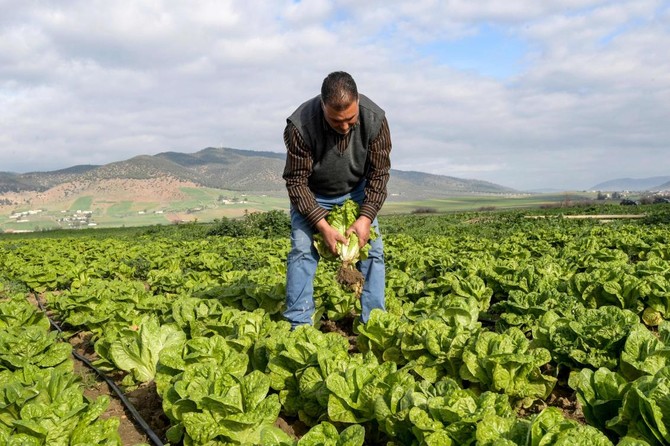
- The bill proposes that the inheritances of men and women be made equal, unless the person making the will goes through clear legal channels to state otherwise
- The legislation has unleashed passionate debate in families, on television shows and among political parties
Sudan Quintet urges ‘those with influence’ to halt weapons flow, deescalate conflict ahead of Ramadan
- Group of 5 organizations condemns ‘increasingly destructive means of warfare’ in Sudan’s civil war, warns that civilians bear the brunt of fighting
- UN spokesperson describes ‘horrific’ situation on the ground, expresses ‘deep alarm’ at escalating attacks on civilian and humanitarian infrastructure
NEW YORK CITY: A group of five international and regional organizations on Wednesday called for an immediate end to flows of weapons and fighters into Sudan, and for coordinated action to deescalate the war in the country and protect civilians as the third anniversary of the start of the conflict approaches.
The so-called Sudan Quintet — comprising the African Union, the Intergovernmental Authority on Development, the League of Arab States, the EU and the UN — said those with influence over the warring factions must act to “halt the flow of weapons, fighters and other forms of support that sustain violence and contribute to the fragmentation of Sudan.”
In a joint statement, the Quintet expressed “grave concern at the continued escalation of the conflict” and called for “the immediate halting of any further military escalation, including the use of increasingly destructive means of warfare.” Civilians are bearing the brunt of the fighting, it warned.
The conflict began in April 2023 when tensions between rival military factions the Sudanese Armed Forces and the paramilitary Rapid Support Forces escalated into full-scale war in the capital Khartoum and spread across the country.
The war has killed tens of thousands of people; US intelligence officials and independent analysts have suggested the true death toll could be in the hundreds of thousands.
The conflict has also triggered what the UN describes as one of the worst humanitarian crises in the world. More than 33 million people are in need of humanitarian assistance, and more than 13.6 million have been displaced by the fighting, 9.3 million of them within Sudan and about 4.3 million to neighboring countries.
The Quintet said the rapidly deteriorating situation in the Kordofan region and Blue Nile State was particularly alarming, citing reports of deadly drone strikes, the tightening grip of sieges around major population centers, and attacks on critical infrastructure such as hospitals, schools and humanitarian assets.
It also highlighted issues such as forced displacements, severe constraints on humanitarian access, and attacks on aid convoys. These developments “underscore the urgency of immediate action to prevent atrocities,” it said.
Recalling “the horrors witnessed in El-Fasher” and earlier warnings that went unheeded, the Quintet said civilians “must no longer bear the cost of ongoing hostilities.” The organizations stressed that the protection of civilians and critical infrastructure was a fundamental obligation under international law, and that the principles of international humanitarian law applies to all parties to the conflict.
“Civilians and civilian infrastructure must be protected, international humanitarian law must be respected, and safe, rapid and unhindered humanitarian access to all areas in need must be ensured,” they said.
“Serious violations of international humanitarian law cannot go unaddressed,” they added, and perpetrators must be held accountable.
With the start of the holy month of Ramadan only a week away, the Quintet urged all sides to embrace efforts to broker a humanitarian truce and “immediately deescalate hostilities” so as to prevent further loss of life and enable life-saving assistance to reach those in need.
The organizations reaffirmed their commitment to the sovereignty, unity and territorial integrity of Sudan, and said they remain committed to efforts to facilitate a Sudanese-owned, inclusive political dialogue with the aim of ending the war and paving the way for a peaceful political transition.
The situation on the ground in Sudan continues to be “horrific,” UN spokesperson Stephane Dujarric said on Wednesday as he expressed “deep alarm” at “the escalating attacks that we’re seeing in the country, where aerial strikes are placing civilians at grave risk and directly hitting humanitarian and public infrastructure.”
A drone strike on a mosque in the city of Al-Rahat in North Kordofan state at dawn on Wednesday killed two children and injured 13, all of them students attending a school at the mosque.
This followed drone strikes on a primary school in the town of Dilling in South Kordofan late on Tuesday, where injuries were also reported. The same night, a World Food Programme warehouse in Kadugli, the state capital of Kordofan, was struck by a suspected rocket attack that caused significant damage to buildings and mobile storage units.
In recent days drone strikes been reported in other parts of South Kordofan, North Kordofan and West Kordofan, Dujarric said, all of them close to key supply routes connecting the city of El-Obeid in North Kordofan with Dilling and Kadugli in South Kordofan.
“This is endangering civilians, including humanitarian workers,” Dujarric told reporters in New York. “The fact that we have to reiterate almost every day that civilians, civilian infrastructure, places of worship, schools and hospitals cannot and should not be targeted is a tragedy unto itself.
“Yet we have to keep reminding the parties of this almost every day, and that they need to respect international humanitarian law amid these deeply concerning developments.”


