

Turkey says it has capacity to create ‘safe zone’ in Syria alone

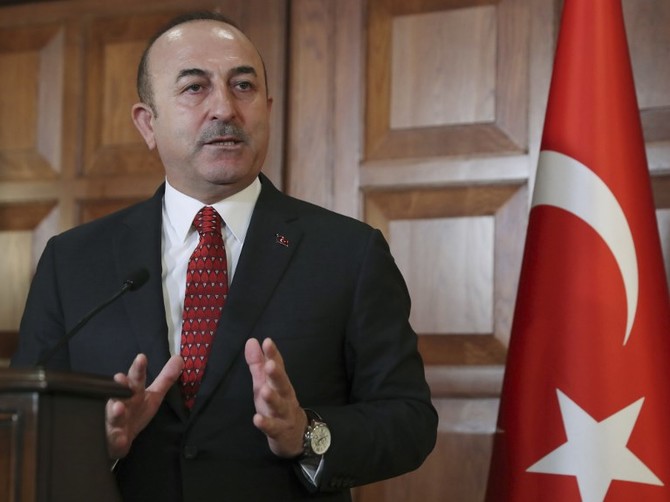
The Turkish Foreign Minister Mevlut Cavusoglu, above, says they are on the same page with Russia, except on the issue of Al-Assad staying in office. (AFP)
Updated 24 January 2019
Follow

Turkey says it has capacity to create ‘safe zone’ in Syria alone

Turkey has the capacity to create a "safe zone" in Syria on its own but will not exclude the United States, Russia or others if they want to cooperate, Turkish Foreign Minister Mevlut Cavusoglu said on Thursday.

Speaking to broadcaster A Haber, he said Ankara and Moscow were on the same page regarding a Syrian political solution aside from the issue of whether President Bashar al-Assad should stay in office. He added that Turkey was in indirect contact with the Syrian government, without providing details.



Lebanon’s government approves a deal to transfer Syrian prisoners back to Syria

Updated 30 January 2026
Follow

Lebanon’s government approves a deal to transfer Syrian prisoners back to Syria

  • Lebanon and Syria have a complicated history with grievances on both sides
  • A key obstacle to warming relations has been the fate of about 2,000 Syrians in Lebanese prisons

BEIRUT: Lebanon’s Cabinet on Friday approved an agreement to transfer Syrian prisoners serving their sentences in Lebanon back to their home country.
The issue of prisoners has been a sore point as the neighboring countries seek to recalibrate their relations following the ouster of former Syrian President Bashar Assad in a lightning offensive by Islamist-led insurgents in December 2024. Former insurgent leader Ahmad Al-Sharaa is now Syria’s interim president.
Lebanon and Syria have a complicated history with grievances on both sides. Many Lebanese resent the decades-long occupation of their country by Syrian forces that ended in 2005. Many Syrians resent the role played by the Lebanese militant group Hezbollah when it entered Syria’s civil war in defense of Assad’s government.
A key obstacle to warming relations has been the fate of about 2,000 Syrians in Lebanese prisons, including some 800 held over attacks and shootings, many without trial. Damascus had asked Beirut to hand them over to continue their prison terms in Syria, but Lebanese judicial officials said Beirut would not release any attackers and that each must be studied and resolved separately.
The deal approved Friday appeared to resolve that tension. Lebanese Information Minister Paul Morcos said other issues remain to be resolved between the two countries, including the fate of Lebanese believed to have been disappeared into Syrian prisons during Assad’s rule and the demarcation of the border between the two countries.
Lebanon’s Deputy Prime Minister Tarek Mitri told reporters after the Cabinet meeting that about 300 prisoners would be transferred as a result of the agreement.
Protesters gathered in a square below the government palace in downtown Beirut ahead of the Cabinet vote to call for amnesty for Lebanese prisoners, including some who joined militant groups fighting against Assad in Syria. Some of the protesters called for the release of Sunni cleric Ahmad Al-Assir, imprisoned for his role in 2013 clashes that killed 18 Lebanese army soldiers.
“The state found solutions for the Syrian youth who are heroes and belong to the Syrian revolution who have been imprisoned for 12 years,” said protester Khaled Al- Bobbo. “But in the same files there are also Lebanese detainees. ... We demand that just as they found solutions for the Syrians, they must also find solutions for the people of this country.”