MASHKAI, Balochistan: Liaquat Ali, a 30-year-old laborer, couldn’t help but burst into tears of joy when he got the key last month for his new two-room, mud-brick house.
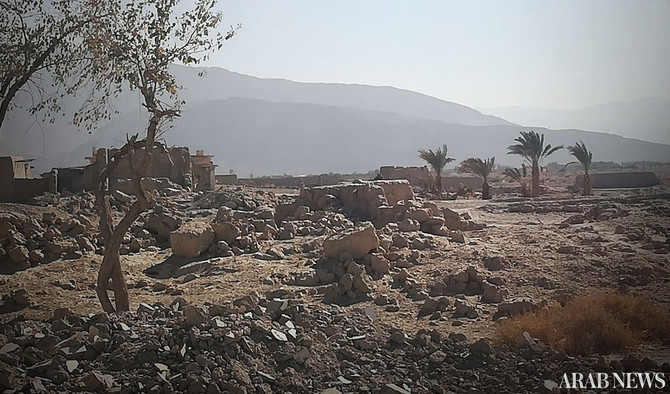
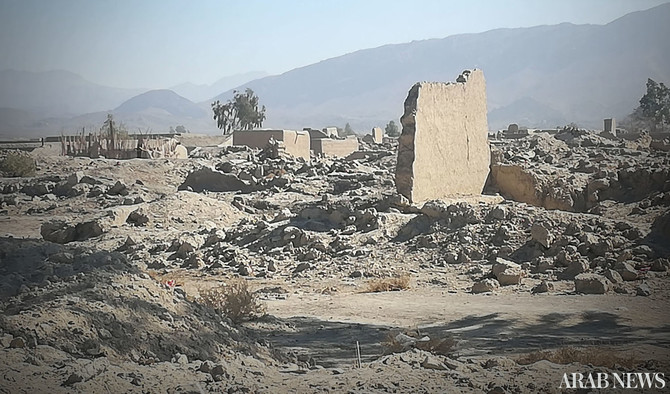
Ali’s former mud home was destroyed five years ago in two devastating quakes in Baluchistan, a huge earthquake-prone province of rugged mountains and deserts in Pakistan’s southwest.
According to official figures, over 825 people died and 200,000 had their lives disrupted when a 7.7 magnitude quake struck on September 24, 2013, followed by another one four days later. The quakes destroyed homes and knocked off communication systems. Ali’s home district of Awaran was the worst affected.
“After all those miserable days, I am happy I got a home,” Ali told Arab News.
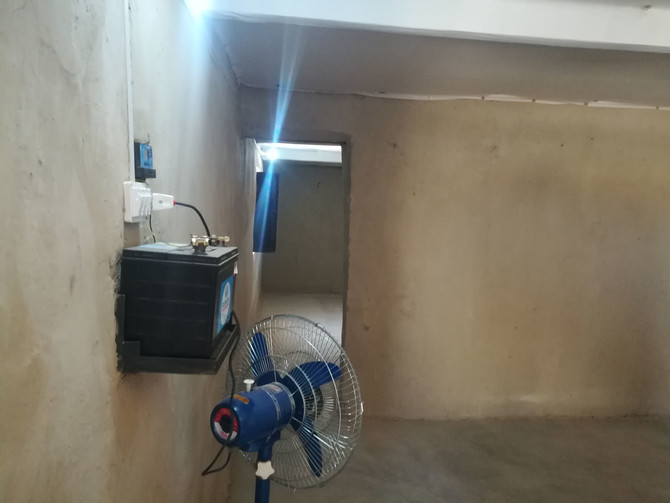
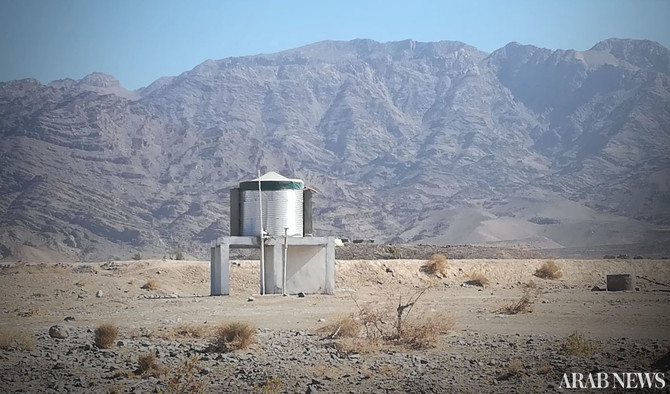
“I couldn’t imagine that I would get all these facilities in my hometown,” Ali said as he walked around his house and pointed to a solar panel on his rooftop. He said the home had uninterrupted electricity and water and he paid no bills.
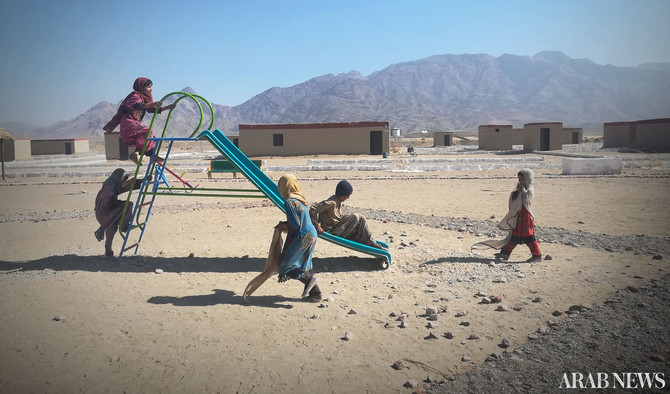
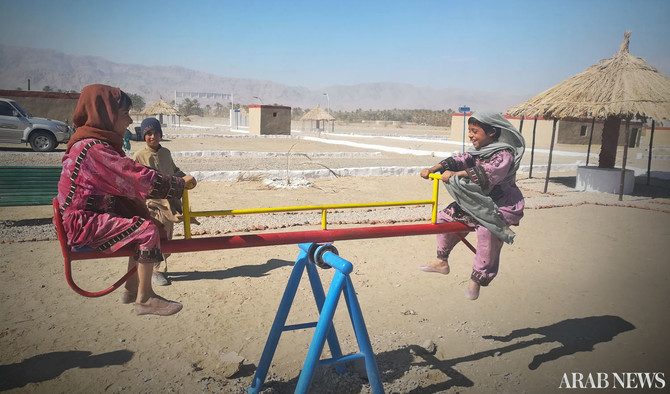
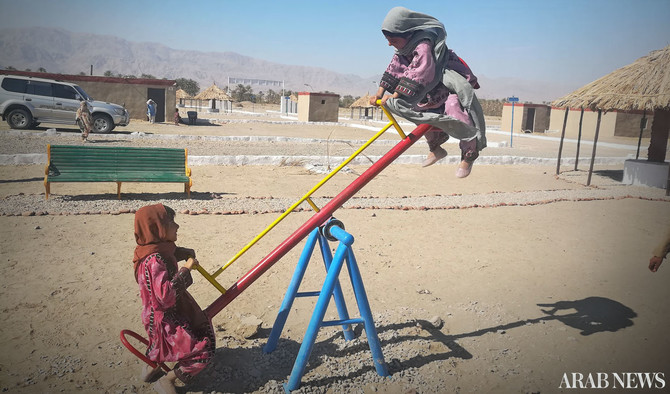
“Our kids have a playground and a school,” Ali said. “What more could we ask for?”
But Ali’s family is only one of thousands that need shelter in Mashkai, the largest of the three administrative divisions that make up Awaran district, with a population of 34,625 people living in a smattering of 94 tiny villages.
The building of the 75-house model village by the Pakistan army is but a tiny blip is the gargantuan rebuilding task that Baluchistan requires.
About 21,000 homes were destroyed across Baluchistan during the earthquake, 9,000 of them in Mashkai alone, forcing thousands of people to live in tents near their wrecked homes or flee to other parts of the province.
“The construction of the model village by the army is a good step but to help thousands of the affectees requires some large-scale efforts by the civilian government, which has the prime responsibility of providing shelter,” said Ahmed Iqbal Baloch, a social activist who owns the Baloch language Vsh News channel.
Locals said the government had done little to help them since the earthquakes but Zahoor Ahmed Buledi, the provincial minister for information, claims the provincial government has provided relief.
“Thousands of homes have been built by the provincial government,” he claimed, declining further comment. However, Baloch said no houses had been built. “The government had given Rs50,000 per family, an amount which was insufficient for constructing a house,” Baloch said.
Baluchistan, which borders Iran and Afghanistan, is one of the poorest regions of Pakistan and has some of the worst health indicators in the country.
The province is also home to Baloch militants engaged in a decades-long conflict with the central government which they accuse of discrimination in distribution of revenues from oil, gas and minerals.
The 2013 quake was followed by a spate of attacks on army and paramilitary troops. Two soldiers delivering relief supplies were killed by a roadside bomb near Awaran, rockets fired by the militants narrowly missed military helicopters carrying aid and there were several attacks on relief convoys.
“Since violence was at its peak [when the earthquakes took place], neither government nor NGOs [non-governmental organizations] could enter the area,” said Baloch, the social activist. “Even then Chief Minister Dr. Abdul Malik failed to enter area.”
Security in Baluchistan has improved since as thousands of militants have surrendered amid vast investment from Beijing’s Belt and Road infrastructure splurge. A new transport corridor, the China Pakistan Economic Corridor through Baluchistan, will link Western China with Pakistan’s Arabian Sea port of Gwadar and is due to be operational soon.
While militants vow to disrupt work on the corridor a senior security official in Gajjar, the headquarter of Mashkai, said the military had made major security gains. He described a time when a local college was turned into the head office of the Baloch Liberation Front and no cars could travel in the area after dark.
“The civilian administration was almost non-existent,” said the official, who declined to be named as he was not authorized to speak to journalists on the record. “But now private vehicles pass by without fear, even during nights. The people can send their children to school and bazaars are open. The peace has been restored”
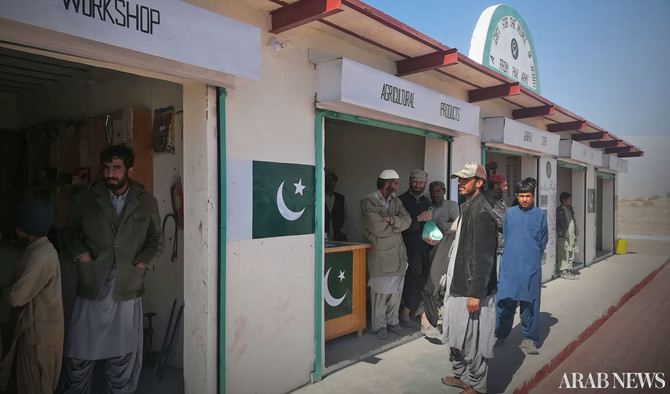
He said the army had launched many projects in the area including renovating schools, setting up a telemedicine facility and opening vocational training centers.
“As the people of this poor and neglected area cannot afford to construct houses, we also thought constructing a model village could bring some relief to lives of some of the [earthquake] affectees,” the official said.
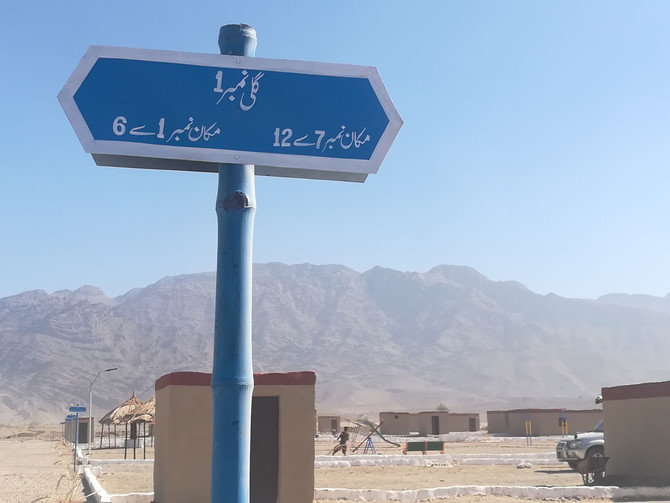
Work on the model village, which cost Rs.15 million, began on May 26 last year and was completed on December 14.
“This mega project has been built on a self-help basis by the army in short span of six months,” a statement by the military’s media wing said, adding that in addition to the homes, the village also had a mosque, children’s play area and soccer and cricket grounds.
But Ali said a lot more needed to be done.
“We need more such houses,” he said. “We need roads and employment to come.”


![]()
![]()
![]()
![]()
![]()
![]()
![]()
![]()
![]()
![]()
![]()
![]()
![]()
![]()
![]()

Balochistan residents get ‘model homes’ five years after quake





Balochistan residents get ‘model homes’ five years after quake
- Army inaugurated Rs.15 million 75-house village in December
- The model village has soccer and cricket grounds, mosque, school and children’s play area
Latest updates


Recommended


© 2026 SAUDI RESEARCH & PUBLISHING COMPANY, All Rights Reserved And subject to Terms of Use Agreement.