RIYADH: Crude oil prices recovered by the end of the week, with the Brent crude price settling above $60 per barrel after deteriorating below that level during the week. The Brent price rose to $62.70 per barrel and WTI rose to $53.80 per barrel.
The price market structure for the Brent crude price has flipped to a slight backwardation after hovering in a slight contango for the past two weeks. Even if the OPEC+ output cut of 1.2 million barrels per day (bpd) is yet to be reflected in the market, this signals an upcoming tight market amid strong supply-demand fundamentals and a well-balanced market for the first half of 2019.
Conversely, some market participants assumed a far more bearish fundamental outlook, while output cuts by the Organization of the Petroleum Exporting Countries (OPEC) should limit inventory builds and settle the market in a sustainable range above $75 per barrel for Brent, especially when the US continues to push for zero waivers on Iranian crude oil imports.
Iran’s crude oil output averaged 3.8 million bpd in 2017 and fell to 2.7 million bpd by the end of 2018, despite the US granting waivers in early November 2018 to eight of the largest importers of Iranian crude oil. If the US does not intend to renew the waivers, Iran’s crude oil output is likely to fall further below 2.5 million bpd.
The International Energy Agency’s (IEA) monthly report came with stronger oil demand this year compared with 2018, despite the expected economic slowdown amid concerns over economic growth in China and the US.
The IEA also reported that US oil output will rise by 1.3 million bpd in 2019, though S&P Global Platts reported US oil rigs dropping for the ninth consecutive week when Brent prices fell below $70 per barrel in mid-November 2018. Baker-Hughes drilling statistics show that the US oil-rig count has been moving in a relatively narrow band of 858-886 since June 2018.
China, as the world’s second-largest economy and largest crude oil importer, took advantage of the low oil prices in late 2018 and imported a record 10.35 million bpd in December 2018, amid independent refiners lifting their import quotas. China’s crude oil imports in 2019 are likely to rise before the impact of the OPEC+ output cuts on the market.
In late 2018, US refiners that have enjoyed record wide discounts of Western Canadian Select (WCS) to WTI are now threatened as this discount has narrowed amid Alberta’s output cuts of 325,000 bpd throughout 2019.
Consequently, US refining margins are threatened, while American refiners are already struggling with a glut of refined product inventories. Wide Canadian price spreads have played a major role in justifying rampant refinery utilization in the US, particularly in the mid-continent. Nevertheless, the narrowed discount means higher net-backs for Canadian oil sands producers.
The US Energy Information Administration (EIA) reported mid-continent refining utilization capacity averaging around 93 percent in 2018, when US refiners basically profited from the widening WTI/WCS spread.
Planned winter maintenance in US refineries started in early January. This will give some relief to the US downstream amid robust refined product inventories. Some refiners might choose to extend maintenance in an effort to bring a degree of balance to the oversupplied refined products market.


![]()
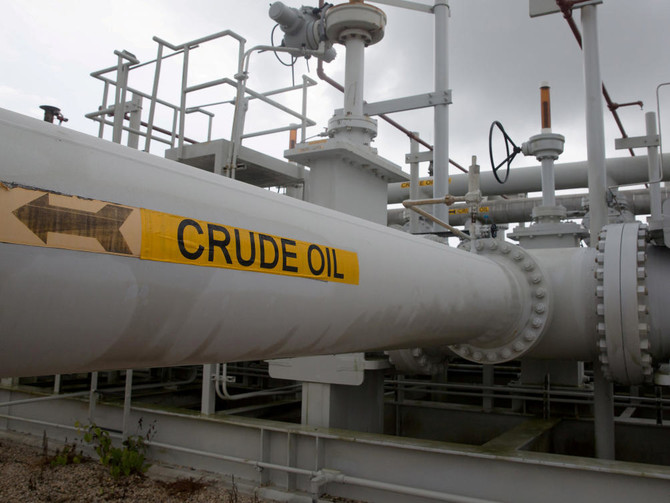
Crude oil price rise signals a return to balanced market
Crude oil price rise signals a return to balanced market
- Iran’s crude oil output averaged 3.8 million bpd in 2017 and fell to 2.7 million bpd by the end of 2018, despite the US granting waivers in early November 2018 to eight of the largest importers of Iranian crude oil
- If the US does not intend to renew the waivers, Iran’s crude oil output is likely to fall further below 2.5 million bpd


Latest updates


© 2026 SAUDI RESEARCH & PUBLISHING COMPANY, All Rights Reserved And subject to Terms of Use Agreement.