ATHENS: Authorities have banned demonstrations in a large section of central Athens and will shut down streets and subway stations during a visit by German Chancellor Angela Merkel, who arrives in the Greek capital Thursday afternoon for meetings with Prime Minister Alexis Tsipras and other officials.
Around 2,000 officers, a police helicopter and drones will be deployed for the visit, which ends Friday afternoon.
Germany was the largest single contributor to the three international bailout packages Greece received since 2010 as it struggled through a dramatic financial crisis which almost saw it crash out of the eurozone. Germany was also seen as one of the main enforcers of stringent austerity measures, including tax hikes and pension and salary cuts, imposed in return for the rescue loans.
Merkel and Tsipras have met in person many times over the course of the past few years, but this will be the first time the German chancellor visits Athens during Tsipras’ government. He came to power in a January 2015 election on a strongly anti-bailout and anti-Merkel campaign, famously once declaring during a campaign speech before European elections: “Go back, Mrs. Merkel!“
Relations have since warmed, and Tsipras dropped his virulent anti-bailout stance, implementing the reforms demanded by Greece’s creditors.
Greece saw its economy shrink by a quarter during the crisis, with unemployment reaching highs of 28 percent, and 58 percent for young people. The jobless rate has since fallen to just below 19 percent.
“I know that the last few years were very difficult for many people in Greece,” Merkel said in a statement to the Athens daily Kathimerini newspaper before her visit. “Europe showed its solidarity with its three aid packages and supported Greece in its course of reforms toward fiscal and economic stability. It was doubtless a difficult course.”
Greece emerged from its third and final bailout in August last year, but its economy will remain under strict supervision and it has pledged further reforms to ensure its finances remain on track.
“With the completion of the third adjustment program last year, Greece has made great progress,” Merkel told Kathimerini. “This should be an incentive for the future.”
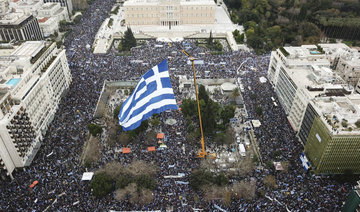
Apart from the financial crisis, the two leaders are expected to discuss migration, an issue on which the positions of Tsipras and Merkel have been relatively close, as well as the name deal Greece reached with neighboring Macedonia.
Under the deal reached last year, the former Yugoslav republic will be renamed North Macedonia in return for Greece dropping its objections to the country joining NATO and eventually the European Union. Greece argues use of the term “Macedonia” implies territorial claims on its own northern province of the same name, and usurps its ancient Greek heritage.
The deal has met with vociferous opposition in both Greece and Macedonia, where critics accused their respective governments of making too many concessions to the other side. The issue is threatening Tsipras’ coalition government, with the head of the junior coalition Independent Greeks party, Defense Minister Panos Kammenos, threatening to leave the government if it goes through.
Germany has made it clear it considers the name deal a historic opportunity.


![]()

German leader Merkel heads to Athens; demonstrations banned
German leader Merkel heads to Athens; demonstrations banned
- Germany was the largest contributor to the three international bailout packages Greece received since 2010
- Greece emerged from its third and final bailout in August last year, but its economy will remain under strict supervision

Latest updates


© 2026 SAUDI RESEARCH & PUBLISHING COMPANY, All Rights Reserved And subject to Terms of Use Agreement.