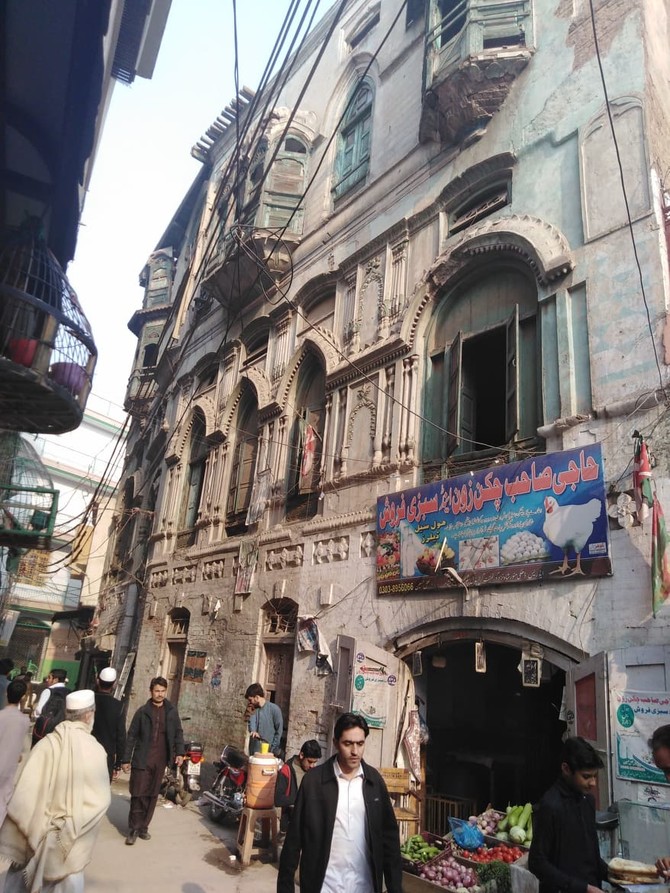
PESHAWAR: From the old Qissa Khwani Bazaar in Peshawar, a narrow alleyway leads you to Dhakki Munawar Shah where a magnificent multi-story building stands tall and can be seen from a distance.
Locals know it as the birthplace of Prithviraj Kapoor, Shashi Kapoor, and Shammi Kapoor — legends of the Hindi film industry who were born and lived in Peshawar, before moving permanently to India.
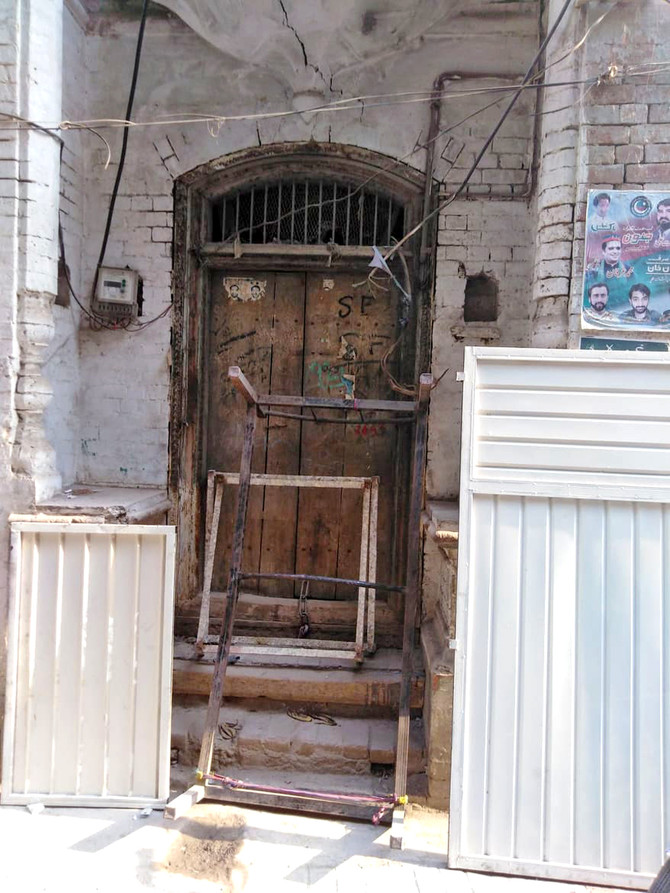
The haveli or mansion has stood the test of time and is nearly a century old. It houses 40 rooms and is nestled in the heart of the walled city of Peshawar, one of its most distinctive landmarks, drawing locals and tourists alike in droves.
It was in the news once again when, recently, Foreign Minister Shah Mehmood Qureshi said that his government had received a call from Indian actor Rishi Kapoor to turn his ancestral home into an educational institution or a museum. Responding to media questions at the ground-breaking ceremony for the Kartarpur Corridor, Qureshi said: “You can tell him (Rishi Kapoor) that we’re entertaining his request.”
That’s something that locals in the area are campaigning for, too.
“Every day foreign tourists visit Raj Kapoor’s ancestral house and we want the historical Haveli to be turned into a museum which could help local business flourish,” Amir Nawaz, an octogenarian goldsmith who resides in the congested Dhakki Munawar Shah area, next to Qissa Khwani Bazaar, said.
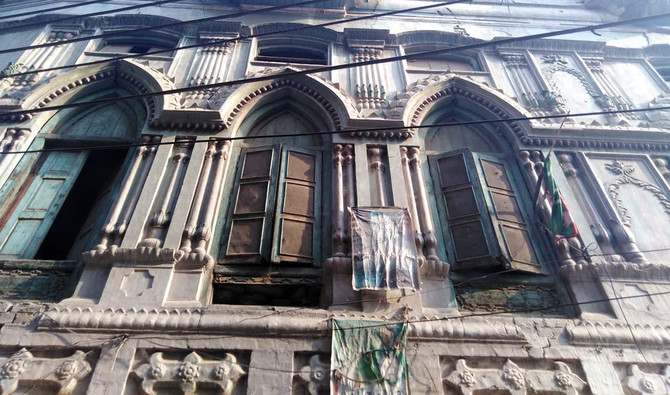
Nawaz recalled a time when he was told by his father that the building’s splendid façade, with decorated jharokas, had been built between 1916-1918 by Raj Kapoor’s grandfather, Dewan Basheswarnath Singh Kapoor. “I still recall that Raj Kapoor, the father of Rishi Kapoor, was born in this building,” he said.
Mubarak Shah, another local who owns a roadside eatery stall in the area, said that the businesses in the vicinity had gained momentum following media reports about the haveli. “I prefer that the facility is turned into a tourist destination instead of an education center because this will multiply businesses,” Shah said, adding that the mansion is losing its efficacy due to carelessness. “A number of people ask me about its history on a daily basis. Being the birthplace of the legends of Indian cinema, the place is very famous,” he said.
During former dictator General Zia-ul-Haq’s rule in the late 1980s, Nawaz said that Raj Kapoor’s younger brother, Shashi Kapoor, and Rishi had visited Peshawar, taking with them some soil from their ancestral home which was used during the construction of the Raj Kapoor in India.
The sons of late Hajji Khushhal, the owner of the compound, had demolished its top two floors a few years ago citing that the place was in shambles. However, it was only after the intervention of the archaeology department that further demolition was put on hold.
Nawaz-Ud-Deen, a research officer at the archaeology department in Peshawar, told Arab News that the haveli is a private property owned by Israr Khan, a jeweler. “Basically, it was a five-story building but its owners have demolished two of its floors. However, our department swung into action and stopped him from further damaging the place,” he said.
One look at the haveli and one can understand why. The ancient facility’s grandeur is intact with its majestic design adorned with exquisite flowers and complimented with swinging balconies. The façade is built with old bricks and a variety of arches and represents the perfect blend of Hindu architecture with structural artwork from the Mughal era. “We want to preserve this historic building but let’s first reach a settlement with its owner to acquire it as a government property,” Nawaz-Ud-Deen said.
He added that his department is waiting for approvals from the central or provincial governments before initiating the “gigantic project” to turn it into a public facility.


![]()
![]()
![]()
![]()
![]()
![]()

Locals urge authorities to turn Raj Kapoor’s ancestral home into a museum


Locals urge authorities to turn Raj Kapoor’s ancestral home into a museum
- Insist it will help their businesses flourish as the landmark is a famous attraction in Peshawar
- Multi-story villa was built between 1916-1918
Latest updates


Recommended


© 2026 SAUDI RESEARCH & PUBLISHING COMPANY, All Rights Reserved And subject to Terms of Use Agreement.